What if the most expensive part of your 2026 build isn’t the high-end finishes, but a single overlooked zoning detail in the Prescott-Russell / City of Ottawa? Most homeowners we speak to in Russell and the surrounding townships feel a deep sense of anxiety about budget creep and hidden fees. It’s a valid concern because hiring a custom home builder involves the largest financial commitment you’ll likely ever make. You want a home that reflects your vision, but you don’t want to be blindsided by the unexpected costs that often plague poorly planned projects.
This guide provides the institutional clarity you need to move forward with quiet confidence. We’ve compiled the essential data on local market conditions and permitting requirements to ensure your investment remains predictable and transparent. We will explore the specific regional risks that lead to delays, the reality of current construction timelines in Ontario, and the exact questions you must ask to ensure a conflict-free partnership that delivers your vision with bespoke precision.
Key Takeaways
- Identify the primary risks within the 2026 Prescott-Russell / Ottawa residential landscape to prevent the common pitfall of “unlimited” budget overruns.
- Learn why selecting a custom home builder who offers conflict-free advisory is the most critical step in protecting your financial interests.
- Explore the “Measured Scoping” framework that captures every technical detail to ensure your design remains aligned with your C$ investment goals.
- Discover how live budgeting tools and data-driven planning eliminate the financial surprises often found in traditional construction projects.
- Gain a list of transparent, high-stakes questions to ask potential partners to ensure they act as a seamless extension of your vision.
Table of Contents
-
Custom Home Building in Russell & Ottawa: Navigating Costs and Risks
-
The Design-Build Framework: How Data Protects Your Investment
Custom Home Building in Russell & Ottawa: Navigating Costs and Risks
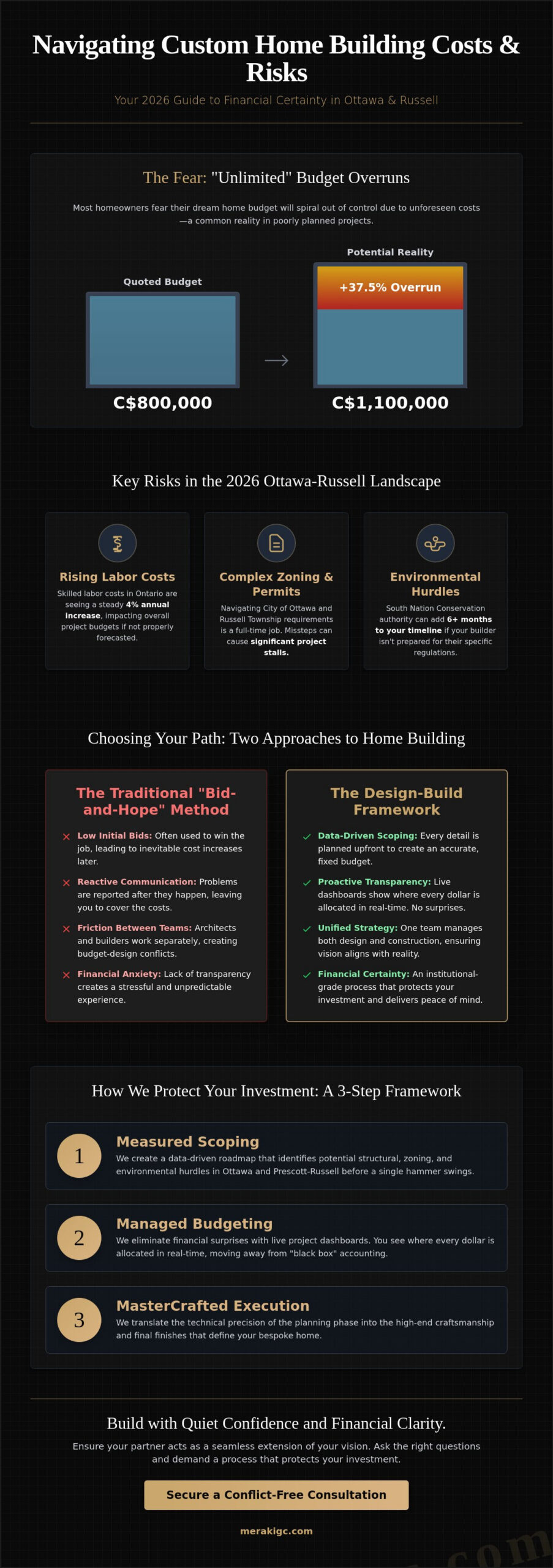
The 2026 residential construction landscape in the Ottawa-Gatineau region is defined by a flight to quality. While material supply chains have stabilized since the volatility of the early 2020s, skilled labor costs in Ontario have seen a steady 4% annual increase. For anyone looking to hire a custom home builder, the primary concern isn’t just the timeline; it’s the fear of the "unlimited" budget overrun. Most homeowners we speak to worry that a quoted C$800,000 project will balloon into a C$1.1 million headache due to unforeseen variables.
Managing a high-end project requires more than just a contractor; it requires a unified strategy. We utilize a design-build model to bridge the gap between architectural vision and fiscal reality. By integrating the design and construction phases, we eliminate the friction that usually happens when a builder receives plans they can’t realistically execute within your budget. You can learn more about how we manage these moving parts by reviewing our process. This institutional approach ensures that every detail of the complex home construction process is mapped out before work begins.
What Does it Cost to Build Custom in Prescott-Russell / Ottawa?
Price per square foot is a misleading metric that often leads to financial heartbreak. In the 2026 market, bespoke projects involve unique variables like high-efficiency HVAC systems, custom millwork, and site-specific engineering that standard averages don’t capture. Relying on a "ballpark" figure usually results in cutting corners later. Pre-construction scoping is the only way to get financial certainty.
Local Permit and Zoning Challenges
Navigating the City of Ottawa and Russell Township requirements is a full-time job. In the Prescott-Russell area, environmental hurdles from the South Nation Conservation authority can add six months to your timeline if you aren’t prepared. Local expertise is vital because zoning bylaws are frequently updated to reflect new density and environmental standards. We’ve seen projects stall for half a year simply because a custom home builder didn’t account for specific setback requirements or private well-system regulations in rural Russell.
What this means for you:
-
Avoid "price per square foot" estimates; they don’t account for 2026 Ontario labor realities.
-
Ensure your builder has a direct line of communication with local conservation authorities.
-
Choose a partner who prioritizes pre-construction scoping to protect your investment.
The Design-Build Framework: How Data Protects Your Investment
Most homeowners we speak to in the Ottawa and Russell area fear the "bid-and-hope" method. This is a traditional approach where a contractor provides a low estimate to win the job, only for the standard 10% contingency fund to vanish by the end of the first week. This lack of transparency creates unnecessary friction and anxiety. To protect your capital, we utilize a structured framework that prioritizes data over guesswork.
According to the Design-Build Institute of America, integrating design and construction under a single contract significantly improves cost certainty and delivery speed. Our process follows three deliberate steps:
-
Step 1: Measured Scoping. We capture every technical detail before a single hammer swings. This is not just a floor plan; it is a data-driven roadmap that identifies potential structural hurdles in the Prescott-Russell soil or Ottawa’s specific zoning bylaws.
-
Step 2: Managed Budgeting. We use live project dashboards to eliminate financial surprises. You see where every C$ is allocated in real-time, moving away from the "black box" accounting of traditional general contracting.
-
Step 3: MasterCrafted Execution. This is the transition from data to high-end craftsmanship. As a custom home builder, we ensure that the technical precision of the planning phase is reflected in the final finish of the home.
The Problem with Traditional General Contracting
The "bid-and-hope" model often fails because it relies on reactive communication. When a problem arises on-site, the homeowner is the last to know and the first to pay. We replace this with proactive transparency. By using live dashboards, we provide the same level of sophisticated reporting that an asset manager would expect from a boutique firm. This ensures your investment is managed with institutional-grade reliability rather than local-market guesswork.
Integrating Home Automation and Specialized Spaces
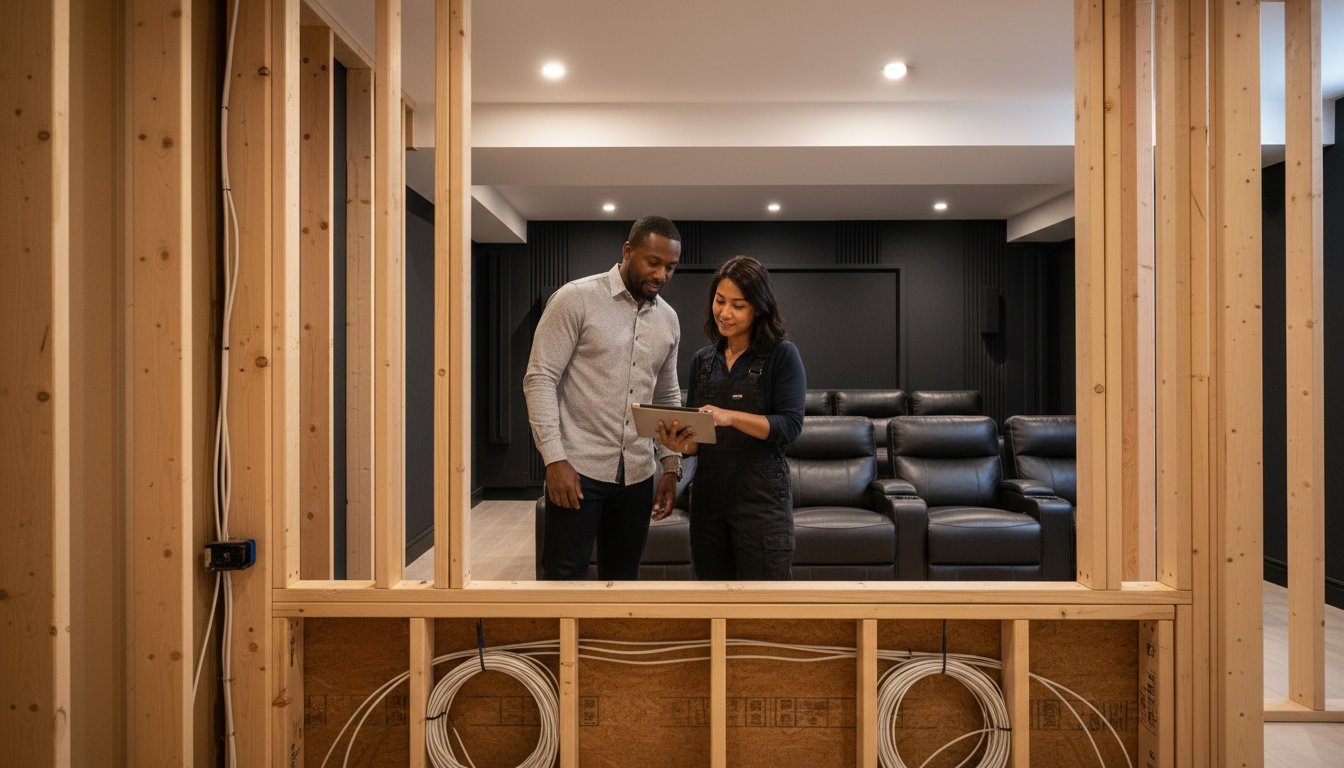
High-end builds in 2026 require more than just four walls. Modern luxury involves complex assets like smart home integration and specialized entertainment zones. These systems must be planned during the framing stage. Waiting until the drywall is up to decide on wiring for a custom home theater or a high-end basement build leads to expensive retrofitting and delays.
Our philosophy involves putting soul and creativity into these technical requirements. We treat home automation not as an add-on, but as a core component of the architectural design. This multi-asset execution ensures your home is technologically advanced yet human-centric. If you are ready to see how a data-driven approach can secure your next project, you can view our detailed process here to understand how we maintain alignment with your goals.
Choosing Your Partner: What to Ask a Custom Home Builder
Selecting a custom home builder shouldn’t feel like a high-pressure sales meeting. Most homeowners we speak to in Russell and Ottawa are looking for a trusted advisor, not a pitchman. You need a partner who provides conflict-free advisory during the design phase. This means they prioritize your project’s feasibility and your financial goals over simply winning a contract. Look for a firm that offers a boutique, personalized feel while maintaining institutional-level reliability in their operations. This balance ensures your build remains a priority without sacrificing professional standards. You can read more about why Meraki is the choice for transparent builds.
Red Flags and What to Watch For
Here’s where projects go wrong: many homeowners accept quotes that lack depth. Be cautious of contractors who provide pricing without a detailed site discovery process. In the Ottawa region, soil conditions and local permitting requirements can drastically impact costs. If a builder hasn’t walked your lot or reviewed local bylaws, their estimate is a guess. Watch for these specific indicators:
-
Low-Ball Allowances: Some builders set allowances for materials intentionally low to make the initial quote look attractive. For example, a C$10,000 allowance for flooring might sound fine, but if the actual cost for your preferred material is C$25,000, you’ll face an immediate budget overrun.
-
Lack of Transparency: Ask them directly: "Can I see a live example of your project management dashboard?" A professional custom home builder uses real-time data and digital tools to keep you informed, not just occasional emails.
-
Vague Timelines: If they can’t show you a structured schedule that accounts for lead times on specialized materials, delays are inevitable.
What This Means for You: The Path to a Predictable Build
A structured planning process transforms a stressful construction project into a white-glove experience. When you choose a conflict-free, bespoke construction partner, you gain peace of mind. You aren’t just buying a house; you’re investing in a measured process that eliminates surprises. This approach ensures your C$300,000 or C$500,000 investment is handled with the same precision as a high-stakes institutional project. It results in a home built with soul and technical excellence.
Contact Meraki GC to start your measured planning process.
Securing Your Investment in the Prescott-Russell / Ottawa Region
Building a high-end home in Russell or Ottawa shouldn’t feel like a high-stakes gamble. We’ve explored how the design-build framework minimizes financial risks and why specialized expertise in local permitting is vital for transformations between C$100,000 and C$500,000. Selecting a custom home builder involves more than just looking at a portfolio; it requires finding a partner who integrates soul and creativity into a structured, institutional process. Most homeowners we speak to are looking for this exact blend of artistic vision and fiscal discipline.
Our proprietary Measured, Managed, MasterCrafted approach is designed to eliminate the common anxiety of budget overruns and timeline delays. We utilize precise data to ensure your architectural vision aligns with financial reality from the very first meeting. You deserve a sophisticated, white-glove experience that treats your project as a significant asset rather than just another transaction. By focusing on transparency and rigorous planning, we help you navigate the complexities of the 2026 market with quiet confidence.
Get a Data-Driven Renovation Quote for Your Prescott-Russell / Ottawa Project and start your journey with a team that values transparency. Your dream home is a major investment, and we’re here to help you protect it every step of the way.
Frequently Asked Questions
How much does a custom home builder cost in Ottawa in 2026?
In 2026, hiring a custom home builder in Ottawa typically requires an investment between C$400 and C$650 per square foot for premium construction. These figures reflect current labor rates and the cost of high-performance materials required by updated Ontario Building Code standards. Most homeowners we speak to find that a 2,500 square foot bespoke residence starts at C$1,000,000, excluding the price of land and municipal development charges. We recommend budgeting an additional C$50,000 for site-specific requirements like septic systems or specialized grading in rural areas.
What is the difference between a general contractor and a design-build firm?
A design-build firm manages your entire project from the initial architectural sketches to the final interior finishes under a single contract. This institutional approach creates a seamless flow of information and prevents the common C$30,000 budget gaps that happen when an independent architect designs something a builder can’t affordably execute. A general contractor usually enters the picture only after your plans are finished. While a contractor focuses on execution, a design-build partner acts as a sophisticated advisor who balances aesthetic goals with financial reality from day one.
How long does the custom home building process typically take in Russell?
The timeline for building a custom home in Russell generally spans 12 to 18 months from the first consultation to move-in day. You should account for 8 to 12 weeks just for the Township of Russell to process building permits and site plan approvals. We’ve observed that 45 percent of project delays occur during the pre-construction phase due to slow decision-making on fixtures and finishes. Establishing a firm design early in the process is the most effective way to ensure your project stays on schedule and avoids seasonal weather disruptions.
What should I ask a custom home builder before signing a contract?
You should ask a custom home builder for a documented history of their "allowance" accuracy and their specific protocol for managing change orders. Ask them, "How many projects of this scale have you delivered in the Prescott-Russell / Ottawa area in the last 24 months?" and "Can you provide a line-item breakdown of your fixed-price vs. estimated costs?" It’s also vital to confirm they carry at least C$5 million in liability insurance. Transparent builders will show you their communication software so you know exactly how updates are handled.
Can I build a custom home if I already have a lot in Ottawa?
Yes, you can build on your own lot, but you must first conduct a thorough site feasibility study to identify hidden costs like rock excavation or municipal service connections. Many lots in established Ottawa neighborhoods are subject to "infill" regulations that dictate exactly how high or wide your home can be. If your design requires a minor variance, you’ll need to attend a Committee of Adjustment hearing, which can add 4 to 6 months to your timeline. We always suggest a soil test and a topographic survey before you fall in love with a specific floor plan.
What happens if the project goes over budget?
If a project exceeds its initial estimate, it’s usually because of unforeseen site conditions or "scope creep" during the construction phase. To protect your capital, we suggest maintaining a 10 to 15 percent contingency fund for any high-stakes investment. Our process involves a rigorous pre-construction phase where 95 percent of costs are locked in before the first shovel hits the ground. This sophisticated planning minimizes the risk of financial surprises and ensures that any necessary adjustments are made through a formal, transparent approval process rather than unexpected invoices.

Article by
~ Jason Bourguignon
Jason has been passionate about building homes from a young age, starting his first successful construction company at age 21. With experience across nearly every sector of the industry, he brings a hands-on understanding of the entire building process. For over two decades, he has managed hundreds of custom home builds, additions, and renovations with some single projects exceeding $2.5M. Jason does not just focus on construction, but also helps homeowners create spaces they truly call home.
Disclaimer
The information in this article is provided for general educational purposes only and is based on typical renovation scenarios in Ontario. Every project is unique, and actual costs, timelines, and requirements may vary. This content does not constitute professional, legal, or engineering advice. We recommend consulting with a qualified contractor or specialist for your specific project.