What if the most expensive part of your $300,000 renovation isn’t the custom cabinetry or the high-end finishes, but the three words “let’s just start”? Most homeowners we speak to in Ottawa feel a natural urgency to see progress, especially when facing a 40 business day wait for complex municipal permits. You want your vision realized, but rushing into demolition often leads to the “slippery slope” of escalating costs that frequently haunt older homes in neighborhoods like the Glebe or Rockcliffe Park.
We understand that anxiety; it’s why we believe a structured pre-construction planning phase is a financial insurance policy rather than a project delay. By investing in this bespoke scoping process, you move from the uncertainty of a ballpark estimate to the quiet confidence of a fixed-price contract. This article explains how a data-driven timeline and thorough structural audits eliminate budget surprises before they happen. You’ll learn how to protect your investment, navigate the 2024 Ontario Building Code updates, and ensure your project remains a seamless, sophisticated extension of your home.
Key Takeaways
- Understand why rushing to break ground actually delays your move-in date and how to avoid the common $50,000 mid-project budget spike.
- Learn how rigorous pre-construction planning uncovers hidden structural issues in older Ottawa homes before the first hammer swings.
- Discover how 3D modeling and site discovery align your design vision with the technical realities of your home’s existing footprint.
- Identify the specific tools, like live project dashboards, that provide the transparency needed for a fixed-price contract you can trust.
- Navigate the complexities of City of Ottawa permitting and the 2024 Ontario Building Code with a clear, data-driven timeline.
Debunking the ‘Planning is a Delay’ Myth in Ottawa Renovations
Most homeowners we speak to in Ottawa are eager to see the first sledgehammer swing. It’s a natural reaction. When you’re committing to a $250,000 investment in your home, you want to see physical progress. However, there’s a common misconception that an early start date equals an early completion date. In reality, rushing to the job site without a rigorous pre-construction planning phase is the fastest way to invite the dreaded $50,000 mid-project surprise. Professional builders know a fundamental truth: every hour spent in the office saves five hours of expensive problem-solving on-site. Without a data-backed plan, you’re relying on “ballpark estimates” that often ignore the technical complexities of Ottawa’s older housing stock.
What happens when you skip pre-construction?
Skipping this phase leads to “discovery” errors once walls are opened. In neighborhoods like Westboro or the Glebe, unexpected structural decay or outdated wiring can trigger immediate budget overruns. For instance, the 2024 Ontario Building Code now mandates specific smoke-tight gypsum barriers in secondary suites. If these aren’t accounted for during the Pre-construction services phase, you’ll face costly change orders and significant delays in your 20 to 40 business day permit timeline. Late-stage material changes also collide with regional supply chain issues, where custom fixtures can have 12-week lead times. Without planning, these lead times become your project’s bottleneck.
The ‘trusted advisor’ vs. the ‘order taker’ contractor
A contractor who says “yes” to every request without verifying structural feasibility is a major red flag. They act as “order takers” rather than experts. We believe in a measured and transparent process that prioritizes honesty over easy answers. A trusted advisor will tell you if your vision isn’t feasible for your budget before you spend a dime on demolition. This level of transparency prevents friction and ensures your investment is protected. We treat planning as a collaborative investment in your project’s sanity, transforming a stressful “design-as-you-go” approach into a predictable, master-crafted execution.
What this means for you
By prioritizing a structured planning phase, you eliminate the “slippery slope” of escalating costs. You gain a fixed-price contract you can actually trust and a timeline that accounts for the City of Ottawa’s specific 2026 permit fee structures and inspection schedules. Instead of worrying about what’s behind your walls, you can focus on the excitement of your home’s transformation.
The 5 Pillars of Effective Pre-Construction Planning
A sophisticated renovation requires more than a simple floor plan. It demands a structured approach that bridges the gap between a creative vision and technical execution. Effective pre-construction planning is built on five essential pillars that transform a high-stakes investment into a predictable success. Most homeowners we speak to are surprised by how much data we gather before a single tool arrives on-site. This stage involves thorough site discovery, where we identify structural realities in Ottawa’s older homes, and 3D modeling to ensure your aesthetic goals align with your home’s architecture.
Moving from vague allowances to fixed-price certainty is the third pillar. By finalizing every fixture and finish early, we eliminate the budget creep that often ruins the renovation experience. We also account for Ottawa’s seasonal construction challenges, ensuring your project isn’t stalled by a January freeze. This level of detail is why experts recommend a Beginner’s Guide to Managing a Remodel as a starting point for any significant home investment.
Navigating Ottawa renovation permits and regulations
The Ottawa renovation permits process is a common source of anxiety. In 2026, the City of Ottawa charges $12.75 per $1,000 of construction value for renovations. During pre-construction, we identify if your property in a neighborhood like Sandy Hill has heritage designations or zoning variances that could add two to six months to your timeline. We also coordinate engineering reviews for open-concept conversions to ensure your home remains structurally sound under the 2024 Building Code.
What should I watch for in a pre-construction agreement?
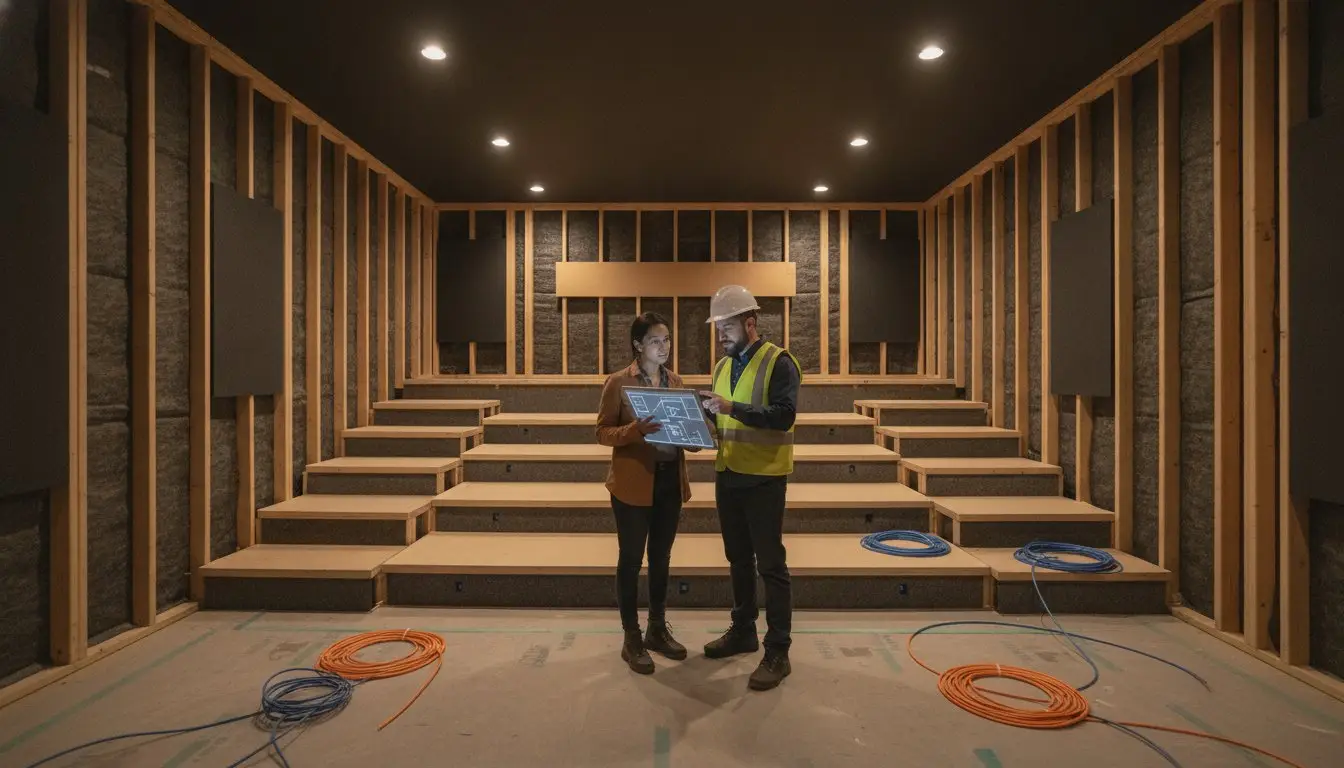
Here’s where projects go wrong: signing an agreement that only includes a basic floor plan. A professional pre-construction agreement must feature a granular “Scope of Work” that details everything from electrical load requirements to specific smart home hardware. Watch for “long-lead” items. Custom home theater components or bespoke kitchen cabinetry can take 12 weeks or more to arrive. Identifying these during the planning phase ensures they are ordered well before they are needed on-site. You can learn more about how we manage these details by reviewing our process for high-value renovations.
What this means for you
This structured approach replaces guesswork with data. Instead of hoping your project stays on track, you’ll have a clear roadmap that accounts for the $117 minimum permit fees and complex engineering needs. You gain the confidence that your vision is actually feasible within your chosen budget.

From Scoping to Certainty: The Meraki Approach to Pre-Construction
Moving from a conceptual design to a physical build requires a bridge built on data. We call our methodology “Measured, Managed, MasterCrafted.” This isn’t just a tagline; it’s a commitment to eliminating the guesswork that plagues high-value renovations. During the pre-construction planning phase, we act as a seamless extension of your vision. We prioritize conflict-free advisory, which means our recommendations are based solely on what is best for your home’s structural integrity and your long-term investment, rather than what is easiest for a crew to build.
One of the biggest stressors for homeowners in Ottawa is the communication gap. We solve this through live project dashboards. You won’t have to chase us with phone calls or emails to find out where your project stands. Instead, you’ll have access to real-time data regarding your timeline, material orders, and budget status. Once the planning phase is complete, we transition from a planning fee to a fixed-price contract. This provides a level of institutional-grade reliability that transforms the typical renovation experience into something sophisticated and predictable.
What this means for you: Peace of mind
The primary benefit of this approach is knowing your final price before the first hammer swings. This is the ultimate form of risk management. By documenting every detail early, you protect your ROI on home renovation services in Ottawa. You’ll have the confidence that comes from working with a dedicated project manager who understands the specific challenges of Prescott-Russell soil conditions or the 2026 City of Ottawa inspection schedules. It’s about certainty.
What should I ask my contractor about pre-construction?
Here’s where projects go wrong: assuming every contractor plans with the same level of rigor. To protect your investment, we suggest asking these three questions before signing a major contract:
- How do you handle unforeseen structural issues in your estimates? A vague answer here usually leads to expensive change orders later.
- Do you provide a fixed-price contract based on a detailed scope? If they only offer “ballpark” numbers, your budget is at risk.
- Can I see a sample of your pre-construction documentation? Professional firms will have structured reports, 3D models, and detailed logistics plans ready to show you.
We invite you to experience a different kind of partnership. By focusing on transparency and structured planning, we ensure your home transformation is as rewarding as the final result. If you’re ready to move from “just getting started” to a master-crafted plan, we’re here to help.
Secure Your Renovation’s Future with Certainty
A high-value renovation shouldn’t feel like a gamble. By shifting your focus from immediate demolition to a rigorous pre-construction planning phase, you transform potential risks into managed milestones. You’ve seen how identifying structural realities and navigating the 2024 Building Code early prevents the budget spikes that derail so many Ottawa projects. This structured approach is the difference between an estimate that shifts and a fixed-price contract you can trust.
At Meraki, our local team led by Ken Turner specializes in residential transformations exceeding $100,000. We use our proprietary “Measured, Managed, MasterCrafted” process to ensure every detail is accounted for before work begins. This institutional level of care provides the transparency and peace of mind your investment deserves. If you’re ready to trade anxiety for a clear, data-driven roadmap, we invite you to Book a Consultation to Start Your Measured Planning Phase. Your vision is feasible; it just needs the right foundation.
Frequently Asked Questions
How much does pre-construction planning typically cost for an Ottawa renovation?
Planning fees are usually calculated as a percentage of your total project investment or as a fixed fee based on the complexity of the design. While we don’t use a one size fits all price, most homeowners allocate a specific portion of their budget to cover site discovery, 3D modeling, and engineering reviews. This upfront investment is significantly lower than the 20% contingency fund experts recommend for older homes in neighborhoods like the Glebe to cover mid project surprises.
What happens if we find a major issue during the pre-construction phase?
Finding a structural or mechanical issue during the pre-construction planning phase is the best way to protect your budget. It allows us to re-scope the design or adjust the engineering before any physical work begins. For example, if we discover outdated wiring that doesn’t meet the 2024 Building Code, we can include the remedy in your fixed price contract. This prevents the costly work stoppages and emergency change orders that happen when a contractor rushes into demolition without a plan.
Can I take my pre-construction plan to another contractor for the build?
You own the detailed documentation, floor plans, and material specifications generated during our planning phase. While we design these plans for a seamless transition into our master-crafted build process, the data driven roadmap belongs to you. Most homeowners choose to stay with us because our deep familiarity with the project’s technical nuances ensures a conflict-free execution. Having a bespoke “Scope of Work” ensures you aren’t trapped by a single contractor’s vague ballpark estimate.
How long does the pre-construction phase usually take for a basement or kitchen?
A thorough planning phase for a high value kitchen or basement typically requires four to eight weeks. This schedule allows for precise site measurements, design iterations, and the selection of custom items with 12 week lead times. You must also account for the City of Ottawa’s permitting timeline, which takes 10 to 20 business days for simple renovations. Rushing this stage often leads to delays later when materials don’t arrive on time or inspections fail due to a lack of detailed documentation.

Article by
~ Jason Bourguignon
Jason has been passionate about building homes from a young age, starting his first successful construction company at age 21. With experience across nearly every sector of the industry, he brings a hands-on understanding of the entire building process. For over two decades, he has managed hundreds of custom home builds, additions, and renovations with some single projects exceeding $2.5M. Jason does not just focus on construction, but also helps homeowners create spaces they truly call home.
Disclaimer
The information in this article is provided for general educational purposes only and is based on typical renovation scenarios in Ontario. Every project is unique, and actual costs, timelines, and requirements may vary. This content does not constitute professional, legal, or engineering advice. We recommend consulting with a qualified contractor or specialist for your specific project.