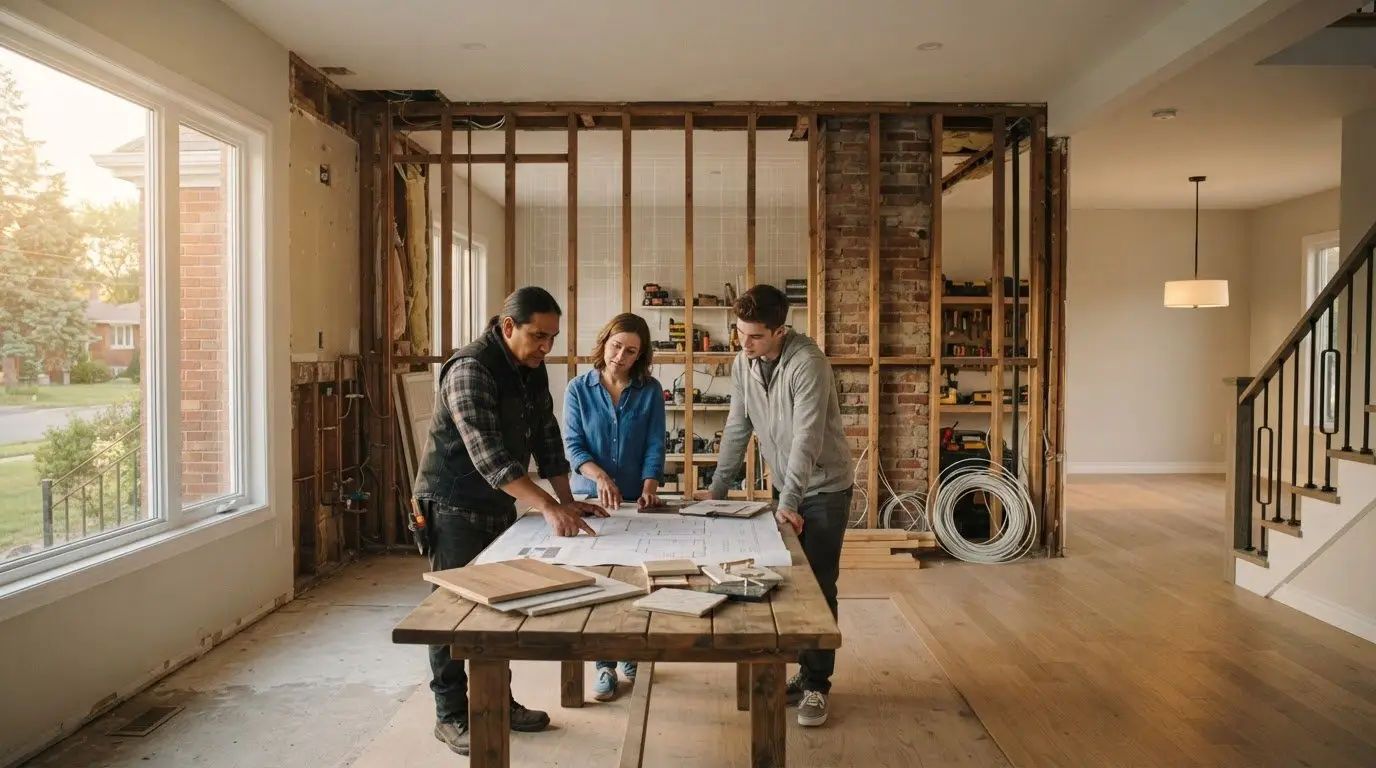
What if the “money pit” scenario isn’t a result of bad luck, but a predictable consequence of an incomplete plan? Most homeowners we speak to in the Ottawa and Prescott-Russell area feel a deep sense of anxiety when they start looking at how to budget for a major home renovation. It’s common to worry about fluctuating 2026 material costs or the risk of your lifestyle being upended by an unclear timeline. You want a home that reflects your success, not a project that drains your accounts through endless “surprises.”
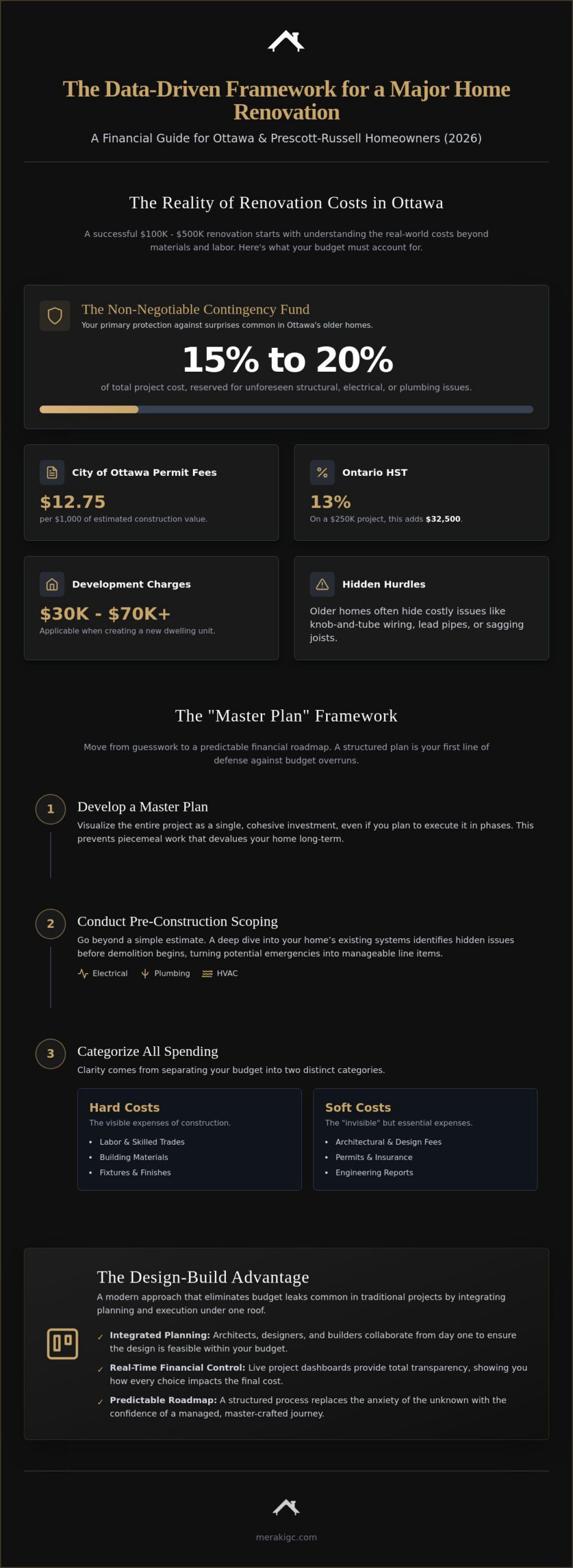
We believe that a high-value renovation should be handled with the same rigor as any other major investment. This guide provides a sophisticated, data-driven framework designed to eliminate financial ambiguity and protect your return on investment. You’ll learn how to navigate 2026 Ottawa building permit fees, which are currently $12.75 per $1,000 of construction value, and why a 15% to 20% contingency fund is non-negotiable. We’ll also show you how a structured design-build approach turns a stressful process into a predictable, master-crafted journey.
Key Takeaways
- Analyze the 2026 labor and material landscape in the Ottawa-Gatineau region to understand what a $100K to $500K investment actually covers today.
- Discover how to budget for a major home renovation using a data-driven framework that prioritizes a “Master Plan” to protect your long-term cash flow.
- Learn why pre-construction scoping is the most effective tool for uncovering hidden electrical, plumbing, and HVAC costs before the first hammer swings.
- Compare Fixed-Price and Cost-Plus contract models to see which provides the highest level of financial security for high-value residential transformations.
- See how the design-build model uses integrated planning and live project dashboards to eliminate the budget leaks common in traditional renovation projects.
The Reality of Major Renovation Costs in Ottawa (2026)
A major renovation in 2026 is a complex financial undertaking. In the Ottawa-Gatineau region, the cost of skilled trades and specialized materials has reached a new baseline. When we discuss the $100K to $500K project bracket, we’re looking at high-value transformations like custom home theaters, structural kitchen remodels, or secondary suites. Learning how to budget for a major home renovation requires a shift from guessing to data-driven planning that reflects these current market values.
Here’s where projects go wrong: assuming an older home is a blank slate. In historic neighborhoods like Westboro or the Glebe, we frequently encounter “money pit” scenarios involving knob-and-tube wiring, lead pipes, or sagging joists. These hidden hurdles make understanding the renovation process essential before you sign a contract. Aligning your “Wish List” with these regional realities ensures your investment remains protected and your expectations stay grounded.
Regional Variables: Permits, HST, and Labour
Ontario’s 13% HST is a non-negotiable cost that many homeowners overlook during early planning. On a $250,000 project, taxes alone account for $32,500 of your total spend. Beyond taxes, the City of Ottawa permit fees are $12.75 per $1,000 of construction value as of January 2026. If your project involves creating a new dwelling unit, development charges can range from $30,000 to over $70,000. These are fixed costs that must be cleared before any aesthetic work begins.
We often see homeowners tempted by “cheap” labor quotes to offset these fees. In our experience, these typically lead to the most expensive budget overruns. Lower initial quotes often mask a lack of proper insurance, poor site management, or a failure to follow the Ontario Building Code. Investing in a team that uses structured planning and clear communication is the only way to ensure your project stays on track without sacrificing quality or safety.
What this means for you
Success depends on transparency. You must account for a 15% to 20% contingency fund specifically for the structural surprises common in Ottawa’s older housing stock. By prioritizing a “Master Plan” over piecemeal repairs, you can ensure that every dollar spent contributes to a cohesive, high-quality result that enhances your home’s long-term value.
A Step-by-Step Framework for a Data-Driven Renovation Budget
Most homeowners we speak to are eager to begin selecting finishes and fixtures. However, here’s where projects go wrong: neglecting the structural foundation of the financial plan. A “Master Plan” is your first line of defense. It allows you to visualize the entire project as a single, cohesive investment, even if you choose to execute it in phases to manage cash flow. The cornerstone of how to budget for a major home renovation is pre-construction scoping. Unlike a simple estimate, this process involves a deep dive into your home’s existing HVAC, electrical, and plumbing systems to identify hidden issues before they become expensive mid-project emergencies.
To maintain clarity, you must categorize your spending into “Hard Costs” and “Soft Costs.” Hard costs include the visible elements like labor and materials. Soft costs cover the necessary “invisible” expenses: permits, architectural design fees, and insurance. Meraki utilizes a Measured, Managed, MasterCrafted framework to ensure these numbers are rooted in data rather than hope. This structured planning replaces the typical anxiety of the unknown with the confidence of a predictable roadmap.
The 20% Contingency: Why it is Non-Negotiable
Generic online advice often suggests a 10% buffer. For a $300,000 transformation, that simply isn’t enough. We recommend a 20% contingency because major renovations in Ottawa often involve complex structural shifts that reveal unforeseen challenges behind old drywall. What should I watch for? It’s often “scope creep.” As the project takes shape, the temptation to add premium features or “just one more thing” grows. We use live project dashboards to show you exactly how these choices impact your reserve in real-time, keeping you in total control of the final price tag.
What this means for you
Success in a high-value renovation isn’t about having the lowest quote; it’s about having the most accurate one. By using pre-construction scoping and maintaining a strict 20% contingency, you protect your lifestyle and your investment ROI. If you’re ready to see how this level of transparency works in practice, you can review our detailed project management process.
Moving from Estimate to Execution: Choosing the Right Financial Model
Choosing the right contract model is just as important as the design itself. For a $300,000 transformation, we generally see two paths: Fixed-Price or Cost-Plus. While Cost-Plus might seem flexible, it often leaves you vulnerable to the fluctuating material costs of 2026. A Fixed-Price contract provides more security because the builder assumes the risk of price changes. This is where the Design-Build advantage becomes clear. When design and construction are integrated, there’s no finger-pointing between an architect and a contractor. Every detail is accounted for before the work starts, preventing the budget leaks that plague traditional models.
Red Flags in Contractor Estimates
Here’s where projects go wrong: the “allowance trap.” Many contractors provide low-end allowances for items like flooring or cabinetry to make their initial quote look attractive. If your estimate includes $3 per square foot for tile when you actually want a premium finish, you’re facing an immediate budget overrun. Another major risk is an estimate provided on a single page. A major renovation requires a multi-page construction budget, not a simple sales quote. If your contractor can’t show you a detailed breakdown of costs, they likely haven’t done the necessary scoping to protect your investment—a level of precision that professional firms like nexeragc.com maintain as a standard for high-value residential projects.
Similarly, Metro Reconstruction Services, Inc. leverages over four decades of construction expertise to ensure that every structural detail is accounted for in the initial planning phase, providing the transparency needed for high-stakes investments.
What should I ask my contractor? Before signing, ensure you have clear answers to these four questions regarding transparency and reporting:
- How often will I receive detailed financial reports throughout the build?
- Do you provide a live project dashboard for real-time budget tracking?
- How are material price increases handled once the contract is signed?
- Is this a comprehensive construction budget or a preliminary sales estimate?
What this means for you
A data-driven quote is the only way to ensure your project finishes on the number you agreed to. It moves the project from the realm of “best guesses” into a structured, institutional framework of accountability. Understanding how to budget for a major home renovation through the lens of a professional construction budget protects your ROI. This level of transparency is the cornerstone of our commitment to excellence, ensuring your project is managed with the same rigor you apply to your own business decisions.
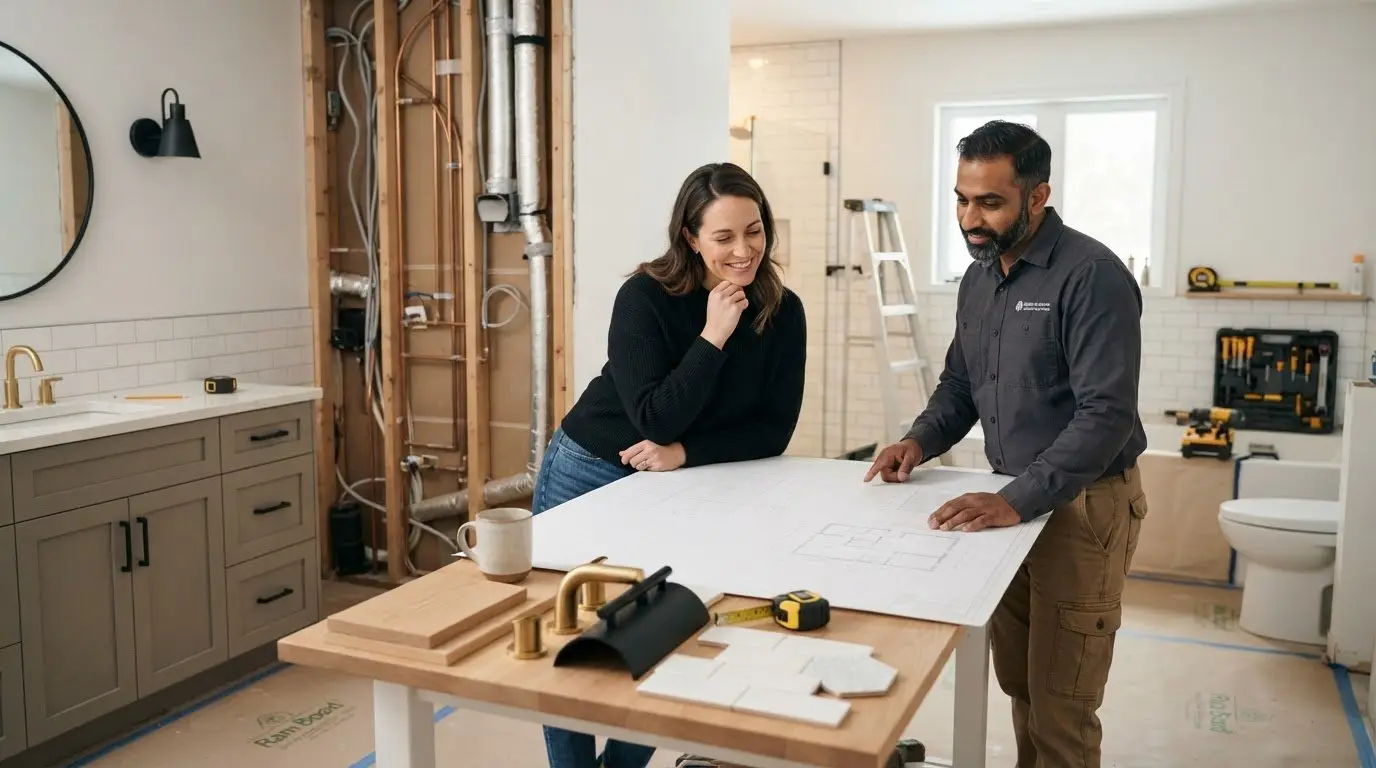
Secure Your Investment with a Master Plan
A successful transformation in the Ottawa area requires more than just a vision; it demands a rigorous financial framework. By now, you understand that how to budget for a major home renovation is less about finding the lowest number and more about uncovering the most accurate one. Moving away from “allowance traps” and single-page estimates protects both your lifestyle and your home’s long-term value. Integrated planning ensures that every dollar is accounted for before the first hammer swings.
Our proprietary “Measured, Managed, MasterCrafted” process is designed specifically for $100K to $500K residential transformations. We replace the standard anxiety of construction with institutional-grade transparency. Through our live project dashboards, you’ll maintain real-time visibility into every phase of the build. This structured approach ensures that your project remains a source of pride rather than a source of stress. It’s about providing you with the same level of data you expect in any other high-stakes investment.
If you’re ready to move forward with a partner who values honesty and precision, we’re here to help. You can Request a Data-Driven Renovation Quote for Your Ottawa Home to begin your pre-construction journey. Your vision deserves a roadmap that is as refined as the final result.
Frequently Asked Questions
How much should I set aside for a contingency fund in 2026?
You should set aside exactly 20% of your total project cost for a contingency fund. While many online guides still suggest 10%, our experience with Ottawa’s older housing stock shows that 20% is necessary to cover unforeseen structural or electrical issues. This buffer ensures that if a problem arises behind a wall in Westboro or the Glebe, you won’t have to sacrifice your high-end finishes to pay for the repair.
What is the average cost per square foot for a high-end basement renovation in Ottawa?
High-end basement costs are driven by the complexity of the systems you choose to integrate, such as custom home theaters or advanced home automation. Most homeowners we speak to find that moving away from “builder-grade” materials toward premium stone, custom cabinetry, and specialized lighting changes the investment significantly. Rather than focusing on a generic square foot rate, it’s better to look at the total scope of structural, plumbing, and electrical upgrades required for your specific vision.
Can I stay in my home during a major $200K+ renovation to save on budget?
Staying in your home during a major transformation is usually not recommended. The constant noise, dust, and necessary utility shut-offs can create a high-stress environment for your family. Here’s where projects go wrong: homeowners think they’re saving money, but having to work around residents often slows the crew down. This can lead to project delays and increased labor costs that quickly eat up any savings you hoped to gain on temporary housing.
What happens if the material costs increase after I sign the contract?
Your protection against price spikes depends on whether you sign a Fixed-Price or Cost-Plus contract. This is a critical detail when learning how to budget for a major home renovation in a fluctuating market. In a Fixed-Price model, the contractor typically absorbs the risk of material increases once the contract is executed. What should I ask my contractor? Always confirm how they handle supply chain volatility and whether your quote includes a price-lock period for specific high-value materials.

Article by
~ Jason Bourguignon
Jason has been passionate about building homes from a young age, starting his first successful construction company at age 21. With experience across nearly every sector of the industry, he brings a hands-on understanding of the entire building process. For over two decades, he has managed hundreds of custom home builds, additions, and renovations with some single projects exceeding $2.5M. Jason does not just focus on construction, but also helps homeowners create spaces they truly call home.
Disclaimer
The information in this article is provided for general educational purposes only and is based on typical renovation scenarios in Ontario. Every project is unique, and actual costs, timelines, and requirements may vary. This content does not constitute professional, legal, or engineering advice. We recommend consulting with a qualified contractor or specialist for your specific project.