
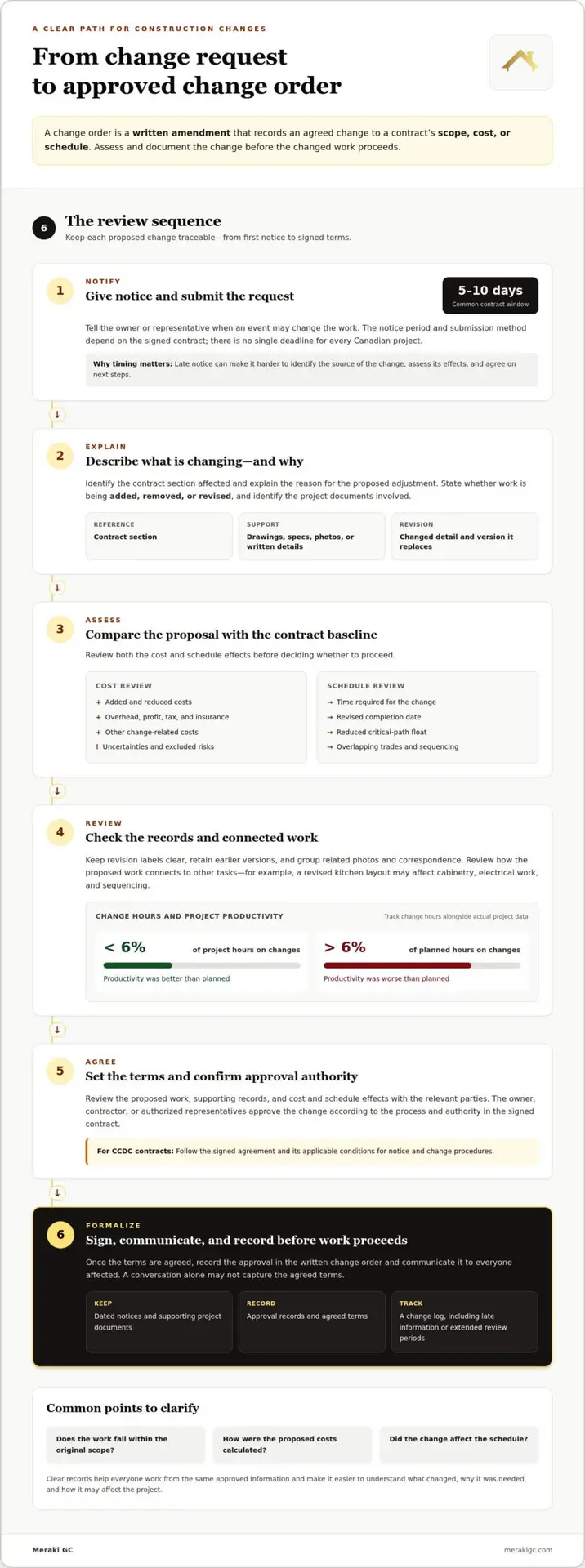
A change order is more than paperwork: it’s the written agreement that changes a construction contract’s scope, cost or schedule. Effective change order management in construction means notifying the owner when a scope change becomes apparent and assessing its cost and timing before the work proceeds. Construction contracts commonly set a 5-10-day window for notice, though the exact timeframe varies by contract.
It’s reasonable to worry that a change could lead to an unexpected cost or delay. Clear documentation helps everyone understand what is changing, why it is needed, and how it may affect the project.
This article explains what a construction change order is, why it matters, and how contractors notify clients and assess its impact. You’ll also learn what to look for in a change request so you can make informed decisions as your project moves forward.
Key Takeaways
- Recognize when a requested or unexpected change may affect the contract’s agreed scope, cost or schedule.
- Look for a clear written record of what is changing, why it is needed and which project documents are affected.
- Assess the proposed work against the original plan, including how it could affect sequencing and completion timing.
- Structured planning and transparent communication can help homeowners understand changes before they shape the project.
Contractor change notification and impact assessment
Prompt notice gives the parties a chance to assess a proposed change before it affects the approved scope, budget, or schedule. The contract sets out the process, while clear records explain the decision and its effects.
Change Notification and Notice Requirements
A change notice tells the owner or their representative that an event may alter the contractor’s scope of work. Construction contracts commonly require notice within 5-10 days, but the deadline varies by contract. For Canadian projects, follow the notice period and submission method in the signed agreement; there is no single deadline that applies to every contract. Timely notice matters because late notice can make it harder to determine the change’s source, review its effects, and agree on next steps.
Assessing Cost, Schedule, and Productivity Impacts
An impact assessment compares proposed work with the contract baseline to determine its cost and schedule effects. The estimate should identify added and reduced costs, overhead, profit, tax, insurance, and other change-related costs, and state any uncertainties or excluded risks. Review the schedule for the time required, a revised completion date, reduced critical-path float, or overlapping trades. These details help the parties weigh the change before approving it.
Changes can also affect productivity. Project productivity was better than planned when less than six percent of project hours went to changes, and worse than planned when more than six percent of planned hours went to changes. Tracking change hours alongside actual project data can help reveal disruption early.
CCDC Processes and Change Order Disputes
Under a CCDC contract, notice and change procedures depend on the signed contract and its applicable conditions. The parties should follow those terms, document the proposed work and its cost and schedule effects, and secure approval before treating the change as agreed. Common disputes concern whether work falls within the original scope, how costs were calculated, and whether a change caused delays.
To reduce disagreements, keep dated notices, supporting project documents, approval records, and a change log that captures late information or extended review periods. Review the evidence and impacts with relevant parties before submitting the change. Once terms are agreed, record the approval and communicate it to everyone affected.
What is a construction change order?
A change order is a written amendment that formally changes a construction contract’s scope, cost, or schedule. On an Ottawa home build, a revised drawing or different finish may need documented review before the work changes.
Initiating and Justifying Change Requests
A change request records a proposed adjustment and why it is needed. An owner, designer, contractor, or other stakeholder may raise one when plans, materials, or site conditions call for different work. The request should identify the affected contract section and explain the technical basis, using relevant drawings, specifications, photographs, or written details. This gives owners a clear basis for assessing whether the request fits the project.
Change Descriptions and Supporting Records
A complete change record describes the work being added, removed, or revised and identifies the affected project documents. It should explain what each party will provide and refer to the original contract. For example, a drawing revision should identify the changed detail and the version it replaces. Construction software can connect design, material quantities, costs, and schedule data, helping teams compare a proposed revision with the current baseline.
Consistent document control matters: label each revision, retain earlier versions, and keep related photos and correspondence together. These records help owners and contractors work from accurate information instead of conflicting plans.
Approvals and Process Steps
The owner and contractor, or their authorized representatives, approve a change according to the authority and process set out in their construction contract. The process is to submit the request, document its justification, assess scope and impacts, review supporting records, agree on terms, then sign and communicate the formal change. Record approval before changed work proceeds, since a conversation alone may not capture the agreed terms.
For homeowners planning a project, structured project planning can establish clear documentation and review practices before construction begins.
Definition and purpose of construction change orders
A construction change order is a written amendment to the original contract that records an agreed change to scope, cost, or schedule. Change order management in construction is the process of evaluating, documenting, approving, and tracking those amendments so project decisions remain clear.
Meaning of a Construction Change Order
The signed change order formally records what the parties have agreed to change. It distinguishes new work from the original contract, such as replacing a specified finish or revising an installation detail. That distinction matters when owners review invoices, completion dates, or later requests. Without a clear record, the parties may disagree about whether the work was included from the start.
A change directive is different: it is an owner’s instruction to change work under the contract, while cost and schedule effects may be determined afterward. The written change order records the agreed terms once those effects have been assessed.
Purpose of Change Order Management
A consistent change order process gives each proposed revision a traceable path from request to signed agreement. It connects the reason for the change with its cost, schedule, and supporting project records. For example, a revised kitchen layout can affect cabinetry, electrical work, and sequencing. Assessing those connections together helps reveal conflicts before crews proceed.
Good records also help minimize disputes by showing which version was approved, when the decision was made, and what the original contract required. Keep the request, revised drawings, estimate, approval, and final record together. If terms remain unresolved, document the open issue rather than treating it as agreed. This keeps the project’s decision history useful for later reviews.
For a home build, plan your project with a structured process so scope decisions and documentation have a clear place from the outset.
Meraki General Contracting: Custom Home Theater Design and Build
Meraki General Contracting brings structured planning and project management to residential construction, including custom home theatre design and build projects. If you’re planning a home transformation, a clear scope and early coordination can make decisions easier to assess as the work develops.
Meraki’s Measured, Managed, MasterCrafted process focuses on project scoping and data-driven pricing before construction begins. For a home theatre, basement renovation, or home automation integration, early planning helps define the work and clarify how project decisions connect. Design-build project management coordinates planning and construction, with communication focused on the homeowner’s interests.
If you’re planning a project in Ottawa or Prescott-Russell, contact Meraki General Contracting or visit merakigc.com to discuss your next step.
Set a Clear Direction for Your Next Project
Before work begins, decide how project decisions will be handled if your priorities shift. A useful conversation with your contractor can clarify who will review proposed changes, how their effects will be explained, and what record you’ll receive before agreeing. That shared understanding gives you a clearer basis for choices as the project moves forward.
Thoughtful change order management in construction is not about avoiding every adjustment. It is about making each decision deliberately, with the right people involved and the project’s goals in view. If you’re planning a home project and want to discuss a clear, structured approach, contact Meraki General Contracting.
Your next project can start with clear priorities and informed decisions.
Frequently Asked Questions
What should a construction change order form include?
A useful form identifies the request, affected work, and any drawings or specifications that need revision. For an Ottawa or Prescott-Russell project, note whether the change affects drawings used for a permit application. Keep project records aligned with the current design, and address any required plan updates through the applicable local process.
How do you price and estimate construction change orders?
Use the pricing method set out in the contract, such as unit prices, cost-plus, or time and materials. Separate labour, materials, equipment, and applicable markups, then state the estimate’s assumptions. Comparing the estimate’s basis with the contract’s pricing method helps homeowners see whether both parties are assessing the proposed work on the same terms.
How do change orders affect construction schedules and project budgets?
A change may affect the sequence of work as well as the remaining budget. In Ottawa and Prescott-Russell, a revision that affects drawings or selections tied to other work may require the team to coordinate those decisions before proceeding. Ask which upcoming tasks depend on the change and whether local review of revised plans affects the project sequence.
How should contractors document, track, and manage change orders?
Keep one current record for each proposed change, including its status, related drawings, and decision history. On a residential project in Prescott-Russell or Ottawa, keep permit-related plans with the corresponding revisions so the team can identify which design is current. Homeowners should retain the latest records and note which decisions remain open.
What software is best for construction change order management in Canada?
No single software choice suits every residential project. Choose a system the team can use consistently to keep current drawings, decisions, and records together. For Ottawa-area work, consider whether it can organize permit-related plans alongside project revisions, control access for the people involved, and make current information easy for homeowners to find.
What this means for you
For a home project in Ottawa or Prescott-Russell, track decisions that may affect drawings, selections, or the order of work. Ask how a proposed revision relates to current project documents and what decision you need to make next. This helps you stay involved while the project team coordinates the details.

Article by
~ Jason Bourguignon
Jason has been passionate about building homes from a young age, starting his first successful construction company at age 21. With experience across nearly every sector of the industry, he brings a hands-on understanding of the entire building process. For over two decades, he has managed hundreds of custom home builds, additions, and renovations with some single projects exceeding $2.5M. Jason does not just focus on construction, but also helps homeowners create spaces they truly call home.
Disclaimer
The information in this article is provided for general educational purposes only and is based on typical renovation scenarios in Ontario. Every project is unique, and actual costs, timelines, and requirements may vary. This content does not constitute professional, legal, or engineering advice. We recommend consulting with a qualified contractor or specialist for your specific project.