For homeowners planning renovations in Ottawa and Prescott-Russell, a contractor’s payment request deserves as much scrutiny as the finished quote. Signs of a bad contractor include asking for more than 15% upfront without a clear explanation, demanding full payment before the work is done, or avoiding a written agreement. Payments should be tied to project milestones, with the scope and terms set out in writing.
It’s reasonable to want work to start promptly and the budget to stay under control. But pressure to pay or sign quickly can leave you exposed if the work is delayed, incomplete, or different from what you expected. This guide explains what to watch for in deposits and milestone payments, what a written agreement should cover, and which questions can help you assess a contractor before work begins. It also covers warning signs that may emerge during construction, so you can make decisions with a clearer view of the risks.
Key Takeaways
- Match each payment to a clear project milestone, and ask for a written explanation of any substantial upfront material costs.
- Before work begins, review the contractor’s licence and insurance documents, and look for clear answers about site safety and permit responsibilities.
- Make sure the written agreement spells out the work, payment terms, schedule, exclusions, and how changes will be handled.
- Compare the contract details with what you’ve been told, and pause if there’s pressure to sign or pay before the terms are clear.
1. Large upfront payments and milestone-based draws
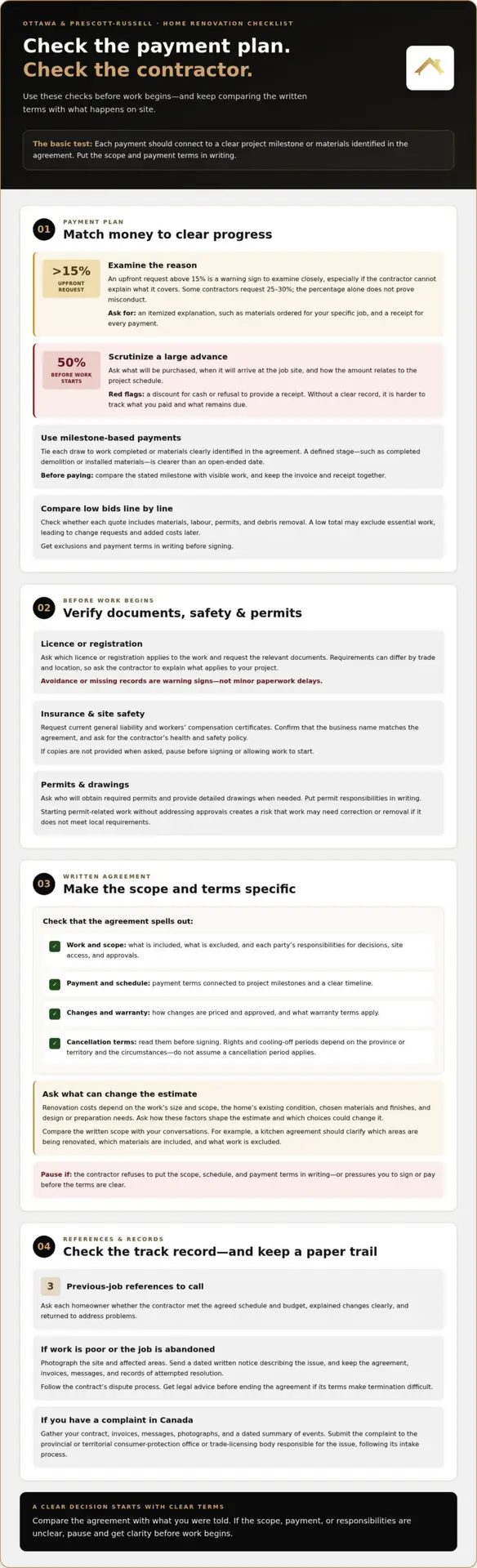
A payment plan should connect each draw to work completed or materials clearly identified in the agreement. An upfront request above 15% of the project cost is a warning sign to examine closely, especially if the contractor cannot explain what the deposit covers. Some contractors request 25 to 30% upfront, so the percentage alone doesn’t prove misconduct. Ask for an itemized reason, such as materials ordered for your specific job, and a receipt for every payment.
A demand for 50% before work begins deserves careful scrutiny. Ask what will be purchased, when it will arrive at the job site, and how the amount relates to the project schedule. A discount for cash or a refusal to provide a receipt is a red flag: without a clear record, it’s harder to track what you paid and what remains due.
Milestone-based payments make it easier to compare what you pay with the progress made. A contract might tie a payment to a defined stage, such as completed demolition or installed materials, rather than an open-ended date. Before paying, compare the stated milestone with the visible work and keep the invoice and receipt together.
An unusually low bid can also create payment risks. Compare quotes and ask what each includes, such as materials, labour, permits, and debris removal. A low total may exclude essential work, leading to change requests and added costs later. Get exclusions and payment terms in writing before signing. These practical checks can help distinguish a well-planned payment schedule from warning signs that call for a pause.
2. What Are the Signs of a Bad General Contractor?
In Ottawa, ask which licence or registration applies to the work and request the contractor’s relevant documents. Requirements can differ by trade and location, so the contractor should explain what applies to your project. If they avoid the question or can’t show relevant records, treat it as a warning sign, not a minor paperwork delay.
Ask for current general liability and workers’ compensation certificates, and confirm that the business name matches the agreement. These documents clarify who is insured and what coverage is in place. Request the contractor’s health and safety policy, too. If they don’t provide copies when asked, pause before signing or allowing work to start.
Permits matter, too. Ask who will obtain any required permits and provide detailed drawings when needed. A contractor who proposes starting permit-related work without addressing approvals creates a practical risk: work may need correction or removal if it doesn’t meet local requirements. Put permit responsibilities in writing.
Speak by phone with three references from previous jobs. Ask each homeowner whether the contractor met the agreed schedule and budget, explained changes clearly, and returned to address problems. If you have a complaint in Canada, gather your contract, invoices, messages, photographs, and a dated summary of events. Then submit it to the provincial or territorial consumer-protection office or trade-licensing body responsible for the issue, following its intake process.
For a project that needs coordinated construction oversight, review general contracting services and note how responsibilities are organized before work begins.
3. Contract quality and written agreements
Before hiring, get the quote and agreement in writing, even if the contractor seems trustworthy. Renovation costs depend on the work’s size and scope, the home’s existing condition, chosen materials and finishes, and the project’s design or preparation needs. Ask how these factors shape the estimate and which choices could change it. The agreement should describe the work, timeline, exclusions, warranty, and how changes are priced and approved.
Compare the written scope with your conversations and the contractor’s portfolio. For example, a kitchen agreement should clarify which areas are being renovated, what materials are included, and what work is excluded. It should identify each party’s responsibilities for decisions, site access, and approvals. A clear breakdown helps you understand how the proposed work relates to the estimate.
Renovation rights and cooling-off periods depend on the province or territory and the circumstances of the agreement. Don’t assume a cancellation period applies. Read the contract’s cancellation terms before signing. If a contractor refuses to put the scope, schedule, and payment terms in writing, treat that refusal as a serious warning sign.
If a contractor abandons the job or delivers poor-quality work, photograph the site and affected areas, then send a dated written notice describing the issue. Keep the agreement, invoices, messages, and records of attempted resolution. Follow the contract’s dispute process, and get legal advice before ending the agreement if its terms make termination difficult. For a major renovation, structured project planning can clarify responsibilities and decisions before construction begins.
Meraki General Contracting: Custom Home Theater Design and Build
Meraki General Contracting designs and builds custom home theatres, basement renovations, and home automation projects, with the scope defined before construction begins. Its design-build project management follows the Measured, Managed, MasterCrafted process, with project scoping and data-driven pricing before construction. This planning helps clarify what the work includes and supports informed decisions before you commit. For a complex renovation, bring your goals and questions into the planning conversation so the project’s scope and key decisions can be addressed early. If you’re planning one of these projects in Ottawa or Prescott-Russell, contact Meraki General Contracting to discuss your plans.
Make Your Next Contractor Decision With Confidence
Recognizing the signs of a bad contractor is a first step. Before committing, put your priorities, questions, and preferred outcomes into a clear project brief. It gives you a practical reference for comparing proposals and discussing changes as the work develops. Document decisions and approvals as the project progresses, so expectations stay visible to everyone involved.
A major renovation can feel easier to manage when the planning conversation is clear from the start. You can use that conversation to explain what matters most in your home and understand how the proposed work will be approached. If you’re ready to discuss your plans, contact Meraki General Contracting. A thoughtful next step can help you move forward with greater clarity and confidence.
Frequently Asked Questions
What Are the Signs of a Bad General Contractor?
Watch for patterns that make a project hard to manage: missed appointments, inconsistent explanations, or repeated schedule changes without a clear reason. A delay may have a valid cause, but the contractor should explain its effect on the work and the next steps. Keep a dated record of commitments and updates; it can help distinguish a one-time problem from a recurring communication breakdown.
What are the most common signs of a bad contractor?
Common warning signs include pressure to decide before you understand the proposal, reluctance to document changes, and poor communication once work starts. These signs of a bad contractor matter most when they occur together or continue after you raise concerns. For example, note whether a promised update arrives and whether revised work is recorded before it proceeds. A clear record helps you assess what is happening.
How can I verify a contractor’s licence, insurance, and references in Canada?
Identify which licence or registration applies to the specific work and location, since requirements can vary. Compare the name on the contractor’s documents with the business named in your agreement. Speak directly with past customers and ask for a specific example of how the contractor handled an unexpected issue, not just whether they liked the finished result.
How can I spot an unusually low or high renovation quote?
Compare quotes line by line, not just by their totals. Check whether each uses similar materials, includes the same rooms and tasks, and accounts for preparation, cleanup, and finishing. Ask for an explanation of any major difference, and note assumptions or allowances that could change later. A higher quote may cover more work; a lower one may leave important tasks outside its scope.
What are the warning signs of contractor scams, pressure tactics, or cash-only demands?
Be cautious if someone creates urgency, changes payment instructions unexpectedly, or asks you to decide before reviewing the paperwork. Confirm changes through a communication channel you have already used, and keep written records of requests and approvals. If a demand seems inconsistent with the signed agreement, pause the transaction and resolve the discrepancy in writing before proceeding.
What this means for you
After each contractor conversation, write down what you understood, what remains undecided, and who will follow up. This simple project note gives you a consistent reference as plans develop and helps keep your priorities clear.

Article by
~ Jason Bourguignon
Jason has been passionate about building homes from a young age, starting his first successful construction company at age 21. With experience across nearly every sector of the industry, he brings a hands-on understanding of the entire building process. For over two decades, he has managed hundreds of custom home builds, additions, and renovations with some single projects exceeding $2.5M. Jason does not just focus on construction, but also helps homeowners create spaces they truly call home.
Disclaimer
The information in this article is provided for general educational purposes only and is based on typical renovation scenarios in Ontario. Every project is unique, and actual costs, timelines, and requirements may vary. This content does not constitute professional, legal, or engineering advice. We recommend consulting with a qualified contractor or specialist for your specific project.