Trust in a six-figure renovation isn’t a gut feeling; it’s a verifiable data point. Most homeowners we speak to in the Ottawa and Prescott-Russell area share the same underlying fear. They worry that a lack of transparency or a misunderstanding of local building codes will turn their investment into a financial burden. It’s a valid concern, especially when you consider that starting work without a permit in the City of Ottawa now carries a 50% administrative surcharge. Finding a trustworthy contractor in Ottawa shouldn’t feel like a gamble with your home’s equity.
We believe that clarity is the antidote to anxiety. This article provides a data-driven framework to help you identify reliable partners and avoid the common pitfalls of high-stakes projects. You’ll learn how to navigate the 2026 Ontario Building Code updates, what specific risks to watch for during the planning phase, and the exact questions you need to ask to ensure your contractor is an expert extension of your own goals. We’ll give you a clear vetting checklist so you can move forward with absolute confidence in your chosen partner.
Key Takeaways
- Spot “guesstimate” traps and understand why low initial quotes often signal missing insurance or WSIB coverage.
- Master a framework for finding a trustworthy contractor in Ottawa by verifying essential credentials like $5M liability insurance.
- Learn how the design-build approach eliminates the accountability gaps that frequently cause budget overruns.
- Move from vague estimates to project certainties by applying a structured pre-construction scoping process.
- Understand how to manage local variables, such as Ottawa’s strict permitting requirements and seasonal labour shifts.
The Ottawa Renovation Landscape: Identifying Red Flags in 2026
Finding a trustworthy contractor in Ottawa is complicated by the city’s unique operational environment. Between the intense seasonal labour shifts and the City of Ottawa’s rigorous municipal oversight, the margin for error is thin. Most homeowners we speak to are surprised by how quickly a project can stall when a general contractor lacks a deep understanding of local logistics and permitting timelines.
One of the most dangerous signals is the “guesstimate” trap. If a quote arrives significantly lower than others, it often points to a lack of professional liability insurance or expired WSIB coverage. In Ontario, a WSIB clearance certificate is only valid for 90 days. If your contractor can’t provide a current one, you’re effectively assuming the risk for any on-site injuries, which can lead to devastating financial liability.
Another major warning sign is a suggestion to bypass Ottawa renovation permits. Reputable firms know that permits are non-negotiable for protecting your property value and ensuring structural integrity. In 2026, starting work without a permit in Ottawa triggers a 50% administrative surcharge, potentially costing you up to $10,000 before you even address the actual construction issues.
What Can Go Wrong? The Cost of Misalignment
Here’s where projects go wrong: unmanaged change orders. On a $200,000 renovation, poor planning can lead to budget creep of 30% or more. Beyond the money, poor scheduling leads to the “forever unfinished” basement syndrome, where projects drag on for months past their deadline because of trade availability issues. Scope creep is the primary cause of project failure in the Prescott-Russell region.
What to Watch For: The Signs of a Professional Firm
Finding a trustworthy contractor in Ottawa requires looking for institutional-grade communication and transparency. Professional firms use live project dashboards rather than sporadic text messages to keep you informed about timelines and selections. They also maintain a specialized focus. When you’re researching Custom Home Builders in Ottawa, look for teams that prioritize structured planning and clear documentation over a “jack-of-all-trades” approach.
This level of professional proof is vital in any service-based partnership; for example, corporate communication specialists often encourage clients to explore Case Studies to demonstrate their strategic process. You should expect the same degree of transparency from a high-end builder.
What this means for you
A lack of documentation is a lack of protection for your property value. Without proper permits, insurance, and written contracts, you have no legal or financial safety net if the work is substandard or incomplete. Professional oversight isn’t an extra cost; it’s the mechanism that secures your investment and ensures your home remains a high-value asset.
The Framework for Verification: 5 Non-Negotiables for Your Contractor
Finding a trustworthy contractor in Ottawa requires moving past surface-level reviews. You need a technical vetting process that mirrors high-level financial due diligence. Start with insurance. A professional firm operating at this scale should carry at least $5M in liability coverage. This level of protection is essential for high-stakes renovations, while a current WSIB standing ensures you aren’t liable for workplace injuries. These aren’t just boxes to check; they are the foundation of avoiding home improvement scams and ensuring long-term project stability.
The design-build model is another critical pillar for success. When you separate the architect from the builder, you create a natural accountability gap. If a design can’t be built within your budget, the designer often blames the builder, and the builder blames the plans. An integrated team owns the entire lifecycle of the project, ensuring that every design choice is rooted in construction reality and financial feasibility.
Demand transparency through technology. You should have 24/7 access to a live project dashboard that tracks every dollar and every deadline. If a contractor relies on memory or messy spreadsheets, they’re managing by accident, not by design. Real-time data access is the only way to maintain confidence in a project of this complexity.
What Should I Ask My Contractor?
Ask how they handle the inevitable surprises in older Ottawa neighbourhoods like Westboro or the Glebe. A professional firm will explain their pre-construction planning phase in detail and offer fixed-price commitments. Ask to see a live dashboard from a current project. If they can’t show you how they manage data in real-time, they likely aren’t equipped for a high-stakes renovation.
The ‘Trusted Advisor’ Model vs. The Transactional Builder
Trust is built on honest, sometimes difficult, conversations about budget reality. A transactional builder tells you what you want to hear to get the deposit. A trusted advisor tells you what you need to hear to protect your investment. This consultant mindset is what differentiates a seamless experience from a stressful one. You can see how this objective approach works by exploring why transparency matters in high-end builds.
What this means for you: You are hiring a project manager who happens to build, not just a craftsman. At the $100K to $500K level, you are paying for the mitigation of risk and the professional execution of a complex plan. Finding a trustworthy contractor in Ottawa means choosing a partner who values your financial security as much as the final aesthetic.

From Scoping to Completion: How Data-Driven Planning Ensures Trust
Finding a trustworthy contractor in Ottawa means looking for a firm that treats your renovation like a capital investment rather than a series of tasks. The ‘Measured, Managed, MasterCrafted’ approach is designed to move your project from vague estimates to mathematical certainties. When you invest in professional project management, you aren’t just paying for labour; you’re investing in risk mitigation. This structured oversight ensures that home automation systems and custom architectural features are integrated seamlessly, future-proofing your property value against changing technology and market standards.
The Pre-Construction Phase: Your Safety Net
Detailed scoping is the only way to avoid the ‘hidden costs’ that often plague older Ottawa homes. Whether it’s upgrading outdated electrical panels or addressing legacy plumbing issues in a sub-floor, these variables must be identified before the first wall is opened. For instance, our Basement Renovations in Ottawa guide highlights how regional code requirements can impact your initial budget if not properly assessed. A fixed-fee design phase is the most effective way to prevent six-figure budget overruns by locking in specifications early. According to Consumer Protection Ontario’s guide to hiring a contractor, having a clear, written agreement is your most powerful tool for project security.
Final Steps: Choosing Your Partner
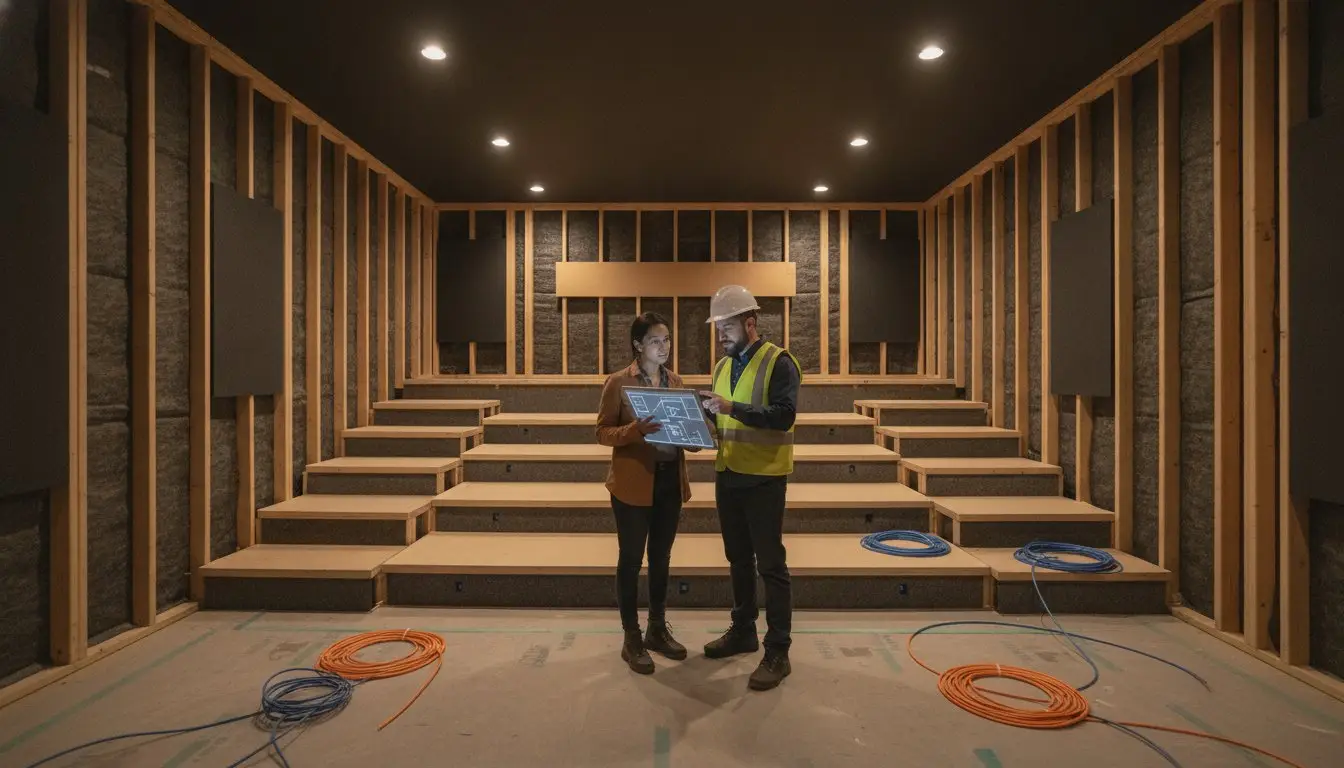
Most homeowners we speak to are tired of the low-bid race that inevitably leads to cutting corners or unexpected delays. Meraki prioritizes transparency and proactive communication over competing on price alone. Whether you’re planning a custom home theater or a full-scale addition, the process should feel like a partnership. A structured start is the only way to guarantee a structured finish. If you’re ready to move beyond guesstimates, you can schedule your data-driven project consultation with Meraki GC to see how our planning phase protects your interests.
Securing Your Investment with Professional Oversight
Your home is likely your most significant asset. Protecting it requires more than just a handshake; it requires a commitment to rigorous standards and absolute transparency. We’ve explored how identifying red flags early and insisting on a design-build model can eliminate the accountability gaps that lead to project failure. Finding a trustworthy contractor in Ottawa isn’t about luck. It’s about selecting a partner who utilizes real-time data and structured planning to manage the complexities of a major renovation.
At Meraki, we specialize in high-stakes residential transformations between $100K and $500K. Our proprietary 3-step project management process and live project dashboards ensure you’re never in the dark about your budget or timeline. When you’re ready to move from uncertainty to a mastercrafted result, Book a ‘Measured, Managed, MasterCrafted’ Consultation. Your vision deserves the security of a professional framework. We’re here to help you build with confidence.
Frequently Asked Questions
How much does a high-end renovation cost in Ottawa in 2026?
High-end renovation costs depend on the architectural complexity, material selections, and structural requirements of your specific project. Rather than focusing on a generic price per square foot, it is more accurate to view the cost as an investment in professional risk mitigation and specialized craftsmanship. Factors such as the 2026 City of Ottawa permit fees and the current rates for skilled trades like electricians and plumbers will influence the total. A fixed-fee design phase is the most reliable way to establish a certain budget before construction begins.
What is the difference between a general contractor and a design-build firm?
A design-build firm integrates the design and construction phases into a single, unified workflow, while a general contractor typically builds from plans provided by an outside architect. This integrated approach eliminates the common accountability gaps that lead to budget creep and scheduling delays. By keeping the design and build teams under one roof, you ensure that every aesthetic choice is grounded in construction reality. It provides a seamless experience with a single point of responsibility for your entire project.
What permits are required for a basement renovation in the City of Ottawa?
Most basement projects require a building permit from the City of Ottawa, especially if you are altering the structure, adding plumbing, or creating a secondary suite. Finding a trustworthy contractor in Ottawa means working with a partner who understands the 2026 Ontario Building Code updates, such as mandatory carbon monoxide alarms on every floor. Failing to secure a permit can result in a 50% administrative surcharge. Professional firms handle these applications on your behalf to ensure your home remains fully compliant and insurable.
How can I verify if an Ottawa contractor has valid WSIB insurance?
You can verify a contractor’s insurance status by requesting a WSIB clearance certificate or using the WSIB’s online eClearance portal. These certificates confirm that the firm is in good standing and are only valid for 90 days, with fixed quarterly expiry dates in February, May, August, and November. Checking this is a critical step in finding a trustworthy contractor in Ottawa. Current WSIB coverage is essential because it protects you from being held personally liable if a worker is injured while working on your property.

Article by
~ Jason Bourguignon
Jason has been passionate about building homes from a young age, starting his first successful construction company at age 21. With experience across nearly every sector of the industry, he brings a hands-on understanding of the entire building process. For over two decades, he has managed hundreds of custom home builds, additions, and renovations with some single projects exceeding $2.5M. Jason does not just focus on construction, but also helps homeowners create spaces they truly call home.
Disclaimer
The information in this article is provided for general educational purposes only and is based on typical renovation scenarios in Ontario. Every project is unique, and actual costs, timelines, and requirements may vary. This content does not constitute professional, legal, or engineering advice. We recommend consulting with a qualified contractor or specialist for your specific project.