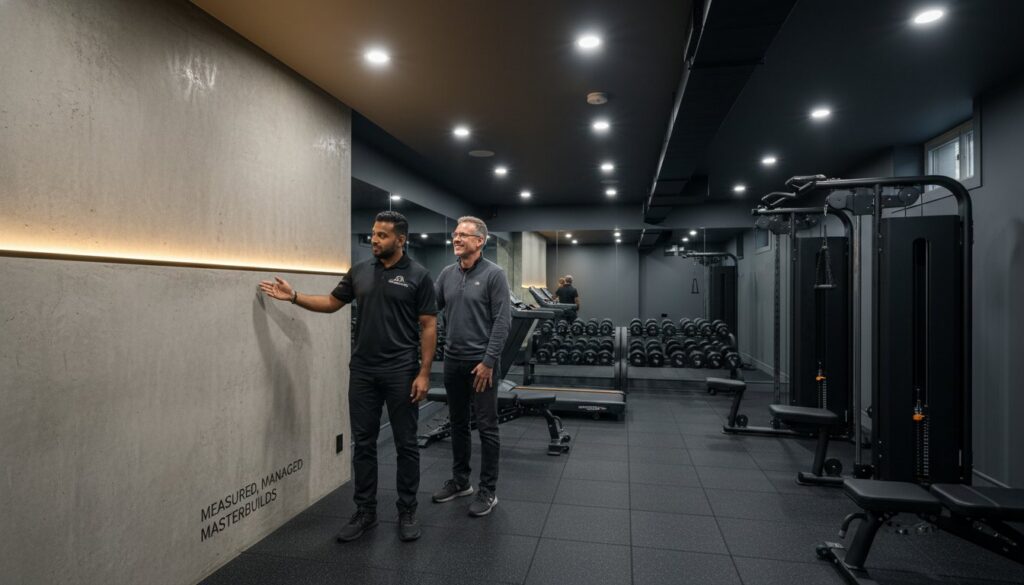
A home gym in basement conversion is far more than a collection of weights and mirrors. It is a high-stakes structural renovation that requires the same precision and environmental control as a primary living suite. Most homeowners we speak to in the Ottawa and Prescott-Russell area are eager to invest in their health, yet they often feel a justified anxiety regarding subterranean moisture, ceiling height restrictions, and the risk of budget overruns. It’s common to worry that a project of this scale might face contractor delays or fail to meet the strict local building codes required for habitable spaces.
We understand that when you’re planning a significant investment in your home, you need a partner who prioritizes transparency and engineering over simple aesthetics. This guide will help you navigate the structural, financial, and technical complexities of a high-end basement gym. You’ll learn how to manage climate control effectively, secure the necessary Ottawa building permits, and ensure your project stays on budget through data-driven planning. We’ll break down the essential questions you must ask your contractor to ensure your new fitness suite delivers both personal wellness and a measurable increase in property value.
Key Takeaways
- Understand why a successful home gym in basement conversion depends on environmental engineering and structural transformation rather than just cosmetic upgrades.
- Explore a structured design-build framework to ensure your project remains on schedule and aligned with your specific fitness requirements.
- Learn how a rigorous structural audit identifies potential conflicts with ceiling heights and ductwork before they become costly delays.
- Discover the specific value drivers that protect your investment and help you avoid the common pitfall of significant unexpected change orders.
Strategic Considerations for a High-End Basement Gym Conversion
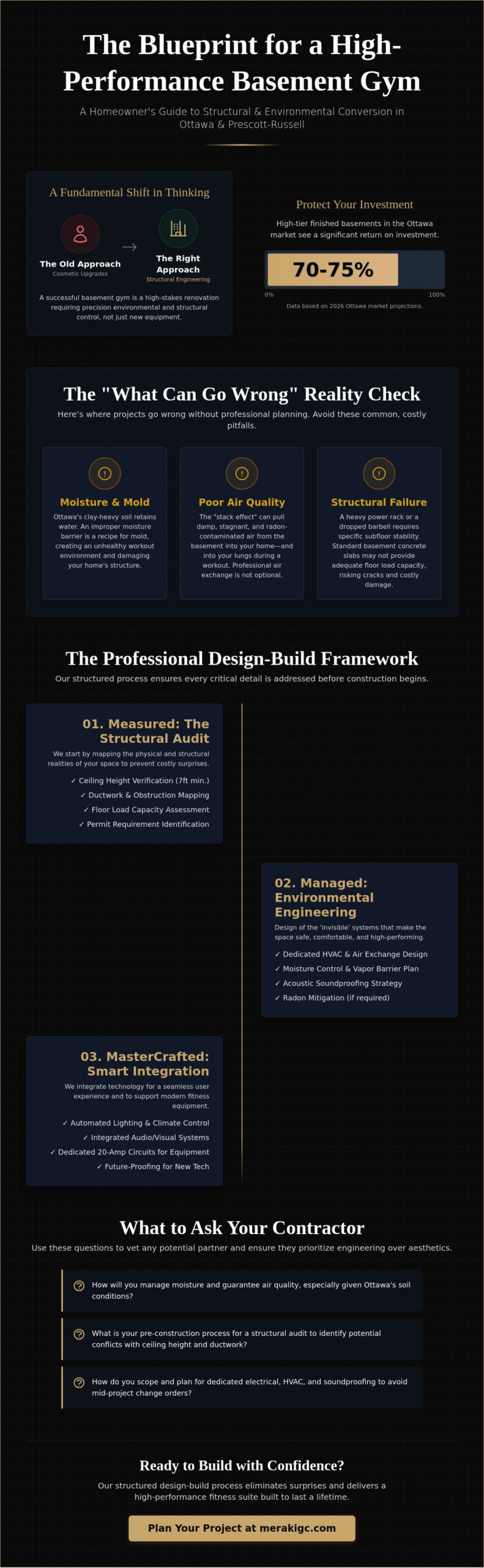
Most homeowners we speak to begin their journey by browsing equipment, but a successful home gym in basement conversion starts with the foundation. A professional conversion is a total structural and environmental transformation of underutilized square footage. In the Ottawa market, high-tier residential renovations that include finished basements can see a return on investment of 70% to 75% as of 2026. Beyond the financial gain, a professionally managed project ensures the space feels like a seamless extension of your home rather than a subterranean after-thought.
We approach these projects through the lens of “fitness architecture,” which is a central pillar of our structured planning process. This means balancing your desired equipment layout with the existing structural integrity of the home. Before you review a comprehensive overview of exercise equipment to fill the space, you must address the subterranean realities that often lead to project failure.
The “What Can Go Wrong” Reality Check
Here’s where projects go wrong: moisture and air quality. Ottawa’s clay-heavy soil retains significant water. This makes improper moisture barriers a recipe for mold. Additionally, the “stack effect” in a home can pull damp, stagnant air from the basement into your lungs during a workout. Without professional air exchange systems, your high-end gym becomes an unhealthy environment. We also see structural pitfalls where homeowners ignore floor load capacities. A heavy power rack requires specific subfloor stability that standard basement slabs might not provide.
Ottawa Regional Requirements and Permitting
Navigating the local landscape is essential for a legal and safe home gym in basement conversion. In Ottawa, you’ll need building permits for any structural modifications or new electrical circuits. This isn’t just red tape; it’s a safety requirement. Regional challenges like radon mitigation and foundation insulation standards are also critical. In 2026, meeting these codes is the difference between a high-value asset and a liability during a future home inspection.
The Design-Build Framework: Converting Your Basement into a Performance Suite
A professional home gym in basement conversion requires a rigorous methodology that moves beyond simple equipment placement. We utilize a framework defined as Measured, Managed, and MasterCrafted to ensure your investment results in a high-performance environment. This process begins with a Structural Audit. We assess ceiling heights against the 2026 IRC requirement of seven feet and identify ductwork that needs relocation to maximize overhead space. Ensuring your environment supports exercise safety guidelines begins with this structural layout, providing the clearance needed for dynamic movements.
The second stage involves Environmental Engineering. This is where we design dedicated HVAC systems and soundproofing tailored for high-intensity use. Finally, Smart Integration connects your lighting, audio, and climate controls into a single automated system. This allows you to transition the space from a high-energy cardio zone to a calm yoga studio with a single touch. If you are ready to see how these engineering steps apply to your home, you can view our full range of design-build services.
Optimizing the Subterranean Environment
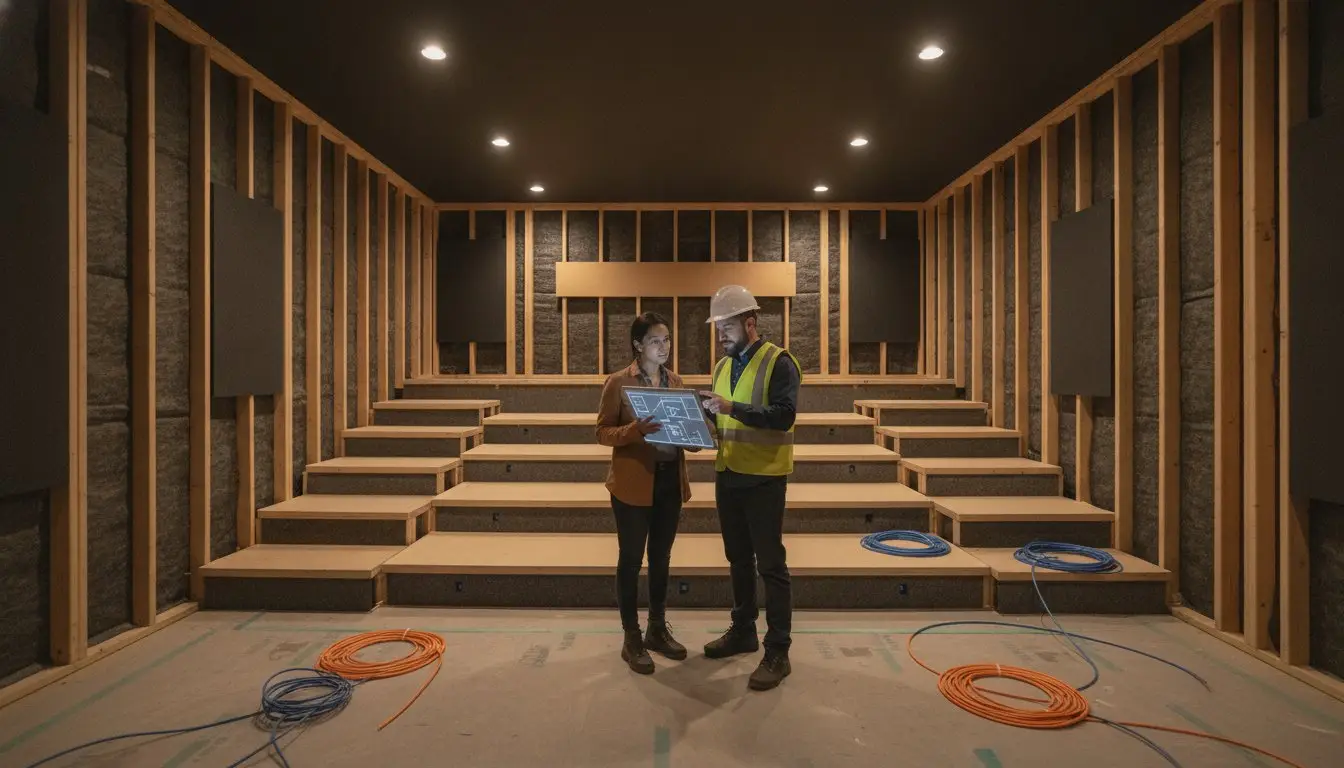
Acoustic treatments, such as resilient channels and specialized insulation, prevent the sound of heavy lifts or high-volume music from disturbing the floors above. We also install dedicated 20-amp electrical circuits to support motorized treadmills and advanced recovery technology without risk of overloading your home’s system. Independent mechanical ventilation is vital for maintaining air quality and preventing the buildup of humidity in below-grade fitness environments.
Measured & Managed: The Meraki Advantage
Here is where projects go wrong for many homeowners: a lack of detailed scoping. We use pre-construction planning to eliminate mid-project surprises and “hidden” costs. During the build phase, you have access to live dashboards that keep you informed of every milestone and schedule update. This transparency is a cornerstone of our approach to basement renovations in Ottawa, ensuring your home gym in basement conversion stays on track and within the agreed budget.
Budgeting, Risks, and the Professional Contractor Partnership
A home gym in basement conversion is a major financial commitment. When planning an investment of this scale, your budget is driven by two distinct categories: structural engineering and architectural finishes. Most homeowners we speak to are surprised to learn that the “invisible” work, such as slab reinforcement and managing basement moisture, often accounts for a larger portion of the budget than the gym equipment itself. Cutting corners on these foundational elements is where projects go wrong. A low-ball quote that ignores the complexity of subterranean environmental control often leads to $50,000 or more in unexpected change orders once the walls are opened.
The Pitfalls of Choosing the Wrong Contractor
Many generalists lack the specialized experience required for high-intensity fitness suites. They might overlook the nuances of home automation for climate control or fail to calculate the floor load requirements for heavy lifting platforms. You should prioritize partners who offer fixed-fee contracts rather than vague “estimates.” An estimate is often a guess that leaves you vulnerable to rising costs; a fixed-fee contract based on rigorous pre-construction scoping protects your interests from day one.
Your Professional Next Steps
Success in a high-end renovation depends on transparency. We believe that a data-driven approach to pricing is the only way to ensure a project stays on track. At Meraki GC, we focus on detailed planning to eliminate the ambiguity that plagues standard construction projects. If you are ready to transform your underutilized space into a high-performance asset, you can explore our specialized renovation services to see how we manage these complexities.
- What should I ask my contractor? Ask for a detailed moisture management plan and a specific breakdown of how they will handle the increased electrical and HVAC loads of a gym.
- What should I watch for? Be wary of any quote that doesn’t include a structural audit of your current basement slab and ceiling height clearances.
Your Path to a High-Performance Fitness Suite
Transitioning an underutilized basement into a high-performance fitness suite is a significant undertaking that requires more than just new equipment. It demands a commitment to structural excellence and environmental precision. By prioritizing a rigorous design-build framework, you ensure your home gym in basement conversion is built on a foundation of safety and long-term value. We’ve explored how managing moisture and securing the right permits protects your investment from the unique challenges of the Ottawa climate.
Our Measured, Managed, MasterCrafted process is designed to give you total clarity throughout the renovation. Through specialized Ottawa design-build expertise and transparent live project dashboards, we eliminate the uncertainty that often accompanies large-scale investments. You deserve a partner who values honesty and technical accuracy as much as you do. When you’re ready to move forward with confidence, we invite you to request a data-driven quote for your basement conversion. Transforming your home should be an empowering experience, and with the right planning, your new gym will serve as a cornerstone of your wellness routine for years to come.
Frequently Asked Questions
Do I need a building permit for a basement gym in Ottawa?
Yes, you need a building permit for any home gym in basement conversion that involves structural modifications, new electrical circuits, or plumbing. In Ottawa, permit fees for 2026 typically fall between $1,200 and $2,000 for projects involving major systems work. It’s a vital step to ensure your renovation is legal and safe. Most homeowners we speak to appreciate that a permit protects their property value during a future sale.
What is the minimum ceiling height required for a functional home gym?
A minimum ceiling height of seven feet is required by the 2026 International Residential Code for habitable basement spaces. While certain obstructions like ducts can sit at six feet four inches, you’ll likely want more clearance for a functional fitness suite. If your current space is too low, we often look at relocating mechanical lines or lowering the floor. It’s best to address these height requirements during the early design phase to avoid equipment limitations later.
How do I prevent moisture and mold in my basement gym?
Blocking moisture starts with installing professional vapor barriers and ensuring your foundation is properly insulated against Ottawa’s damp soil. You’ll also need an independent mechanical ventilation system to manage the humidity that builds up during a workout. This is a standard part of a professional home gym in basement conversion to keep the air clean. We prioritize these “invisible” systems to keep your training environment healthy and your home’s structure protected.
Can my basement floor support heavy weightlifting equipment?
Standard concrete slabs usually handle common equipment, but heavy power racks or deadlift platforms often require specialized subfloor reinforcement. We assess your floor’s load capacity to ensure it won’t crack under the pressure of concentrated weights. High-quality rubber tiles, which usually cost between $3 and $8 per square foot in 2026, also provide a necessary buffer. This setup keeps your equipment stable and prevents long-term damage to the concrete foundation.

Article by
~ Jason Bourguignon
Jason has been passionate about building homes from a young age, starting his first successful construction company at age 21. With experience across nearly every sector of the industry, he brings a hands-on understanding of the entire building process. For over two decades, he has managed hundreds of custom home builds, additions, and renovations with some single projects exceeding $2.5M. Jason does not just focus on construction, but also helps homeowners create spaces they truly call home.
Disclaimer
The information in this article is provided for general educational purposes only and is based on typical renovation scenarios in Ontario. Every project is unique, and actual costs, timelines, and requirements may vary. This content does not constitute professional, legal, or engineering advice. We recommend consulting with a qualified contractor or specialist for your specific project.