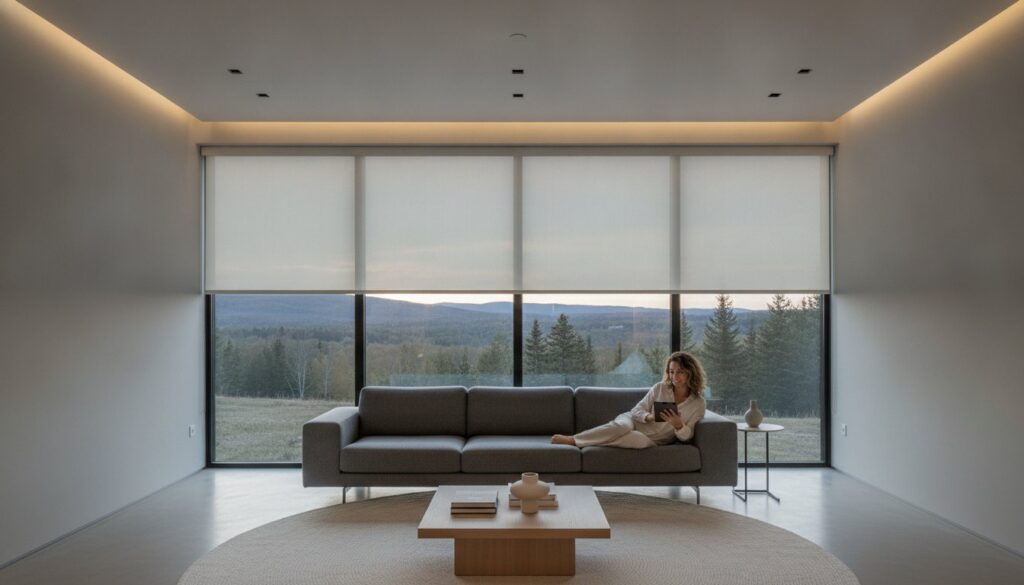
Your home should work for you, not the other way around. While many see automated tech as a series of fancy gadgets, the reality is that integrated lighting and shade control Russell homeowners are now installing is a critical investment in thermal management and long-term property value. It’s about more than just dimming the lights from your phone; it’s about creating a living space that responds to the harsh Ontario sun and our biting winters automatically.
Most homeowners we speak to feel a sense of anxiety when they think about high-end tech upgrades. You might worry about technology becoming obsolete or feel frustrated by the thought of contractors who don’t coordinate their work properly. We understand that fear. This guide will show you how to integrate professional lighting and automated shades into your renovation to enhance your comfort and security while lowering those rising energy bills. We’ll explore the real costs, the common pitfalls that lead to budget overruns, and the specific questions you need to ask your contractor to ensure your system remains seamless and reliable for years to come.
Key Takeaways
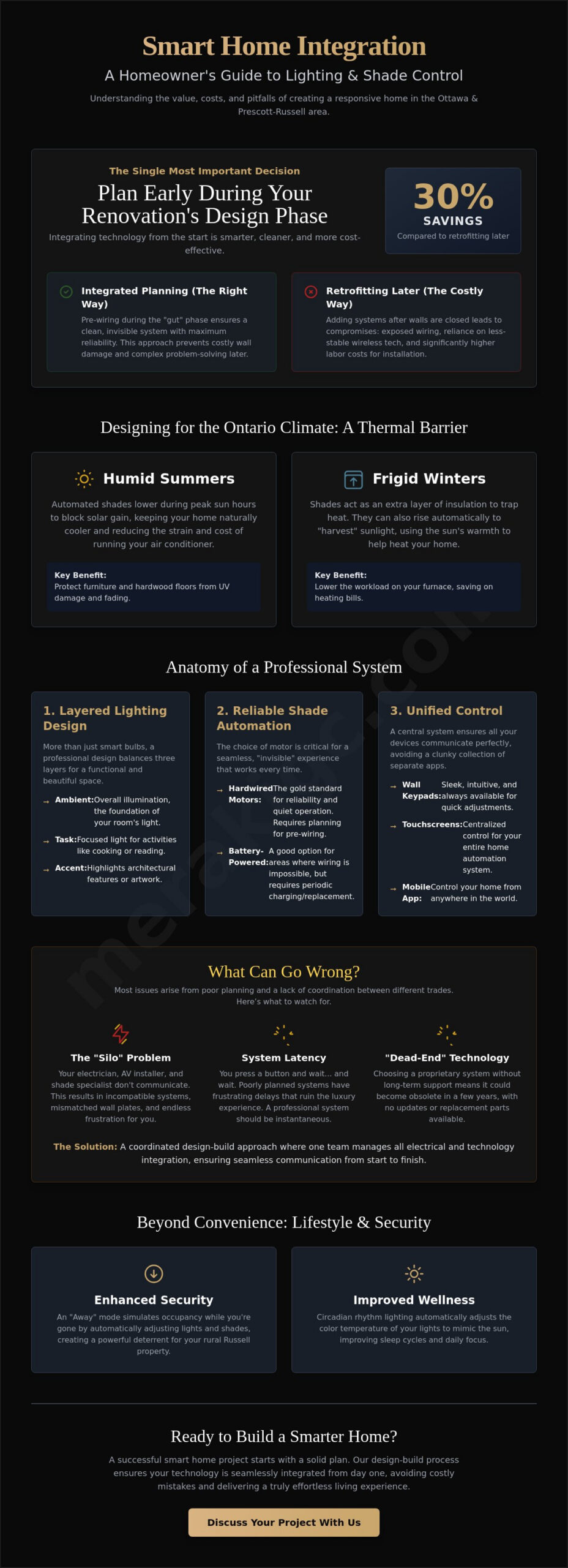
- Planning for integrated lighting and shade control Russell projects during the design phase can save you up to 30% compared to the high cost and complexity of retrofitting technology later.
- Automated shades act as a critical thermal barrier, helping your home stay cooler in humid Ontario summers and warmer during frigid winters without overworking your HVAC system.
- A professional layered lighting design balances ambient, task, and accent lights to ensure your home is as functional for cooking as it is comfortable for entertaining.
- Pre-wiring during the “gut” phase of your renovation is essential for a clean, “invisible” technology experience that avoids the eyesore of exposed cables or unreliable wireless signals.
- Using a coordinated design-build approach ensures your lighting, shades, and electrical systems are managed by one team, preventing the communication gaps that often lead to project delays.
The Value and Cost of Integrated Lighting and Shade Control in Russell
True integrated lighting and shade control Russell homeowners are looking for isn’t just a collection of apps on a phone. It’s a unified Home automation system where your window treatments and light fixtures communicate to manage your environment. Most homeowners we speak to assume they can add these features later. However, early planning is vital. Choosing to integrate these systems during the design phase of a major renovation usually prevents a 20 to 30 percent cost increase that comes with retrofitting technology after the walls are closed.
When we talk about the cost of these systems, it’s never a one-size-fits-all number. The investment depends on several variables that you should discuss with your contractor early on:
- The number of zones: How many rooms require independent control?
- Motor type: Will you use battery-powered shades or hardwired motors for better reliability?
- Control interfaces: Do you prefer sleek wall-mounted keypads or a centralized touchscreen?
In the Prescott-Russell area, our climate makes this a functional necessity rather than a luxury. By managing solar gain, your shades can automatically lower during a hot July afternoon to keep your home cool. In the winter, they rise to let the sun help heat your living space, significantly reducing the load on your HVAC system. You can see how we incorporate these details into our Home Automation System Integration services.
What Can Go Wrong: Avoiding Integration Failures
Projects often go wrong when there’s a “silo” problem. This happens when your electrician and your shade installer don’t speak the same technical language; this leads to keypads that don’t match or systems that won’t talk to each other. You should also watch for proprietary “dead-end” technology that lacks long-term manufacturer support or software updates. System latency is the frustrating delay between pressing a button and the device actually responding, and it often ruins the experience of a poorly planned system.
What This Means for You: Lifestyle and Security
For those living in more rural parts of Russell, security is often a top priority. An “Away” mode can simulate occupancy by moving shades and adjusting lights throughout the evening. This makes your home look lived-in even when you’re at the cottage. Beyond security, these systems support your health through circadian rhythm lighting. This involves automatically shifting the color temperature of your lights to mimic the sun, which helps improve your sleep cycles and daily focus. You can learn more about how we manage these complex installations through our process.
Designing for the Ontario Climate: Thermal Efficiency and Layers
Living in the Prescott-Russell area means preparing for extreme temperature swings, from humid +30°C summers to frigid -30°C winters. Most homeowners don’t realize that their windows are the weakest link in their home’s thermal envelope. By using energy efficient window treatments within an integrated lighting and shade control Russell system, you can create a secondary layer of insulation. This coordination significantly reduces the load on your HVAC system, keeping your home comfortable without overworking your furnace or air conditioner.
Beyond temperature control, you should watch for shade materials that offer high UV protection. The afternoon sun in Ontario can be intense, often bleaching custom hardwood floors and fading expensive furniture over time. High-quality automated shades protect your investment while contributing to the overall system synergy we discuss in our guide to Home Automation in Ottawa.
Managing Natural Light and Solar Gain
Sensors are the secret to true efficiency. They detect exactly when the sun hits the south side of your home and lower the shades automatically to prevent overheating. This isn’t just about comfort; it’s about “harvesting” natural light. By balancing sunlight with your interior fixtures, you reduce the need for artificial lighting during the day, which helps lower your monthly energy bills.
Architectural Lighting: Creating the “MasterCrafted” Feel
It’s a common mistake to think that a few “smart bulbs” from a big-box store equal a professional system. True architectural lighting relies on three distinct layers:
- Ambient: General illumination for safe movement and visibility.
- Task: Focused light for specific activities like cooking or reading.
- Accent: Decorative light used to highlight art or architectural features.
In the open-concept homes common in Russell, “scenes” are essential for defining different moods. A “Cinema” scene might dim the lights to 10 percent and close the black-out shades, while a “Morning” scene slowly raises the shades to wake you with natural light. If you’re planning a major renovation, reviewing our structured planning process can help you understand how these layers fit into your overall design.
Implementing Your System: The Design-Build Advantage
Successful projects aren’t accidents. They’re the result of a “Measured, Managed” approach that treats technology as a structural component rather than an afterthought. When you work with a design-build team, your integrated lighting and shade control Russell plan is baked into the architectural drawings from day one. This eliminates the guesswork that often plagues smart home projects. Most homeowners we speak to find that this structured planning prevents the frustration of hidden costs and mid-project delays.
One of the biggest mistakes we see is waiting too long to think about wiring. You must address pre-wiring during the “gut” phase of your renovation. Once the drywall is up, your options for high-reliability hardwired systems disappear, or at least become much more expensive. Integrating technology at this stage ensures all cables are hidden and the system remains stable. You can see how this tech integration fits into a larger project timeline in our guide to The Design-Build Process.
When interviewing a team, you should ask one specific question: “How will the lighting control system interface with my HVAC and security?” If they can’t explain the communication protocols between these systems, you risk ending up with expensive gadgets that don’t actually work together. Here’s where projects go wrong: assuming that different trades will automatically coordinate their work without a central plan.
Why Integration Outperforms Standalone Installs
Most homeowners are tired of the “ten app” problem. Having separate remotes for shades, lights, and the TV is a headache. A unified system follows a “one app” philosophy, or better yet, it works automatically through wall keypads so you don’t even need your phone. We also use a data-driven pricing model. This means you’ll know the exact cost of your automation before a single wire is pulled, preventing the budget overruns that happen with contractors who guess at prices.
Your Pre-Construction Checklist
- Identify your “must-have” zones like the kitchen, primary suite, and home theatre.
- Verify your network backbone. A high-end integrated lighting and shade control Russell system requires robust, professional-grade Wi-Fi to function without dropping out.
- Confirm that your contractor has a plan for software updates and long-term support.
If you’re ready to move forward, Plan your integrated home with Meraki GC to ensure your technology is handled with the same care as your architectural finishes.
Elevating Your Home’s Performance and Value
Integrating technology into a major renovation is about more than simple convenience. It’s a strategic move to manage energy efficiency and long-term property value. By choosing integrated lighting and shade control Russell homeowners can protect their interiors from UV damage and significantly reduce seasonal HVAC strain. We’ve seen how early planning during the pre-construction phase avoids the common pitfalls of technical silos and ensures your systems communicate without delay.
At Meraki, we specialize in $100K+ residential transformations where precision is non-negotiable. Our Measured, Managed, and MasterCrafted proprietary process is designed to eliminate the anxiety of hidden costs through transparent, data-driven pricing. We act as your trusted advisor, ensuring your vision is realized through structured planning and clear communication. Your home renovation should be a seamless experience that results in a more comfortable and intuitive living space.
Book a Pre-Construction Consultation for Your Russell Home to ensure your investment is protected by a team that values transparency and technical excellence. We look forward to helping you build a home that works exactly the way you live.
Frequently Asked Questions
Is integrated lighting and shade control worth the investment for a Russell home?
Yes, investing in a unified system is worth it because it directly addresses the thermal efficiency challenges of the Ontario climate. Beyond the immediate comfort of automated routines, an integrated lighting and shade control Russell system increases the market appeal of high-value properties. Most homeowners we speak to find that the reduction in energy bills and the protection of interior finishes like hardwood floors provide a measurable return on the initial capital expenditure.
Can I add automated shades and lighting after my renovation is finished?
While you can add these features after a renovation, it’s significantly more expensive and often results in visible compromises. Retrofitting usually requires battery-powered shades or surface-mounted conduits that can disrupt your home’s aesthetic. Here’s where projects go wrong: homeowners wait until the walls are closed, only to find that hardwired reliability now requires invasive and costly electrical work. We always recommend pre-wiring during the “gut” phase to keep the technology invisible.
What happens if my internet goes down? Will my lights and shades still work?
Your lights and shades will continue to function through wall keypads even if your internet connection fails. Professional-grade systems process commands locally on a central hub rather than relying on the cloud for every action. While you might lose the ability to control your home via a smartphone app from a remote location, your pre-programmed scenes and physical switches will remain fully operational. This local reliability is a hallmark of the systems we integrate.
What are the best brands for integrated home control in Canada?
The industry standards for reliability and integration in Canada are Lutron, Crestron, and Control4. These brands are widely supported by local dealers in the Ottawa and Prescott-Russell region, ensuring you have access to long-term service and software updates. When choosing a brand, you should ask your contractor about the manufacturer’s warranty and how easily the system can expand if you decide to automate additional zones in the future.

Article by
~ Jason Bourguignon
Jason has been passionate about building homes from a young age, starting his first successful construction company at age 21. With experience across nearly every sector of the industry, he brings a hands-on understanding of the entire building process. For over two decades, he has managed hundreds of custom home builds, additions, and renovations with some single projects exceeding $2.5M. Jason does not just focus on construction, but also helps homeowners create spaces they truly call home.
Disclaimer
The information in this article is provided for general educational purposes only and is based on typical renovation scenarios in Ontario. Every project is unique, and actual costs, timelines, and requirements may vary. This content does not constitute professional, legal, or engineering advice. We recommend consulting with a qualified contractor or specialist for your specific project.