The most sophisticated smart home in Ottawa isn’t defined by how many gadgets sit on your counters, but by how few of them you actually see. Most homeowners we speak to in the Ottawa and Prescott-Russell area feel overwhelmed by the sheer volume of devices hitting the market in 2026. You likely want the convenience of a modern lifestyle but fear ending up with a collection of expensive smart home features that refuse to talk to each other or become obsolete before the renovation is even finished. It’s a common anxiety, especially when you’re making a significant investment in your property.
We’re here to help you filter the noise and focus on integrated infrastructure that adds genuine value to your home. You’ll discover which systems provide the best return on investment and how to avoid the DIY pitfalls that often lead to high costs and technical headaches. We’ll also break down how the 2026 Ontario Building Code updates and local incentives, like the 23.5% Ontario Electricity Rebate, impact your project planning. This guide provides a clear roadmap to a cohesive, future-proof home that enhances your security and lowers your energy bills without the usual stress of technological clutter.
Key Takeaways
- Learn why a unified ecosystem is superior to a collection of individual gadgets for preventing app fatigue and system failure in larger homes.
- Discover which specific smart home features, such as centralized lighting scenes and integrated climate control, provide the highest value for Ottawa renovations.
- Understand the critical importance of pre-construction planning to avoid the common wiring errors that lead to mid-project delays and budget overruns.
- Identify the essential questions to ask your contractor to ensure your home automation system is professionally integrated and fully future-proof.
Beyond Gadgets: Defining Integrated Smart Home Features
Most homeowners we speak to in Ottawa start their journey by purchasing individual devices. They might install a smart doorbell one month and a set of wireless bulbs the next. However, professional smart home features are not just a collection of apps on your phone. In the context of a high-end renovation, we define these features as a unified ecosystem. This is a framework where your lighting, climate, security, and audio systems communicate through a single, centralized brain rather than acting as isolated islands of technology.
Relying on standalone gadgets often leads to “app fatigue.” It is incredibly frustrating to juggle six different applications just to dim the lights and secure the front door before bed. For a comprehensive overview of home automation, history shows the industry has moved steadily toward this centralized model. By 2026, the standard has shifted toward “invisible tech.” These are systems that use occupancy sensors and predictive logic to adjust your environment automatically, often without you ever needing to provide manual input.
The Infrastructure vs. The Interface
When you are investing significantly in an Ottawa home, the backbone of your system is your most critical decision. We prioritize hardwired connections over Wi-Fi-only setups for any project involving a basement finish or a major addition. Wireless signals often struggle to penetrate the dense masonry or specialized soundproofing materials common in local luxury builds. A physical wire provides a level of high-stakes reliability that radio waves cannot match.
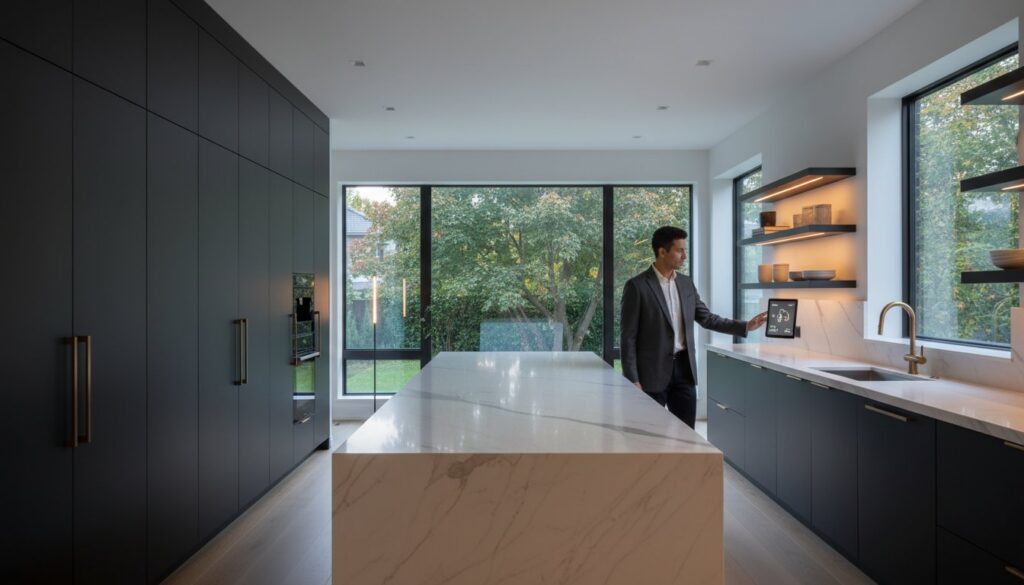
Your interface is simply how you interact with that physical power. While voice control remains a popular choice, sophisticated renovations often utilize dedicated touch panels or automated sensors that trigger based on your daily routine. This technical foresight is a core component of the Meraki Measured, Managed, MasterCrafted approach. We ensure that all technical planning happens during the pre-construction phase. This prevents the project delays and expensive rewiring costs that occur when tech is treated as an afterthought. You can explore more foundational integration concepts in our guide to home automation in Ottawa.
High-Impact Smart Home Features for Ottawa Residences
Selecting the right smart home features involves looking at your home as a single functional unit. While consumer magazines often focus on individual bulbs, we look at centralized lighting systems that allow for custom scenes. For example, a single button on a keypad can dim the lights, lower the screen, and activate the sound system in your custom home theater. This level of integration is also vital for climate control. In Ottawa, where modern homes are built to be airtight, smart thermostats must coordinate with Heat Recovery Ventilators (HRVs) to ensure proper air exchange without wasting heat.
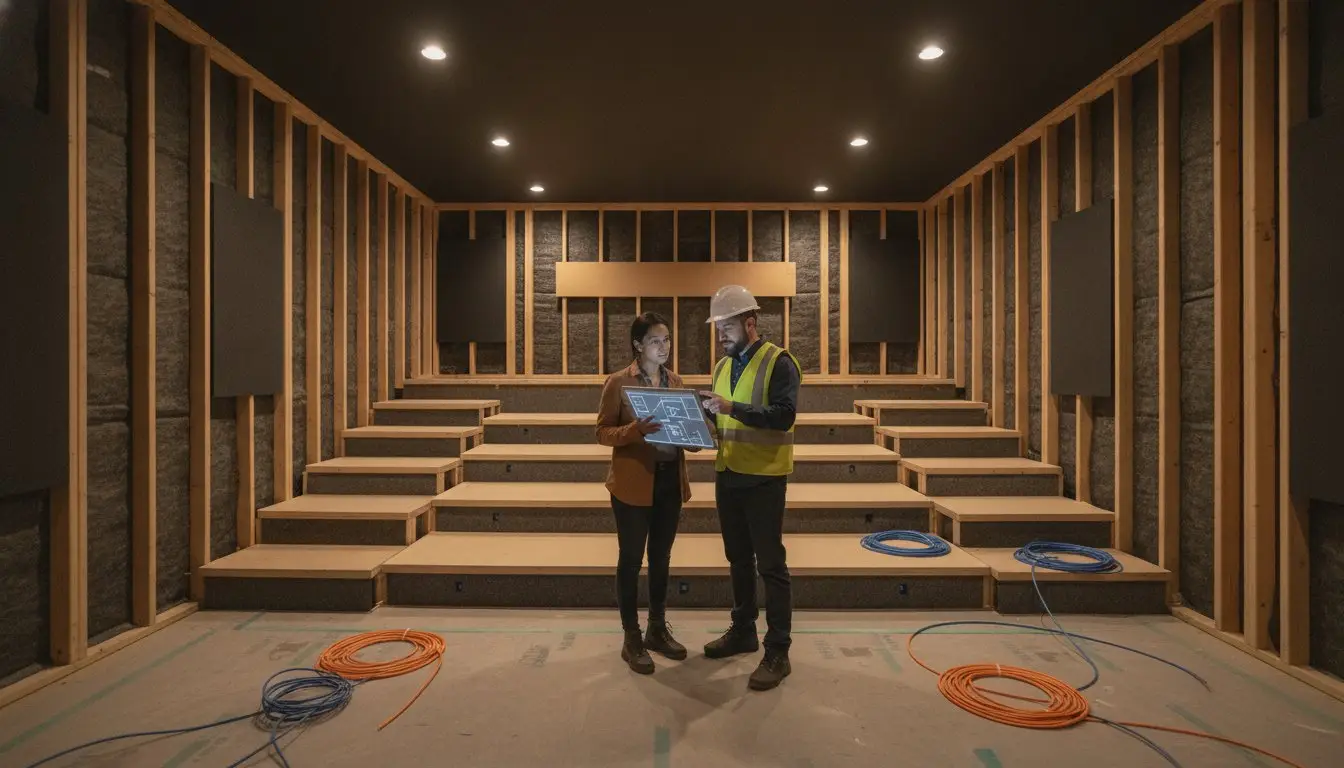
High-fidelity audio is another area where early planning pays off. During a basement renovation, we can integrate speakers directly into the ceilings and walls. This creates a seamless aesthetic that standalone speakers cannot match. Security follows the same logic. Instead of separate apps for your doorbell and locks, a unified system allows you to manage perimeter sensors and access points from one interface. If you are considering these upgrades, our suite of renovation services includes the technical scoping needed to make these systems work together reliably.
Smart Features for Harsh Ottawa Winters
Ottawa winters present unique challenges that standard gadgets often ignore. Automated pipe freeze protection and moisture sensors are essential in local basements to prevent catastrophic water damage during deep freezes. Smart blinds also play a significant role in thermal management. They can be programmed to open during sunny winter days for solar gain and close at night to provide an extra layer of insulation. Additionally, remote access management allows you to grant temporary entry to snow removal crews without compromising your home’s security.
What This Means for You
These integrated features do more than just provide convenience. They solve real-world problems like high energy bills. By coordinating your blinds, lighting, and HVAC, you reduce the load on your mechanical systems. For most homeowners, this translates to a home that is easier to maintain and more attractive to future buyers. It turns a standard renovation into a future-proof investment that responds to the specific climate conditions of the Ottawa Valley. You gain a home that works for you, rather than one that requires constant manual adjustments.
Planning Your Integration: Costs, Risks, and Contractor Selection
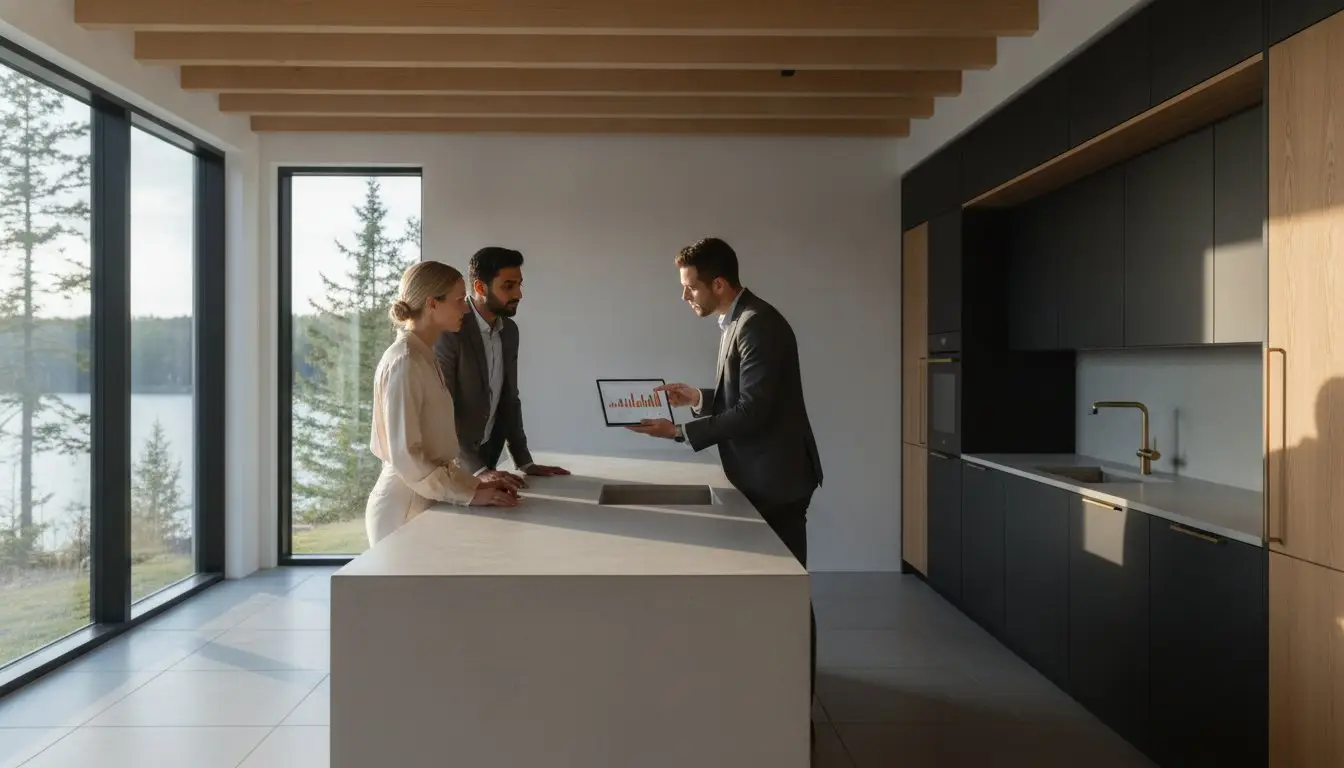
Most homeowners we speak to in the Ottawa and Russell area feel a mix of excitement and dread when budgeting for technology. You want the convenience of a modern lifestyle, but you likely fear the “money pit” reputation often associated with high-tech houses. Professional integration requires a larger initial investment than buying off-the-shelf gadgets. However, it prevents the costly “rip and replace” cycle that occurs when DIY devices fail to scale across a large-scale renovation or a multi-floor home.
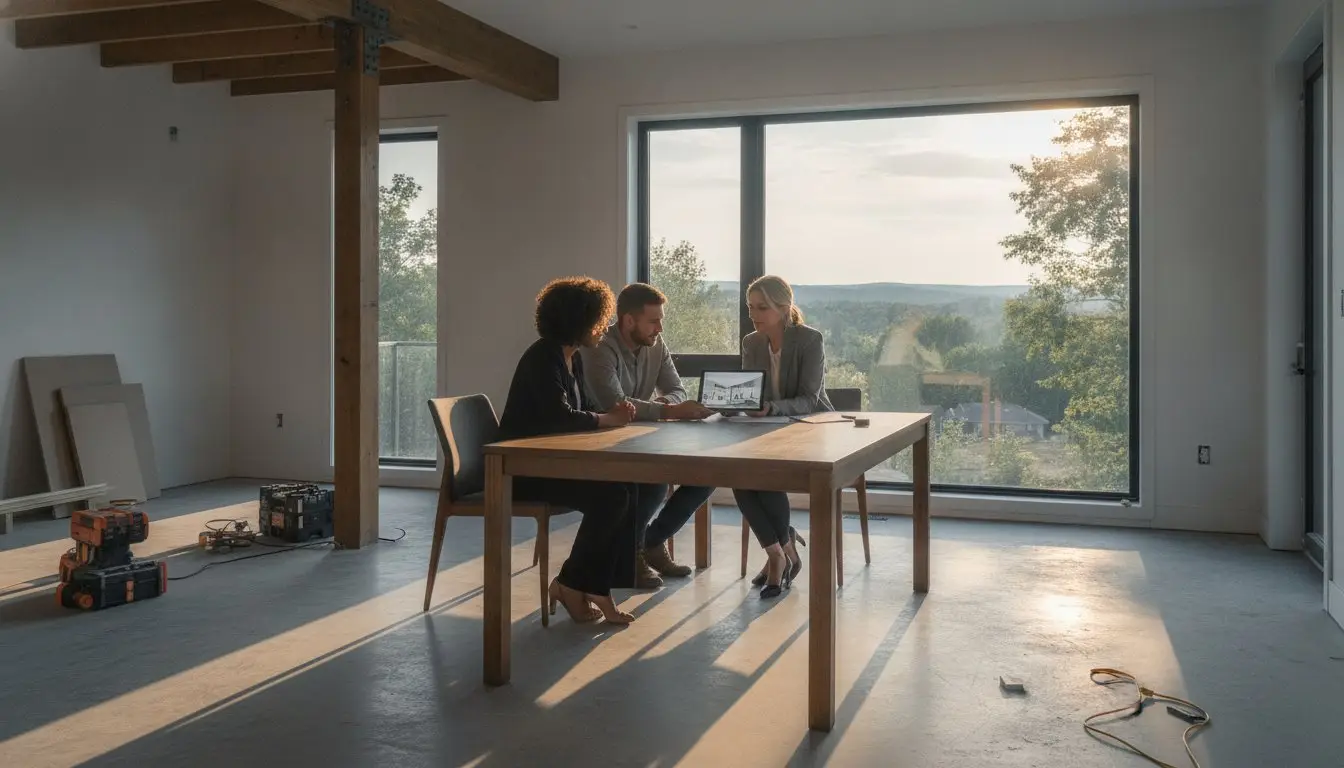
Here’s where projects go wrong: late-stage changes. Deciding to add built-in speakers or automated lighting after the drywall is finished is a recipe for budget overruns and significant project delays. Effective planning requires a hardwired backbone installed during the framing stage. This is why Meraki GC’s design-build services prioritize technical scoping from day one. By treating smart home features as part of the home’s infrastructure rather than an accessory, we eliminate the friction that usually leads to escalating costs.
What should you watch for? Avoid proprietary systems that lock you into a single manufacturer. These “walled gardens” often become obsolete if the brand changes its software or goes out of business. Instead, look for open-standard ecosystems that allow different brands to work together. This ensures your smart home features remain adaptable as technology evolves through 2026 and beyond.
Questions to Ask Your Integration Contractor
- How do you handle system updates and future-proofing? Technology moves fast; your hardware shouldn’t need replacing every few years.
- Will this system work if the internet goes down? Essential functions like lighting and climate control must have local backups that don’t rely on the cloud.
- How is user data protected within the home network? Sophisticated security involves more than just cameras; it requires a protected digital perimeter.
The Meraki Difference in Russell & Ottawa
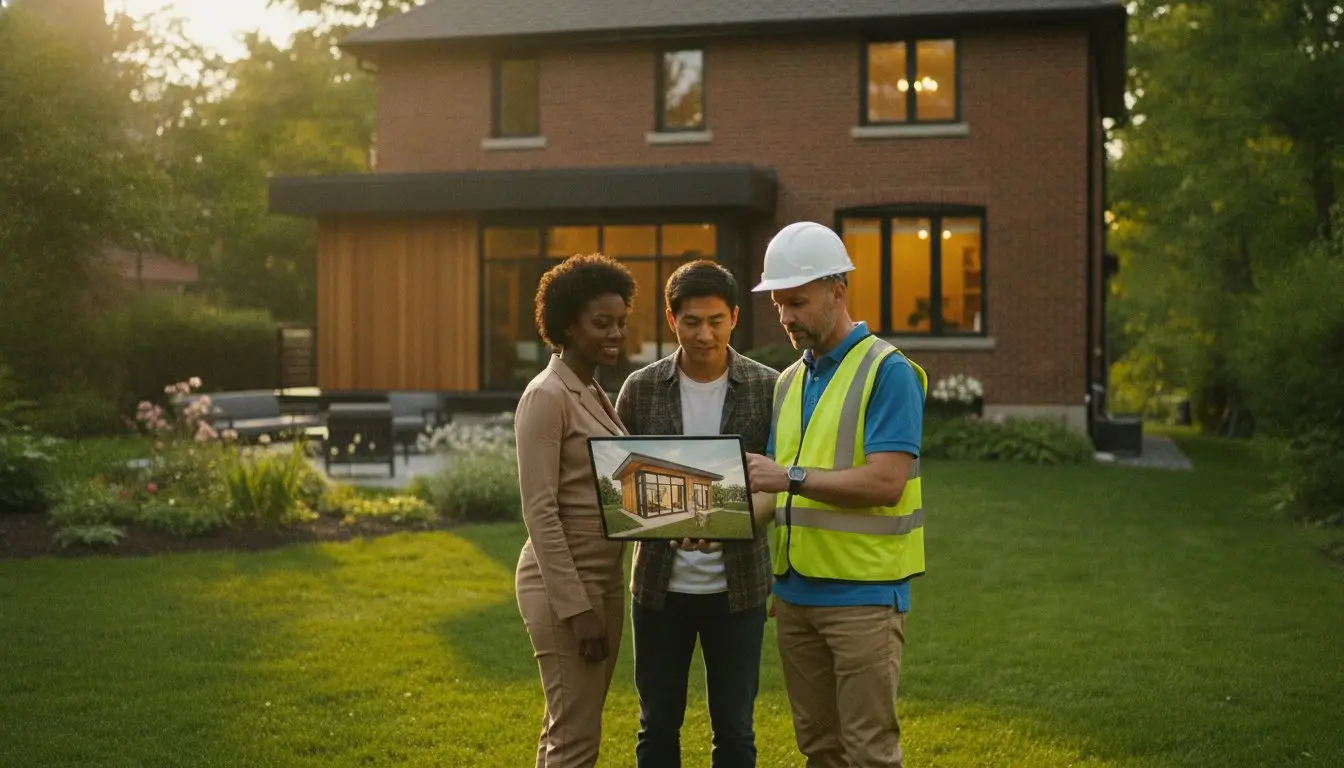
Our process is built on transparency. We use pre-construction scoping to identify every wire and sensor before the first hammer swings. This proactive approach prevents the pitfalls of choosing the wrong contractor who might treat tech as an afterthought. We also provide live dashboards so you can track your integration progress in real-time. If you’re ready to build a home that is as intelligent as it is beautiful, book a data-driven renovation quote to start your smart home journey today.

Building Your Future-Proof Ottawa Home
A sophisticated home is one that anticipates your needs without requiring constant attention. By shifting your focus from isolated gadgets to a unified infrastructure, you protect your property investment from rapid obsolescence. We have discussed how selecting the right smart home features can solve specific regional challenges, such as managing HRV systems in airtight builds or protecting your plumbing during a deep freeze in Russell. These systems work best when they are invisible, reliable, and integrated from the very start of the design phase.
Our Measured, Managed, MasterCrafted process provides the structured framework necessary for these complex integrations. We leverage our local Ottawa expertise to ensure that your project avoids the common pitfalls of poor planning and late-stage technical changes. Whether you are envisioning a specialized custom home theatre design or a fully automated lifestyle, our team acts as a seamless extension of your vision. This approach delivers a home that is both technologically advanced and remarkably easy to live in.
Explore Integrated Smart Home Solutions with Meraki GC
Your renovation is a significant milestone. With the right planning and a focus on transparency, you can move forward with the quiet confidence that your home is ready for whatever the future brings.
Common Questions About Smart Home Integration
How much does a smart home system add to my renovation budget?
Most homeowners we speak to find that allocating between 5% and 10% of their total renovation budget to smart home features is a reliable standard. While this increases the initial investment, it often leads to long-term energy savings through optimized heating and cooling. It is a balance between higher upfront costs and the ongoing reduction of monthly utility bills. This investment also adds clear resale value by providing a modern, integrated infrastructure.
Can I add smart features to my basement after it is finished?
You can add some features later, but retrofitting is significantly more difficult and expensive than pre-wiring during the design-build phase. Once the drywall is up in a finished basement, running new communication lines often requires cutting into your new walls and ceilings. This is where projects go wrong and costs escalate. We recommend installing a hardwired backbone during the framing stage to ensure your system remains stable without future invasive construction.
What happens to my smart home features during a power outage?
Your system’s functionality depends on whether it uses local processing or relies entirely on the cloud. Professional systems often include battery backups for critical components like smart locks and security sensors. If your system is designed with local processing, many of your smart home features will continue to work even if the internet goes down. However, cloud-dependent gadgets will lose most of their functionality until the connection is restored.
Do I need a special permit for home automation in Ottawa?
You don’t need a permit for simple plug-and-play gadgets, but major electrical changes or structural integrations in Ottawa do require them. Any work that involves modifying your home’s wiring or adding new circuits must comply with the Ontario Electrical Safety Code. If your smart integration involves structural additions or significant plumbing changes, you should check with the City of Ottawa regarding permit requirements. A professional contractor handles these filings to ensure compliance.

Article by
~ Jason Bourguignon
Jason has been passionate about building homes from a young age, starting his first successful construction company at age 21. With experience across nearly every sector of the industry, he brings a hands-on understanding of the entire building process. For over two decades, he has managed hundreds of custom home builds, additions, and renovations with some single projects exceeding $2.5M. Jason does not just focus on construction, but also helps homeowners create spaces they truly call home.
Disclaimer
The information in this article is provided for general educational purposes only and is based on typical renovation scenarios in Ontario. Every project is unique, and actual costs, timelines, and requirements may vary. This content does not constitute professional, legal, or engineering advice. We recommend consulting with a qualified contractor or specialist for your specific project.