What if the window treatments you choose today make the rest of your smart home harder to coordinate tomorrow? Smart home automation Russell homeowners are considering should account for how window treatments fit with lighting, climate, security, and entertainment, rather than treating them as a separate upgrade.
It’s reasonable to want more convenience while avoiding unclear costs, mismatched systems, or delays. This guide explains how to identify your everyday needs, compare manual and automated options, and understand which project details affect scope and cost. For homeowners in Russell and the wider Ottawa and Prescott-Russell area, a coordinated plan starts with how you want your home to work, then brings the related decisions together.
Key Takeaways
- Start with each room’s purpose. Decide how privacy, daylight management, and ease of operation should shape your window-treatment plan.
- For smart home automation Russell, consider window treatments as part of the wider system and assess integration needs before making selections.
- Scope and cost depend on factors such as the number of window openings, selected components, power and control requirements, and coordination with other project work. Documenting decisions early can reduce uncertainty.
- Meraki’s structured planning can bring your automation goals into a broader renovation plan through its home automation service.
How automated window treatments fit smart home automation in Russell
Automated window treatments are motorized window coverings that can be planned to operate as part of a home automation system. Manual treatments are opened and adjusted by hand. The right choice depends on how you use each room and how the wider system is planned.
You might consider automated treatments for privacy, daylight management, or easier daily operation. Start by identifying the specific task you want them to handle, rather than assuming automation will solve every issue. The setup and its interaction with other systems depend on the components selected. A general overview of home automation can help put window treatments in context: they’re one possible part of a broader approach to coordinating functions around the home.
When window treatments belong in a wider home automation plan
Start with the room. A bedroom, living area, and street-facing window may each have different needs. Consider how the room is used, where the windows sit, and when privacy or daylight matters. Then consider project timing. Planning treatments alongside lighting or other home systems can help coordinate decisions instead of treating each choice as a separate add-on.
For homeowners in Russell and Embrun, the aim is to fit the plan to the home and the people who use it. Before choosing components, note:
- Which rooms and window openings matter most in daily routines.
- Where privacy or daylight management is a priority.
- Whether you’re planning treatments alongside lighting or other home systems.
- Whether you prefer individual controls or want operation coordinated with other parts of the home.
This is the practical starting point for smart home automation Russell: define what you want each room to do before making equipment decisions. Meraki plans and integrates home automation systems for lighting, climate, security, and entertainment, giving you a way to consider treatment goals within the wider system plan.
How to evaluate automated window treatments for your Russell home
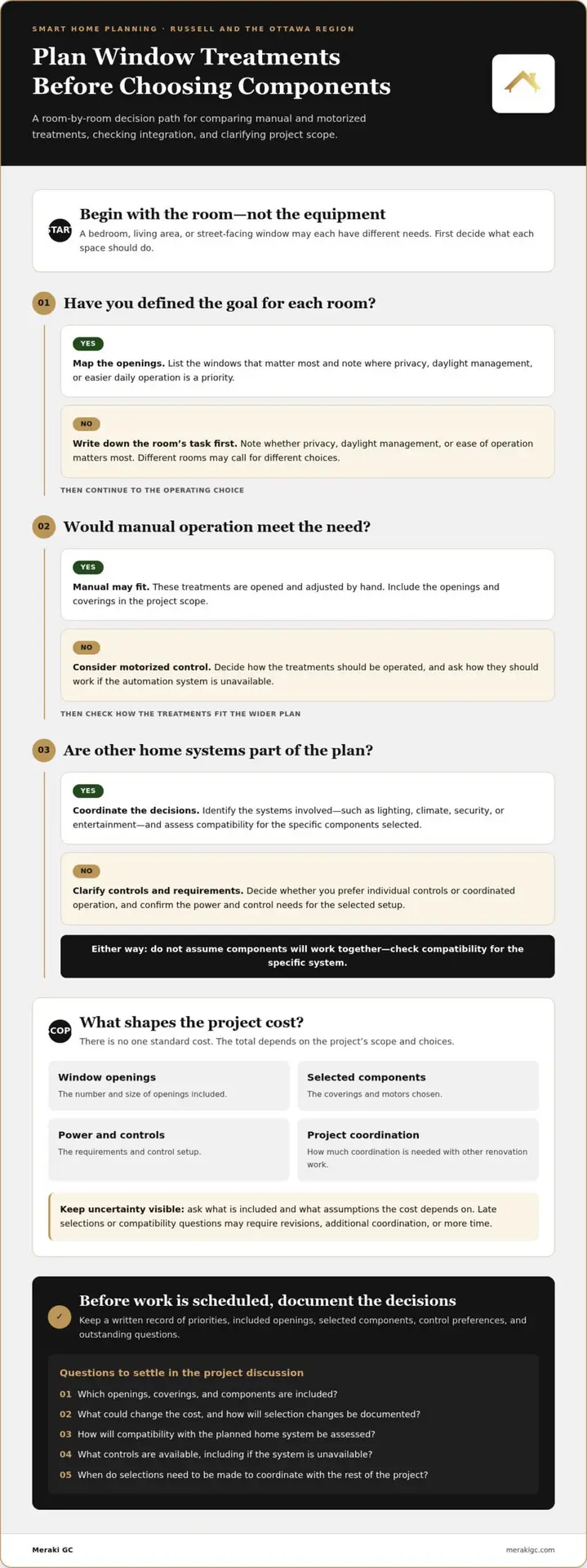
A clear plan turns preferences into decisions that can be scoped and coordinated. Use this sequence to understand the work involved before selections are final.
- Define the room goal. Note whether privacy, daylight management, or easier daily operation matters most in each space. A different goal in each room may call for different choices.
- Map the scope. List the window openings to include and note where needs differ by room. The number and size of openings, selected coverings and motors, power and control requirements, and coordination with other work can all affect project cost.
- Compare operating needs. Consider whether manual operation meets your needs or whether motorized control would make a meaningful difference in daily use. Also think about how the treatments should be operated if the automation system is unavailable.
- Consider integration. Identify which other home systems are part of the plan. Assess compatibility for the specific components and system rather than assuming everything will work together.
- Document decisions. Keep a written record of priorities, included openings, selected components, control preferences, and outstanding questions before work is scheduled.
There isn’t one standard cost for automated window treatments. The total depends on the number of openings, the treatments and components chosen, the control and power setup, and how much coordination is needed with other renovation work. Ask for the scope to show what is included and what assumptions the cost depends on. If selections change or compatibility is considered late, the plan may need revisions, additional coordination, or more time. Planning takeaway: clarify the scope, cost factors, and system requirements before final selections.
What this means for you
Bring practical questions to your project discussion:
- Which window openings, coverings, and components are included in the scope?
- What could change the cost, and how will changes to selections be documented?
- How will compatibility with the planned home system be assessed?
- What controls will be available, and how should the treatments operate if the system is unavailable?
- When do selections need to be made to support coordination with the rest of the project?
For smart home automation Russell homeowners, Meraki’s structured scoping and proactive communication help make decisions and next steps visible as the plan develops. The project planning process creates a shared reference for discussing scope, timing, and coordination needs as the project takes shape.
Plan automated window treatments with Meraki in Russell
Window treatments are easier to plan when their role is considered alongside the rest of the home. In Russell, a homeowner may be coordinating automation with a renovation or planning how lighting, climate, security, and entertainment fit together. Meraki can include treatment goals in that broader home automation plan, so related decisions are considered together rather than in isolation.
Bring a short list of room needs to the planning discussion: where privacy matters, which windows need attention, and how the treatments should fit with other planned work. Also note any existing coverings you hope to keep. Their condition and operation can affect whether they fit the planned approach. The goal is to make the project scope and decisions clear, based on how your household uses the space.
From homeowner priorities to a documented project scope
Meraki’s Measured, Managed, MasterCrafted approach supports project scoping and planning. Your priorities can be discussed alongside the wider renovation plan, with clear communication helping keep decisions visible as the scope develops. Meraki’s design-build process explains how planning and project communication are structured. A documented plan gives everyone a shared reference for what has been discussed and which decisions remain.
If you’re considering automated window treatments, write down the rooms, goals, existing coverings, and related work you want to discuss. You can then talk with Meraki about your home automation goals and how those priorities fit within the wider project plan.
Set a clear direction for your next step
A useful first step is to define what you want your home to do, then keep that purpose at the centre as choices take shape. For smart home automation Russell homeowners can begin with a simple brief: the rooms that matter, the changes they’re considering, and the questions they want answered before agreeing on a scope.
Meraki’s home automation work is supported by structured project scoping and proactive communication, helping homeowners keep decisions and next steps visible. Plan your home automation project with Meraki and bring your priorities into a clear, coordinated discussion.
Frequently Asked Questions
Do automated window treatments need Wi-Fi?
Not necessarily. The connection method depends on the selected treatment and the home system it’s intended to work with. Wi-Fi may be part of some setups, but don’t assume it’s required or that a product will connect to your existing network. For smart home automation in Russell, include connectivity needs in the system plan before choosing components.
Can automated window treatments work with existing blinds or shades?
Sometimes, but compatibility depends on the existing covering and the components selected. Don’t assume a manual blind or shade can simply be converted. Its condition and the way it operates may affect whether it suits the planned approach. Include existing treatments in the project review so the scope reflects what can reasonably be retained or needs replacing.
What happens to automated window treatments during a power outage?
Operation during an outage depends on the system’s power design and the specific components. Don’t count on treatments moving automatically or being easy to operate by hand unless those details are established for the chosen setup. If maintaining access to a particular window matters, include outage behaviour in the planning discussion for your Russell or Ottawa home.

Article by
~ Jason Bourguignon
Jason has been passionate about building homes from a young age, starting his first successful construction company at age 21. With experience across nearly every sector of the industry, he brings a hands-on understanding of the entire building process. For over two decades, he has managed hundreds of custom home builds, additions, and renovations with some single projects exceeding $2.5M. Jason does not just focus on construction, but also helps homeowners create spaces they truly call home.
Disclaimer
The information in this article is provided for general educational purposes only and is based on typical renovation scenarios in Ontario. Every project is unique, and actual costs, timelines, and requirements may vary. This content does not constitute professional, legal, or engineering advice. We recommend consulting with a qualified contractor or specialist for your specific project.