Budget overruns are not an inevitable byproduct of construction; they are a symptom of inadequate pre-construction data. Most homeowners we speak to in the Ottawa area fear that a $200,000 renovation will quietly escalate into a financial burden due to “bait and switch” pricing or hidden structural issues in older neighborhoods. We believe that your investment deserves the same level of rigorous planning as a high-stakes financial portfolio. By prioritizing the strategy of avoiding renovation budget overruns during the initial design-build phase, you can ensure your project remains a source of pride rather than a source of stress.
This guide provides a predictable roadmap to protect your high-value investment from unexpected delays and costs. You will learn how to navigate the 2026 Ontario Building Code updates, including new fire separation requirements for secondary suites, and understand why the Ottawa permit fee of $12.75 per thousand dollars of construction value is a critical factor in your early budgeting. We will outline what can go wrong during a major build, the specific red flags to watch for in a contractor’s proposal, and the essential questions you must ask to ensure your partner operates with absolute integrity and transparency.
Key Takeaways
- Learn why poor scoping is the leading cause of financial friction and how a 15-20% overrun can impact your long-term goals.
- Discover the specific pre-construction strategies professionals use for avoiding renovation budget overruns on major home investments.
- Identify the danger of “vague allowances” in contracts that act as hidden placeholders for much higher final costs.
- Explore how the design-build model replaces adversarial relationships with a unified, data-driven plan for your home.
- Find out which essential questions to ask your contractor to ensure they prioritize transparency and clear communication from day one.
Why Renovations Go Over Budget: The Reality of Ottawa Remodelling
A budget overrun is defined as any instance where the final project cost exceeds the initial contract value. This usually stems from poor initial scoping or unforeseen site conditions that weren’t identified during the planning phase. For projects exceeding $100,000, a 15% to 20% overrun is a common but avoidable outcome. Most homeowners we speak to find that such a gap creates significant debt induced stress and compromises the original vision for their home.
In older neighborhoods like the Glebe or Ottawa West, the risk is particularly high. You may discover knob and tube wiring or structural foundation cracks once the demolition begins. These “as-found” conditions are often paired with the psychological trap of the “while we’re at it” mindset. It’s tempting to upgrade a bathroom or add home automation while the walls are open; however, these spontaneous additions can easily add tens of thousands to the final bill without a clear financial roadmap.
Regional Risks: Permitting and Soil in Prescott-Russell/Ottawa
The City of Ottawa currently charges a permit fee of $12.75 per thousand dollars of construction value for alterations and repairs. While this is a known cost, the real risk lies in permitting delays. Waiting for approvals increases your carrying costs and pushes back your move in date. In rural Prescott-Russell, the challenge is often below the surface. Soil conditions like heavy clay or unexpected rock can require specialized foundation engineering that wasn’t in the initial quote. Latent defects are the primary cause of financial surprises in residential remodeling.
Material and Labour Dynamics in 2026
In 2026, the renovation market reflects a complex landscape of material and labor costs. High end custom fixtures and sophisticated home automation components are still subject to supply chain volatility. Additionally, a shortage of specialized trades in the Ottawa region means labor rates remain high. Effectively avoiding renovation budget overruns requires a structured planning process that accounts for these regional variables and market shifts before construction begins.
Proactive Protection: How to Insulate Your Investment
A low quote isn’t the bargain it appears to be. In the high stakes world of $100,000+ renovations, an artificially low initial price often masks a lack of detailed planning. Here’s where projects go wrong. Choosing a contractor based solely on the bottom line frequently leads to a “bait and switch” scenario where costs balloon once the build begins. We find that an “educate first” approach is the most effective method for avoiding renovation budget overruns. It’s a process that requires looking past surface numbers to understand the data behind the build.
One specific red flag to watch for is the presence of vague “allowances” in your contract. These act as placeholders for items like custom cabinetry or high end bathroom fixtures. If an allowance is set at $10,000 but the actual materials you desire cost $25,000, your budget is compromised before the first hammer swings. Our Measured, Managed, MasterCrafted process eliminates this guesswork by securing actual costs during the design phase. For high value residential projects, we recommend fixed fee contracts over cost plus models to provide the financial predictability you deserve.
Calculating a Realistic Contingency Fund
Most generic advice suggests a flat 10% contingency, but this is often insufficient for complex Ottawa builds. We recommend a tiered approach. For modern additions or basement finishing, a 10-15% fund is appropriate. However, if you’re tackling a heritage renovation in Westboro or the Glebe, a 20% fund is a necessary safety net. This fund should be managed as a specialized reserve for latent defects, not as a spending account for late stage upgrades. This distinction is a hallmark of our design-build Ottawa philosophy, which prioritizes absolute financial transparency.
The Power of Firm Decision Deadlines
Change orders are the silent killers of a renovation budget. Deciding to move a light fixture or upgrade a home automation system after construction has started triggers administrative fees and labor adjustments. To secure 2026 pricing and material availability, it’s vital to set a “lock date” for all finishes. By finalizing these details early, you insulate yourself from the price fluctuations currently impacting the Ontario construction market. If you’re planning a significant investment, starting with pre-construction scoping and planning ensures your vision aligns with your financial reality.
What this means for you
- Predictability: Choosing fixed fee contracts over cost plus models shifts the risk away from your personal finances.
- Security: A tiered contingency fund (up to 20% for older homes) ensures that “as-found” issues don’t stop production.
- Control: Firm decision deadlines prevent expensive change orders and protect you from 2026 material price hikes.

The Design-Build Solution: Aligning Financial Reality with Vision
Traditional “bid-build” models often create an adversarial relationship between homeowners and contractors. In that old system, a contractor might provide a low bid to win the project, only to rely on expensive change orders later to maintain their margins. This approach is the primary driver of project friction. By contrast, a design-build model focuses on avoiding renovation budget overruns by integrating the architectural design and construction teams from the very first meeting. This alignment ensures that the vision for your home is always tethered to your financial boundaries.
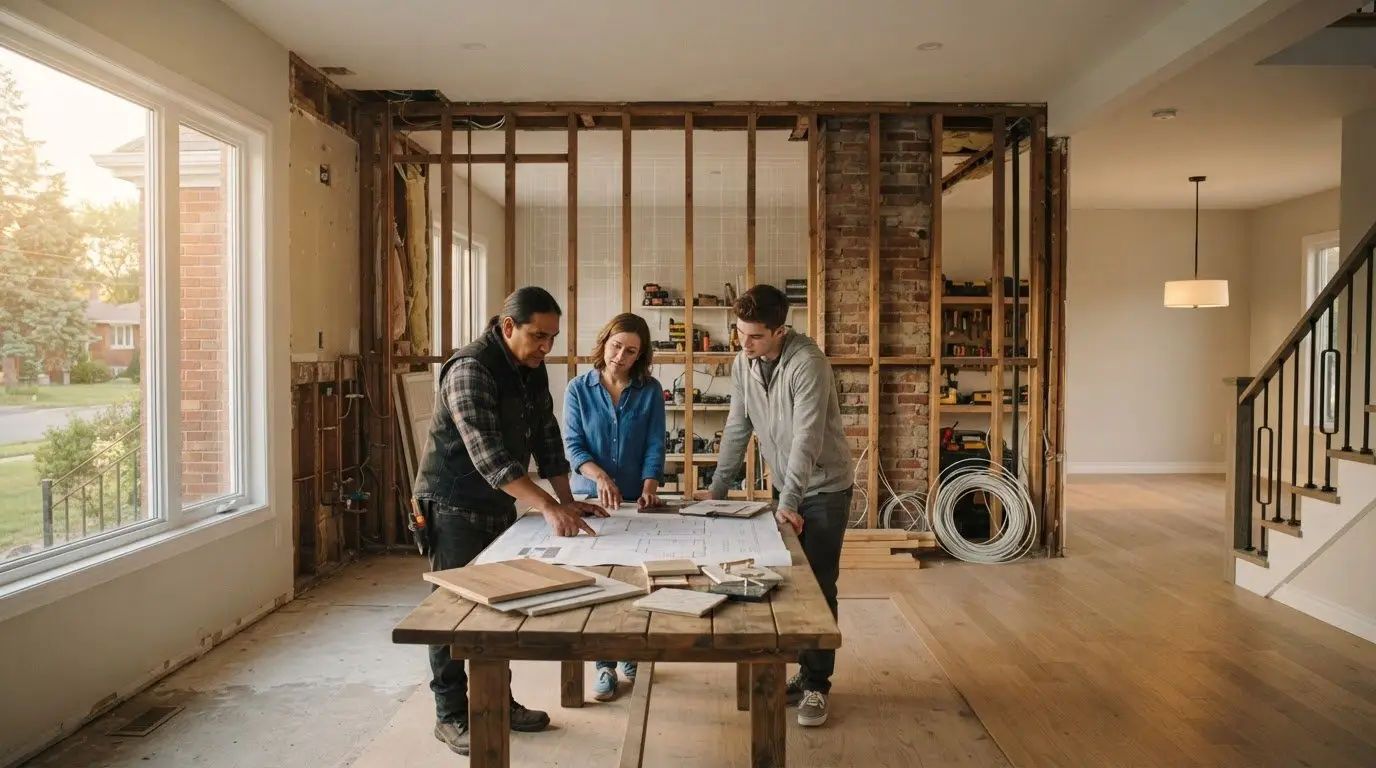
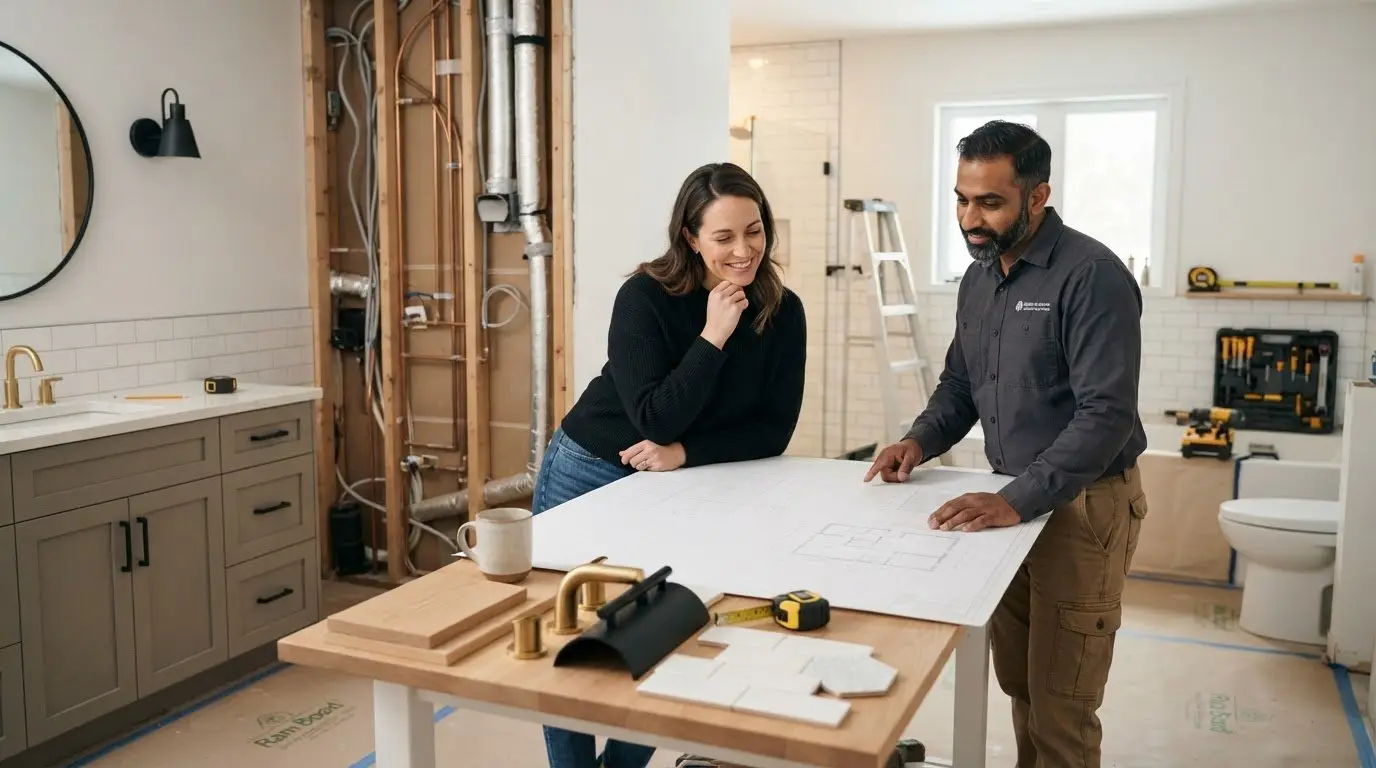
The most critical stage of this process is the pre-construction phase. We believe in investing in data before swinging a hammer. This involves detailed site inspections and exploratory work to identify potential structural issues before they become emergencies. This level of planning is essential for high-complexity projects, such as kitchen renovations in Ottawa, where moving gas lines or electrical panels requires surgical precision. When we know the exact state of your home’s infrastructure, we can provide a quote based on reality rather than assumptions.
Transparency is further maintained through the use of live project management dashboards. These tools allow you to see real-time updates on schedules and expenses, effectively eliminating “bill shock” at the end of the month. It’s about maintaining a measured and intentional flow of information so you always feel in control of your investment.
What to Ask Your Contractor Before Signing
- Structural Integrity: How do you handle “unforeseen” structural issues once the walls are open, and is there a pre-set protocol for communication?
- Financial Tracking: Can I see a sample of your project management dashboard to understand how you track daily costs and material orders?
- Performance History: What percentage of your projects finished within 5% of the original budget last year?
What This Means for You: The Meraki Difference
Our philosophy is rooted in the idea that we are a seamless extension of your own team. We act as a trusted advisor, providing a data-driven roadmap that protects your capital and your peace of mind. By choosing a partner that values transparency over transaction, you gain a home that reflects your vision without the debt-induced stress of a mismanaged build. Explore why Meraki is the preferred choice for Ottawa homeowners who demand both elite craftsmanship and fiscal responsibility.
Securing Your Vision with Precision Planning
Your home is likely your most significant asset. Protecting a $100,000 to $500,000 investment requires moving beyond the guesswork of traditional bidding. By prioritizing pre-construction data and embracing a design-build model, you shift the focus from reactive damage control to proactive management. This strategy is the most reliable path for avoiding renovation budget overruns in the evolving 2026 Ottawa market. It’s about ensuring that your financial roadmap is as solid as the foundation of your home.
Our proprietary Measured, Managed, MasterCrafted process is designed specifically for these high-stakes transformations. We replace the anxiety of unexpected costs with proactive communication and live project dashboards that provide real-time financial clarity. This level of transparency ensures that every decision aligns with your original vision and your long-term goals. You deserve a partner who acts as a seamless extension of your own team, valuing integrity as much as craftsmanship.
When you’re ready to move from inspiration to execution, we’re here to provide the expert advisory your project deserves. You can Request a Data-Driven Renovation Quote to begin your journey with a partner committed to honesty and transparency. Let’s build a space that reflects your standards without the stress of unexpected debt.
Frequently Asked Questions
Is a 10% contingency really enough for a high-end Ottawa renovation?
A 10% contingency is rarely sufficient for high-value investments in neighborhoods like the Glebe or Westboro. While this figure is standard for new builds, older Ottawa homes often hide structural or electrical issues that require a 15% to 20% buffer. Maintaining a higher reserve is a foundational step in avoiding renovation budget overruns. It ensures that “as-found” conditions don’t compromise your finish quality or force you into unnecessary debt.
What are the most common hidden costs in Ottawa basement finishing?
Hidden costs in Ottawa basements frequently stem from moisture mitigation and the 2026 Ontario Building Code updates. Beyond the permit fee of $12.75 per thousand dollars of construction value, you must account for new fire separation standards. For instance, secondary suites now require specific smoke-tight barriers using 15.9 mm Type X gypsum board. Failing to plan for these regulatory details early in the design phase is where most basement budgets fail.
How do I know if a contractor’s quote is too good to be true?
You can identify an unrealistic quote by the lack of granular data and an over-reliance on vague allowances. Most homeowners we speak to are tempted by a low initial number, but this often signals a contractor who hasn’t performed a deep site analysis. A professional proposal should reflect actual material costs and labor rates for 2026. If the document feels light on specifics, it is likely a placeholder for future change orders.
Can I avoid budget overruns by buying my own materials?
Buying your own materials usually creates more financial risk than it saves. While it seems like a way to control costs, you lose the protection of trade warranties and professional procurement. If a fixture arrives damaged or the wrong model is delivered, you are responsible for the delay costs while the crew sits idle. A managed process ensures that every component is tracked and verified before it reaches your home, protecting your timeline and your wallet.

Article by
~ Jason Bourguignon
Jason has been passionate about building homes from a young age, starting his first successful construction company at age 21. With experience across nearly every sector of the industry, he brings a hands-on understanding of the entire building process. For over two decades, he has managed hundreds of custom home builds, additions, and renovations with some single projects exceeding $2.5M. Jason does not just focus on construction, but also helps homeowners create spaces they truly call home.
Disclaimer
The information in this article is provided for general educational purposes only and is based on typical renovation scenarios in Ontario. Every project is unique, and actual costs, timelines, and requirements may vary. This content does not constitute professional, legal, or engineering advice. We recommend consulting with a qualified contractor or specialist for your specific project.