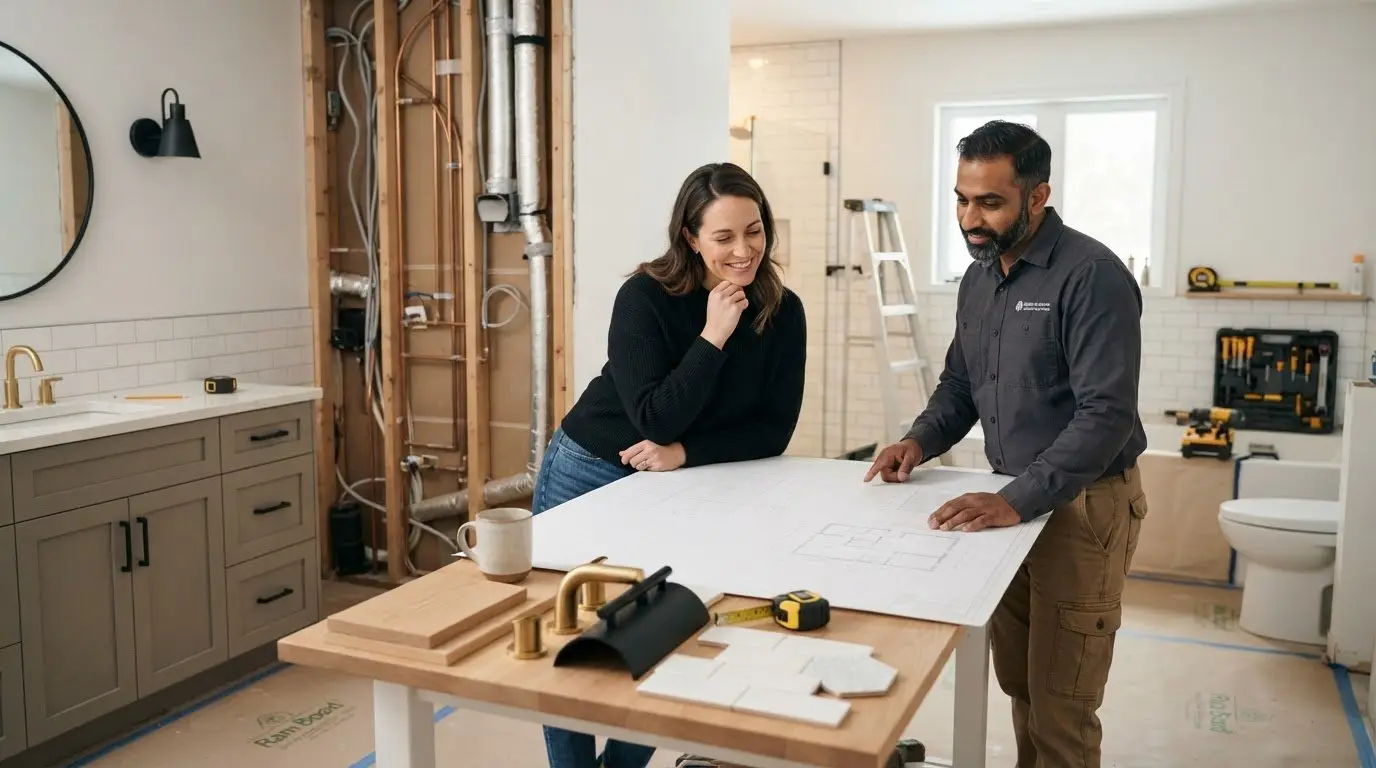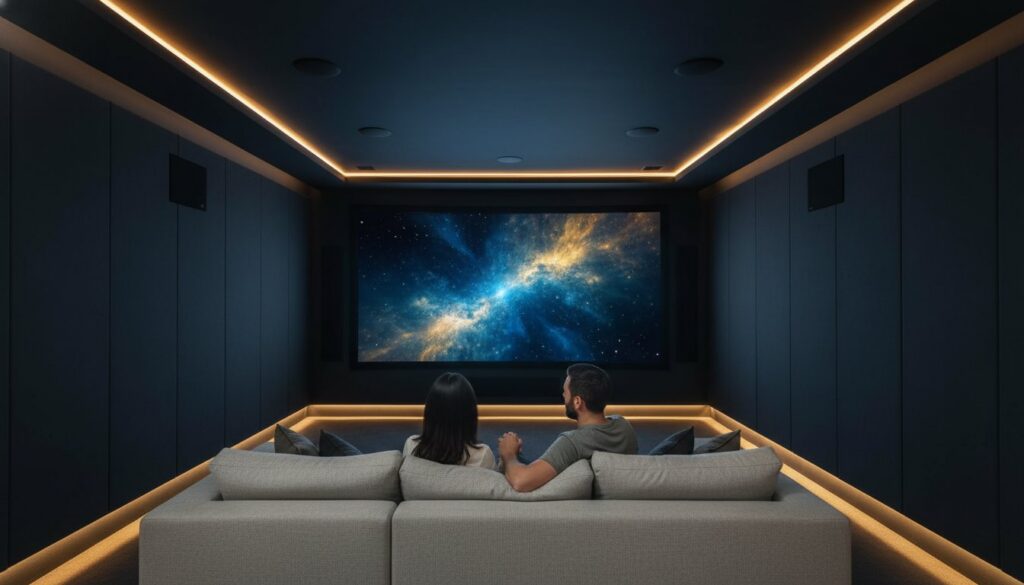
Spending six figures on a custom cinema doesn’t guarantee you’ll actually feel like you’re inside the movie. Most homeowners we speak to in the Ottawa area share a common anxiety; they fear investing heavily into a basement renovation only to end up with a system that sounds thin or “off.” Achieving a professional Dolby Atmos setup for home theater is an architectural challenge, not just a matter of buying expensive hardware. It requires a precise marriage of spatial design and technical execution to work within the unique footprint of a local home.
You deserve a “dome of sound” that truly transports you. This guide will teach you how to architect a world-class immersive experience while avoiding common construction pitfalls like poor soundproofing or messy wiring that fails to meet the 2024 Ontario Electrical Safety Code. We’ll provide a clear understanding of the renovation steps, from choosing between 5.1.2 and 7.1.4 configurations to the specific questions you should ask your design-build team to ensure your project stays on track and sounds spectacular.
Key Takeaways
- Understand how Ottawa basement dimensions and room acoustics dictate the architecture of your speaker configuration.
- Learn why the 7.1.4 layout is the gold standard for a luxury Dolby Atmos setup for home theater compared to entry-level systems.
- Navigate the complexities of Ottawa building permits and the latest Electrical Safety Authority (ESA) requirements to ensure your build is compliant.
- Identify common construction pitfalls, such as poor soundproofing or improper wiring, that can compromise a high-stakes renovation.
- Gain the confidence to manage your budget and timeline by knowing exactly what questions to ask your design-build team before construction begins.
Understanding the Architecture of a Dolby Atmos “Dome of Sound”
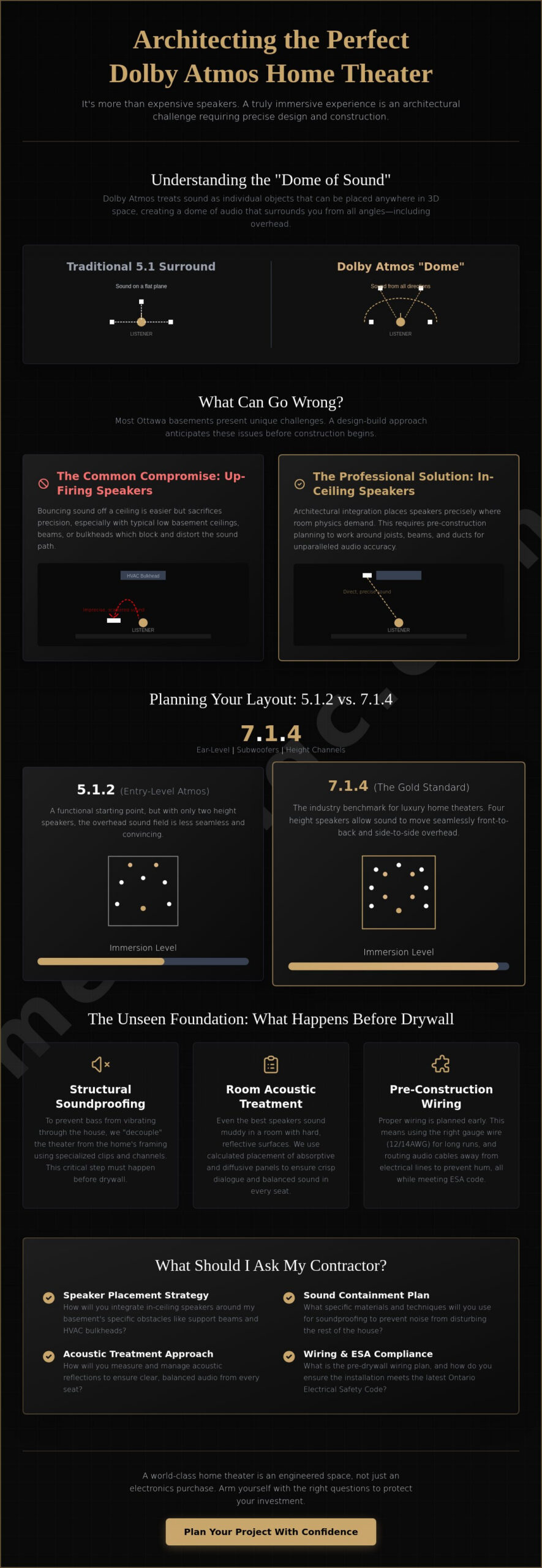
Dolby Atmos is a spatial audio format that treats sound as individual objects in a three-dimensional room. Unlike older systems that sent audio to specific channels, the architecture of Dolby Atmos allows sound to move freely around you. This technology creates what we call a “dome of sound,” where a helicopter overhead truly sounds like it’s hovering above your seat. When planning a Dolby Atmos setup for home theater, you’re not just buying gear; you’re designing a space that can handle these complex audio signals.
Most homeowners we speak to in Ottawa are working with basement spaces. These rooms often present unique challenges like low ceilings, steel support beams, and HVAC bulkheads that can disrupt sound paths. Here’s where projects go wrong: many people choose “up-firing” speakers that bounce sound off the ceiling. While easier to install, they can’t match the precision of true in-ceiling architectural integration. For a high-end build, we look at your floor joist placement and ceiling height during the pre-construction phase to ensure speakers are mounted exactly where the physics of the room requires them.
The Importance of Room Acoustics and Soundproofing
A common worry for Ottawa families is that a powerful theater will disturb the rest of the house. Structural soundproofing is essential. We use specialized materials within the walls to decouple the theater room from the rest of the home’s framing. This prevents low-frequency bass from vibrating through the floorboards into the kitchen above. It’s a critical step that must be handled before the drywall goes up.
Acoustic treatments are just as vital. Hard surfaces like drywall and laminate flooring create reflections that make dialogue muddy. We use a “Measured, Managed” approach to calculate your room’s volume. This allows us to place absorptive and diffusive panels in specific spots to ensure every seat in your Dolby Atmos setup for home theater feels like the best seat in the house. Without these treatments, even the most expensive speakers will sound hollow and unrefined.
Planning Your Layout: From 5.1.2 to 9.2.4 Configurations
Understanding the nomenclature of a modern audio system is the first step in avoiding an expensive mistake. In a Dolby Atmos setup for home theater, you’ll see three numbers, such as 7.1.4. The first digit represents traditional ear-level speakers. The second indicates your subwoofers. The third, and most critical for Atmos, represents the height channels. These are the speakers mounted in or on your ceiling that create the vertical dimension of sound. It’s about precision.
Most homeowners we speak to in the Ottawa area initially consider a 5.1.2 system. While this provides a functional entry point, 7.1.4 is widely considered the gold standard for high-end renovations. This configuration uses four height speakers to allow sound to move seamlessly from front to back and side to side across the ceiling. To achieve a professional result, we recommend following Dolby’s official speaker setup guidelines to ensure your “sweet spot” aligns perfectly with your custom seating layout. Sound doesn’t just happen; it’s engineered.
The Pre-Construction Wiring Phase
Here’s where projects go wrong. If you don’t plan for wiring before the insulation and drywall go in, you’ll face significant hurdles later. We use a structured planning approach to map out conduit paths and speaker wire gauges early. Using a thicker 12 or 14-gauge wire is often necessary for longer runs in large Ottawa basements to prevent signal loss.
What should I watch for? Hidden HVAC ducts and plumbing stacks are the most common obstacles in local homes. These can block the ideal placement of an in-ceiling speaker, forcing a compromise that ruins the soundstage. You must also ensure that sensitive audio cables are kept away from high-voltage power lines to prevent electromagnetic interference. This prevents a persistent hum in your speakers. If you’re feeling overwhelmed by these technical requirements, a quick review of our design-build services can show you how we manage these complexities from day one.
The Cost of Excellence: Budgeting Your Ottawa Home Theater
A professional Dolby Atmos setup for home theater is a significant capital improvement that transcends simple electronics. When budgeting, you must look beyond the price of receivers and speakers. A high-tier project involves structural modifications, custom acoustic cabinetry, and meticulous electrical work. In the Ottawa market, regional compliance adds another layer of complexity. Since May 2025, all electrical work must adhere to the 2024 Ontario Electrical Safety Code. This mandates Arc-Fault Circuit Interrupter (AFCI) protection on living area circuits and the use of tamper-resistant outlets. Failing to account for these ESA requirements early can lead to costly delays during the inspection phase.
What to Ask Your Home Theater Contractor
Verifying a contractor’s technical depth is essential for protecting a six-figure investment. You should ask about their experience with integrated home automation and how they handle the specific acoustic challenges of Ottawa’s regional building styles. Ensure they have a process for data-driven pricing and project transparency. Our Meraki GC Process serves as a model for this level of clear communication, ensuring you aren’t left guessing about the status of your Dolby Atmos setup for home theater.
Maximizing ROI and Long-Term Performance
A professionally designed theater is a powerful asset for Ottawa real estate. Beyond personal enjoyment, a dedicated cinema space built with future-proofing in mind adds tangible value to a luxury home. We recommend installing oversized conduit during the build-out. This allows for seamless cable upgrades in 2030 and beyond without ever opening your walls again. For more context on managing significant investments, our guide to Ottawa custom home theaters provides a broader perspective on high-value renovations.
Securing the Future of Your Home Entertainment
Building a high-end cinema is about more than just purchasing top-tier equipment. It’s about engineering a space that respects the physics of sound and the strict building codes of the Ottawa area. By focusing on the structural architecture of the room and selecting a configuration that fits your specific basement footprint, you ensure your investment delivers the performance you expect. A successful Dolby Atmos setup for home theater requires a disciplined approach to both technical design and construction management.
We specialize in $100K to $500K residential transformations using our proprietary “Measured, Managed, MasterCrafted” process. This structured planning ensures transparency through every phase, from the first wiring run to the final calibration. Our local team provides live project dashboards so you’re always informed about your project’s progress and budget status. You don’t have to navigate these complex technical and regulatory waters alone. We’re here to provide the expertise needed to protect your investment.
Ready to build your dream theater? Get a data-driven renovation quote from Meraki GC.
We look forward to helping you create a space where your family can enjoy truly world-class experiences for years to come. Your vision of a perfect home cinema is well within reach.
Frequently Asked Questions
How many speakers do I actually need for a true Dolby Atmos experience?
You need a minimum of eight speakers for a functional entry-level experience, though twelve is the preferred standard for luxury builds. This configuration includes seven ear-level speakers, one subwoofer, and four overhead height channels. While some basic systems use fewer components, a true “dome of sound” relies on having enough physical sound sources to move audio objects accurately through the three-dimensional space of your room.
Can I install Dolby Atmos in a basement with low ceilings?
Yes, you can install a system in a basement with low ceilings, but it requires careful speaker selection and placement. In typical Ottawa basements where height is limited, we avoid up-firing speakers that bounce sound off the ceiling, as the distance is too short for a convincing effect. Instead, we use wide-dispersion in-ceiling speakers that sit flush with the drywall. This preserves headroom while maintaining the spatial accuracy of your Dolby Atmos setup for home theater.
What is the difference between a 5.1.2 and a 7.1.4 setup?
The difference lies in the number of ear-level and overhead audio channels available to create the immersive soundstage. A 5.1.2 system uses five traditional speakers and two height speakers, providing a basic sense of overhead movement. A 7.1.4 system adds two rear surround speakers and two additional height speakers. This extra hardware allows sound to move seamlessly from front to back and left to right across the ceiling, creating a much more realistic environment.
How much does a professional home theater installation cost in Ottawa?
Professional installation costs in the Ottawa area vary based on the complexity of your room’s structure and the level of acoustic treatment required. Beyond the hardware, you must account for specialized labor, structural soundproofing, and compliance with the 2024 Ontario Electrical Safety Code. Most homeowners we speak to find that the professional installation and calibration phase is where the most value is added, as it ensures the Dolby Atmos setup for home theater performs to its technical potential.

Article by
~ Jason Bourguignon
Jason has been passionate about building homes from a young age, starting his first successful construction company at age 21. With experience across nearly every sector of the industry, he brings a hands-on understanding of the entire building process. For over two decades, he has managed hundreds of custom home builds, additions, and renovations with some single projects exceeding $2.5M. Jason does not just focus on construction, but also helps homeowners create spaces they truly call home.
Disclaimer
The information in this article is provided for general educational purposes only and is based on typical renovation scenarios in Ontario. Every project is unique, and actual costs, timelines, and requirements may vary. This content does not constitute professional, legal, or engineering advice. We recommend consulting with a qualified contractor or specialist for your specific project.