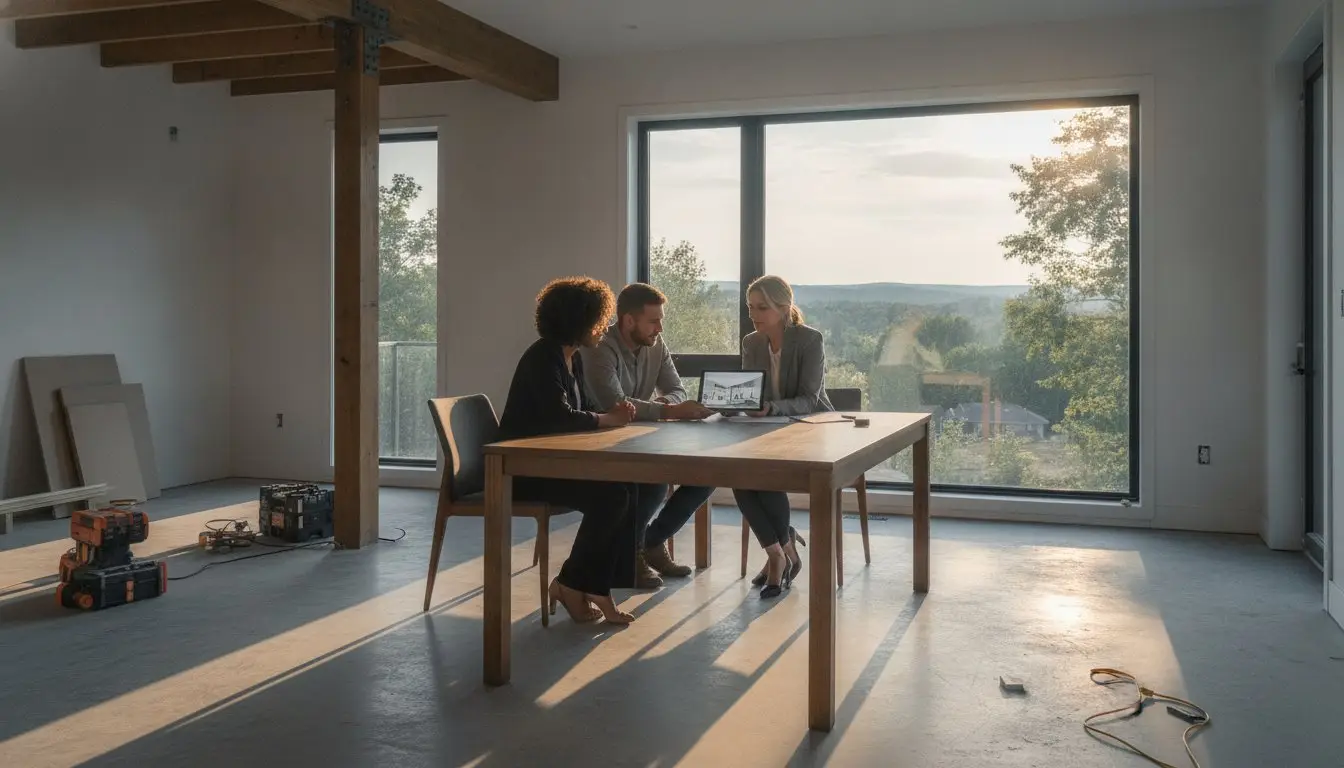
What if your high-end projector delivers a washed-out image simply because your contractor didn’t account for the specific throw ratio or the ambient light in your Westboro basement? Most homeowners we speak to in the Ottawa area feel a mix of excitement and anxiety when planning a significant media room investment. You want a cinematic experience that justifies a six-figure renovation budget, but you don’t want to deal with technical headaches or contractors who ignore provincial regulations. A professional 4K laser projector installation Ottawa requires more than just mounting hardware; it demands a deep understanding of light physics and the Electrical Safety Authority permit process for any new wiring.
We understand that you want a system that works seamlessly with your existing home automation without the stress of budget overruns. This 2026 integration guide will teach you how to incorporate professional-grade projection into your home while avoiding the common pitfalls that lead to project delays. We will explore the technical details you need to watch for, the risks of poor planning, and the specific questions you must ask your contractor to ensure your vision becomes a reality. This is your roadmap to a zero-stress installation that transforms your basement into a world-class private cinema.
Key Takeaways
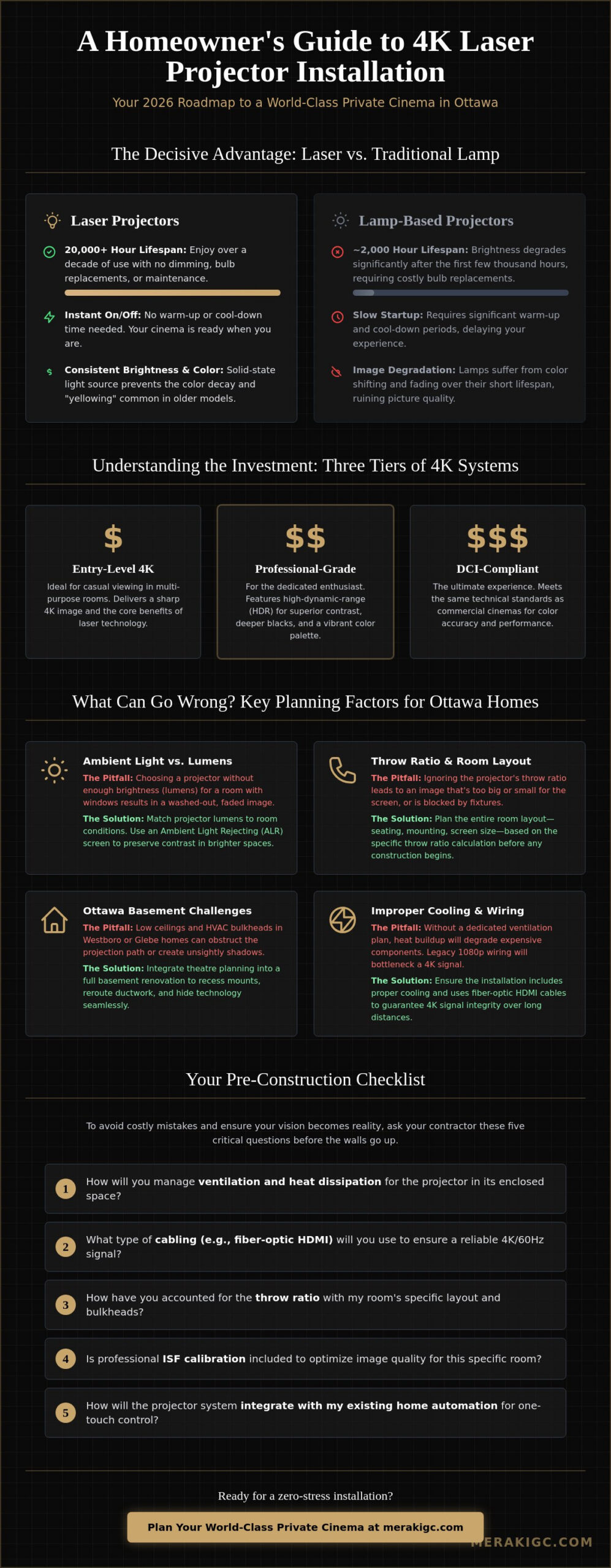
- Understand why 20,000-hour lifespans and instant startup times have made traditional lamp-based projectors obsolete for high-end Ottawa media rooms.
- Learn how to balance projector lumens against your room’s ambient light to ensure a crisp, cinematic image regardless of the time of day.
- Discover the three distinct tiers of hardware for a 4K laser projector installation Ottawa, ranging from high-quality consumer models to professional DCI-compliant systems.
- See how proper automation integration allows your projector to trigger synchronized lighting and climate adjustments for a seamless, one-touch cinema experience.
Why 4K Laser is the Standard for Ottawa Custom Theatres in 2026
4K laser projection has become the definitive benchmark for high-end home cinema. Unlike the flickering, warm-up-heavy projectors of the past, modern laser units provide an experience that mirrors a commercial theater. These systems offer nearly instantaneous startup and lifespans exceeding 20,000 hours. For a homeowner in Ottawa, this means your investment remains vibrant for over a decade without the frustration of dimming bulbs or expensive replacements. To understand the physics behind this shift, one can look at the evolution of Laser Projector Technology, which utilizes solid-state light sources to achieve superior color mapping and brightness levels that traditional lamps simply cannot match.
Most homeowners we speak to worry about their equipment failing prematurely. In the confined spaces of an Ottawa basement, improper cooling is the primary killer of expensive hardware. If your 4K laser projector installation Ottawa doesn’t include a dedicated ventilation plan, the heat buildup will degrade delicate internal components. We also see many projects stall because of legacy wiring. If your existing cabling was installed for a 1080p system, it will likely bottleneck your new 4K feed, leading to frustrating signal drops or reduced image quality.
Laser vs. Lamp: The High-Stakes Reliability Difference
Traditional projectors rely on high-pressure lamps that lose significant brightness within the first 2,000 hours of use. Laser systems are virtually maintenance-free; there are no expensive bulbs to source or replace. Because the light source is consistent, you won’t experience the color decay or “yellowing” that plagues older models. This reliability is essential for integrated systems where the projector is mounted in a difficult-to-access ceiling cove.
Ottawa Basement Challenges: Low Ceilings and Bulkheads
Many homes in neighborhoods like Westboro or the Glebe feature low-clearance ceilings and complex HVAC bulkheads. These structural elements often sit exactly where a projector needs to be mounted. If you don’t account for the throw path during the design phase, you might end up with a shadow on your screen or a projector that hangs too low for safety. Planning your theatre as part of a wider Basement Renovations in Ottawa project allows you to reroute ductwork or recess the mount into the ceiling, ensuring the technology remains invisible until it’s turned on.
The Real Cost and Planning of 4K Laser Projector Installation
Most homeowners we speak to are surprised to find that the hardware is only one part of a complex financial equation. A successful 4K laser projector installation Ottawa requires balancing the equipment tiers with the actual environment of your home. Costs generally fall into three distinct categories: entry-level 4K systems for casual viewing; professional-grade units with high-dynamic-range (HDR) capabilities; and DCI-compliant systems that mirror technical commercial cinema standards. These high-end residential setups often leverage the same technical rigor found in professional event production, where firms like Straight Street Event Services set the standard for visual precision. Here’s where projects go wrong: many people underestimate the light levels in their room, leading to a washed-out image that lacks impact.
To ensure your investment delivers the cinematic experience you expect, you must watch for two critical environmental factors:
- Lumens vs. Ambient Light: Lumens measure the brightness of the projector. If your media room has windows, you need a high-lumen count to keep the image from looking faded.
- Screen Selection: For multi-purpose living rooms, an Ambient Light Rejecting (ALR) screen is essential because it preserves contrast by reflecting only the projector’s light toward the viewer.
Throw ratio is the mathematical relationship between the distance of the projector from the screen and the width of the image it produces. This single number dictates your entire room layout, from seating positions to ceiling mount locations.
Hidden Costs: Cabling, Mounting, and Calibration
Standard HDMI cables often fail to transmit 4K/60Hz signals over distances longer than 15 feet. To ensure reliability, we utilize fiber-optic HDMI cables that maintain signal integrity without dropouts. Beyond the wires, professional ISF calibration is required to achieve a truly cinematic image. This process aligns your hardware with industry benchmarks like the CEDIA Immersive Audio Design Standards, ensuring that color accuracy and brightness are optimized for your specific room conditions.
What to Ask Your Contractor Before the Walls Go Up
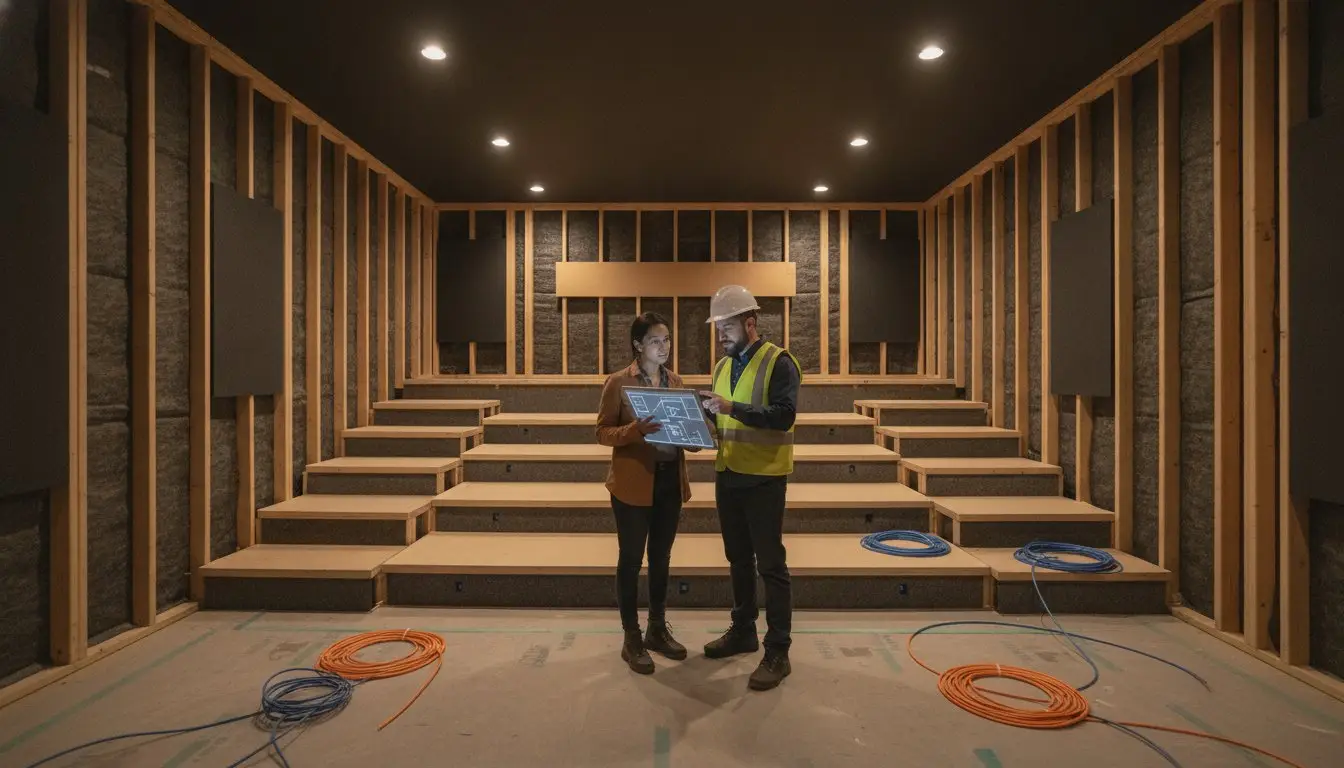
Before your renovation begins, you need to verify that your infrastructure can support the technology. Ask your contractor these specific questions:
- Is the mounting location reinforced for a 40lb chassis? Most residential drywall won’t hold a high-end laser unit safely without extra wood blocking.
- Have you planned for dedicated 20-amp circuits? This prevents electrical interference from other appliances and ensures consistent power delivery.
We believe transparency is key to a successful build. This is why our process at Meraki General Contracting starts with detailed pre-construction scoping to catch these technical details before they become expensive mistakes.
MasterCrafted Integration: Beyond the Projector Mount
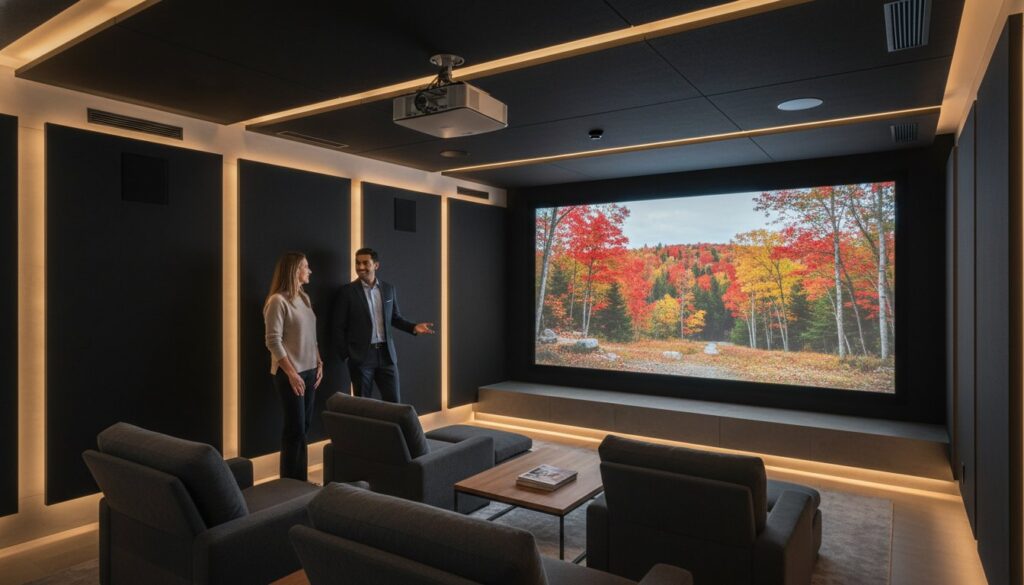
True cinematic immersion is an environmental experience where the technology disappears into the architecture of your home. A professional 4K laser projector installation Ottawa serves as the catalyst for a unified environment. When you initiate a “Movie Scene” through your Control4 or Savant interface, the transition should be synchronized. The lighting fades to a specific percentage, the motorized shades seal the room from light leaks, and the climate control shifts to a whisper-quiet mode. This level of coordination ensures that the technology remains a silent partner to your entertainment.
Acoustic Transparency and Invisible Tech
To replicate a commercial theatre, we often utilize acoustically transparent screens that allow high-fidelity speakers to be positioned directly behind the visual action. This configuration ensures that dialogue and sound effects originate from the screen itself, rather than from visible cabinets on the floor. It creates a cleaner aesthetic and a more natural soundstage. Meraki General Contracting prioritizes this “invisible” approach to ensure your media room remains a sophisticated living space when the screen is retracted.
What this means for you
By moving from a standalone projector to a fully integrated system, you eliminate the friction of managing multiple remotes and settings. For the homeowner, this means a one-touch experience that is reliable enough for every family member to use. It also protects your investment; integrated systems include automated cooling and power conditioning that prevent the hardware failures often caused by the fluctuating power grids or the tight, unventilated spaces found in many older Ottawa basements.
Smart Home Synergy in Ottawa
Managing the heat load in your AV rack is critical during humid Ottawa summers. High-performance components generate significant thermal energy that can degrade delicate circuits if not properly vented. We also focus on light control as a primary pillar of performance. While modern laser units are powerful, automated shades are essential to maintain the deep black levels required for HDR content. You can explore these integrated solutions further in our guide to Home Automation in Ottawa.
The Meraki General Contracting Difference: Managed and MasterCrafted
Our approach is defined by a commitment to operational independence and specialized focus. During our “Measured” phase, we employ 3D laser scanning to map your room’s dimensions, ensuring the projector throw and lens shift are calculated with absolute precision. We also verify that every project complies with Laser Projector Safety Regulations to protect your family and guests. By utilizing fixed-price contracts and structured planning, Meraki General Contracting removes the uncertainty from high-end builds. If you are ready to elevate your home media experience, Book a Pre-Construction Consultation to begin your project with a foundation of transparency.
Executing Your Cinematic Vision with Precision
Achieving a world-class media room requires more than just high-end hardware; it demands a disciplined approach to execution and a commitment to architectural integrity. Throughout this guide, we have explored why laser technology is the definitive choice for 2026 and how local factors, such as Ottawa’s specific basement constraints, dictate the success of your build. Most homeowners find that the difference between a frustrating technical failure and a seamless cinematic sanctuary lies in the rigor of the pre-construction phase.
A professional 4K laser projector installation Ottawa should be a transparent, data-driven process with no financial surprises. Meraki General Contracting utilizes a proprietary Measured, Managed, and MasterCrafted workflow to ensure every detail, from throw ratios to electrical permits, is finalized before the first hammer swings. By providing fixed-price contracts for projects ranging from $100K to $500K, we offer the high-stakes reliability required for elite residential investments. Your theatre should be a reliable retreat, designed and built by local experts who prioritize your long-term interests.
Start your MasterCrafted home theatre journey with Meraki General Contracting and transform your vision into an impeccable reality.
Frequently Asked Questions
How much does 4K laser projector installation cost in Ottawa?
The total investment for a 4K laser projector installation Ottawa depends on your room’s existing infrastructure and the equipment tier you select. Beyond the hardware, you must account for specialized labor like professional calibration and custom mounting. Here’s where projects go wrong: homeowners often overlook the cost of room modifications. If your basement needs new bulkheads or reinforced ceilings, these structural changes will influence your final project budget.
Can I use a 4K laser projector in a room with windows?
You can use a laser projector in a room with windows, but success depends on light management. High-lumen projectors are designed to cut through some ambient light, but direct sun will still wash out the image. We suggest pairing your projector with an Ambient Light Rejecting (ALR) screen. Integrating automated shades into your home automation system is the most reliable way to ensure a crisp image at any hour.
What is the difference between a ‘long throw’ and ‘ultra-short throw’ (UST) laser projector?
The primary difference is the distance needed to produce a large image. Long throw projectors are typically mounted on the ceiling or a rear wall, requiring several feet of space. Ultra-short throw (UST) units sit on a cabinet just inches from the screen. In many Ottawa basements with low ceilings, a UST projector is often the better choice because it avoids interference from HVAC bulkheads and lighting fixtures.
Do I need a special screen for a 4K laser projector?
While a white wall might work for a basic setup, a professional 4K laser projector installation Ottawa deserves a dedicated 4K-rated screen. Standard screens can have a grain or texture that interferes with the fine detail of 4K content. If your media room isn’t a dedicated “black box” theatre, an ALR screen is vital. It reflects light from the projector toward you while absorbing light from windows or lamps.
What should I ask my contractor about home theatre wiring?
Ask your contractor if they have a plan for Electrical Safety Authority (ESA) permitting. In Ontario, any new electrical wiring requires a notification of work filed by a Licensed Electrical Contractor. You should also ask about the type of HDMI cables they intend to use. For 4K signals, fiber-optic HDMI is the industry standard to prevent signal degradation over the long distances common in basement theatre layouts.
Is a laser projector better than a large OLED TV for a basement?
A 4K laser projector is superior if you want an image larger than 98 inches. While OLED TVs provide unmatched black levels, they can’t match the scale of a 120-inch or 150-inch projection screen. For a dedicated basement theatre, the projector offers a more authentic cinema feel. However, if you plan to keep the lights on constantly, a large OLED might be easier to manage in a high-traffic area.

Article by
~ Jason Bourguignon
Jason has been passionate about building homes from a young age, starting his first successful construction company at age 21. With experience across nearly every sector of the industry, he brings a hands-on understanding of the entire building process. For over two decades, he has managed hundreds of custom home builds, additions, and renovations with some single projects exceeding $2.5M. Jason does not just focus on construction, but also helps homeowners create spaces they truly call home.
Disclaimer
The information in this article is provided for general educational purposes only and is based on typical renovation scenarios in Ontario. Every project is unique, and actual costs, timelines, and requirements may vary. This content does not constitute professional, legal, or engineering advice. We recommend consulting with a qualified contractor or specialist for your specific project.