The lowest quote can become the most expensive choice when the scope, responsibilities, or permit plan is unclear. When comparing residential construction companies ottawa homeowners consider, look beyond the total: check what work is included, who is responsible for coordination, and how the contractor explains risks.
It’s reasonable to want a clear budget and reliable schedule before committing to a major home project. The right fit depends on relevant project experience, careful planning, and open communication about assumptions and possible changes.
This guide offers a practical way to shortlist Ottawa-area firms, understand what may affect your budget and timing, and ask better questions before work begins. You’ll learn what to look for in a written scope, how to discuss communication and contractor responsibilities, and why permit requirements should be confirmed with the municipality responsible for your property. Whether you’re renovating, planning an addition, or building a custom home in Ottawa or Prescott-Russell, the goal is to make a confident decision before construction starts.
Key Takeaways
- Match the company’s experience and working model to your project’s scope and coordination needs.
- Compare residential construction companies ottawa homeowners are considering by checking how clearly each explains the work, assumptions, exclusions, and possible changes.
- Ask how the contractor will communicate, provide project updates, and handle unexpected issues that could affect budget or timing.
- Use structured planning, transparent pricing, and clear project visibility as criteria when reviewing a company’s process, not just its portfolio.
What Ottawa Residential Construction Companies Do, and Which Type Fits Your Project?
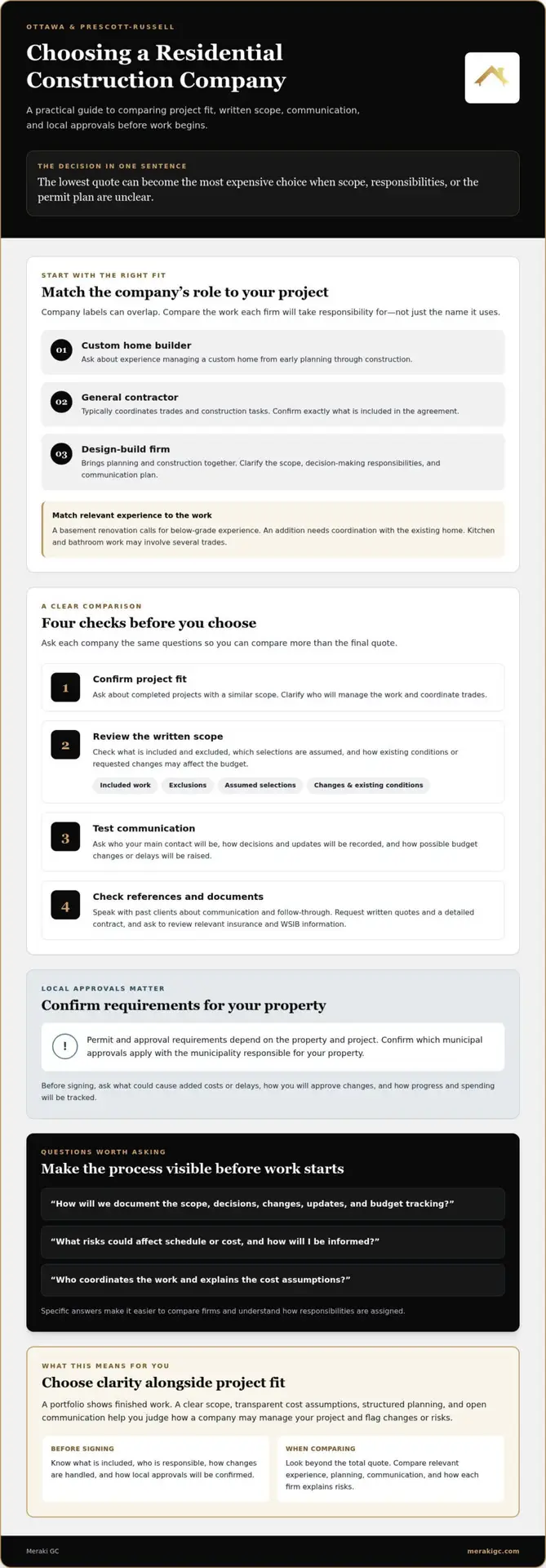
Residential construction companies can include custom home builders, general contractors, and design-build firms. Their roles can overlap, so compare the work each company will take responsibility for, not just the label it uses. A builder may focus on new homes; a general contractor typically coordinates trades and construction tasks. See this overview of what a general contractor does, then confirm exactly what’s included in the contractor’s agreement.
A design-build firm brings planning and construction together under one process. That can simplify coordination, but only if the scope, decision-making responsibilities, and communication plan are clear. For projects in Ottawa or Prescott-Russell, confirm permit and approval requirements with the municipality responsible for the property.
Which contractor model suits your Ottawa-area project?
Start by listing the work you need, then look for relevant completed projects. A basement renovation calls for experience with below-grade spaces; an addition needs a firm prepared to coordinate new work with the existing home. For a custom build, ask about experience managing the project from early planning through construction. A kitchen or bathroom renovation may require coordination between several trades.
As you compare residential construction companies ottawa homeowners may consider, ask who defines the scope, coordinates trades, explains cost assumptions, and manages changes. If you’re considering design-build, this overview of the design-build process can help you identify what to ask. Meraki General Contracting’s structured pre-construction scoping and data-driven pricing are examples of process details to assess, not a substitute for checking project fit.
What this means for you: Shortlist companies by relevant project experience and clearly assigned responsibilities. Before signing, make sure you know who will coordinate the work and how local approvals will be confirmed.
How to Compare Ottawa Construction Companies Before You Sign
A polished portfolio can show finished work, but it won’t tell you how a company handles scope changes or keeps you informed. Ask each firm the same questions so you can compare more than the final quote. These four checks can reveal gaps before they become costly misunderstandings.
- 1. Confirm project fit. Ask about completed projects with a similar scope, and clarify who will manage the work and coordinate trades.
- 2. Review the written scope. Check what’s included and excluded, which selections are assumed, and how existing conditions or requested changes could affect the budget. Materials, finishes, and changes to the agreed work can all affect cost.
- 3. Test communication. Ask who your main contact will be, how decisions and updates will be recorded, and how budget changes or possible delays will be raised.
- 4. Check references and documents. Speak with past clients about communication and follow-through. Request written quotes and a detailed contract, and ask to review relevant insurance and WSIB information.
Before signing, ask what could cause added costs or delays, how you’ll approve changes, and how progress and spending will be tracked. Confirm which municipal approvals apply to your property and project with the relevant municipality. Ontario’s guidance can help you know your consumer rights when planning renovation or repair work.
What should you ask a residential contractor?
Ask: “How will we document the scope, decisions, changes, updates, and budget tracking?” Also ask what risks could affect schedule or cost, and how you’ll be informed. Specific answers make it easier to compare firms. Meraki GC’s structured project planning process is one example to assess when evaluating how a company plans and communicates.
What This Means for You: Choose a Company That Makes the Project Clear
What this means for you: Compare process quality alongside project fit and past work. A strong portfolio shows what a company has built, while its planning and communication practices help you judge how it may manage your project, explain cost assumptions, and flag changes or risks.
How structured planning can reduce uncertainty before construction
Before you commit, ask how the company will define the scope, develop pricing, record decisions, and keep you informed once work begins. Meraki GC calls its approach Measured, Managed, MasterCrafted. It uses structured scoping and data-driven pricing before construction, while live dashboards and proactive communication are intended to support project visibility. These are useful criteria to assess, not guarantees of a particular budget or schedule.
Explore Meraki GC’s project process and consider whether its planning and update practices answer your questions. For your project, check that the written scope makes assumptions and exclusions clear, and confirm applicable approvals with the municipality responsible for your property. The Government of Ontario also explains your rights when hiring a contractor, including considerations for renovation agreements.
As you compare residential construction companies ottawa homeowners may shortlist, look for clear answers and a process that fits the decisions your project requires. If you’re planning a renovation or custom build, review Meraki GC’s residential construction services and consider whether its experience and approach match your plans.
Make Your Next Step a Clear One
Choosing a contractor is about more than comparing portfolios or quotes. Shortlist residential construction companies ottawa homeowners can assess by project fit, a clear written scope, and how openly each firm explains assumptions, changes, and communication. Before work begins, confirm which approvals apply to your property and project with the relevant municipality.
Meraki GC’s Measured, Managed, MasterCrafted process uses structured pre-construction scoping and data-driven pricing. Live project dashboards and proactive communication are intended to help homeowners follow project progress. Consider these practical details as you decide whether a company’s approach fits your needs.
If you’re planning a residential project in Ottawa or Prescott-Russell, discuss your project with Meraki GC and explore whether its process and experience align with your plans. Clear questions and careful comparison can help you take the next step with greater confidence.
Frequently Asked Questions
How do I choose a residential construction company in Ottawa?
Choose a company with relevant experience, a clear scope, and a planning and communication process that fits your project. When comparing residential construction companies ottawa homeowners may consider, look beyond the portfolio: ask who coordinates the work, how decisions and changes are documented, and how budget updates are shared. Check references, review the written agreement, and confirm project-specific approval requirements with the municipality responsible for your Ottawa or Prescott-Russell property.
What should I ask an Ottawa contractor before hiring them?
Ask what’s included and excluded, who manages the project, and how you’ll approve changes. Find out how the contractor tracks costs, shares updates, and communicates possible delays or unexpected work. Ask for references from similar projects and clarify which municipal approvals may apply. Before signing, make sure the written agreement reflects your understanding of the scope, responsibilities, payment terms, and change process.
How much does residential construction cost in Ottawa?
There isn’t one reliable figure for every Ottawa project. The total depends on the type and scope of work, material and finish choices, existing conditions, coordination needs, and any changes made after work begins. Request a written quote that explains assumptions, exclusions, and what could affect the budget. For your specific property, confirm applicable permits or approvals and related requirements with the responsible municipality.
What can go wrong when hiring a construction company?
Problems can arise when the scope is vague, exclusions are missed, responsibilities aren’t clear, or changes aren’t documented. These gaps can contribute to added costs, delays, or disputes about what the contractor agreed to do. Limited updates can also leave homeowners unsure about decisions or progress. Reduce the risk by checking references, reviewing the written agreement, and asking how issues will be raised and recorded.

Article by
~ Jason Bourguignon
Jason has been passionate about building homes from a young age, starting his first successful construction company at age 21. With experience across nearly every sector of the industry, he brings a hands-on understanding of the entire building process. For over two decades, he has managed hundreds of custom home builds, additions, and renovations with some single projects exceeding $2.5M. Jason does not just focus on construction, but also helps homeowners create spaces they truly call home.
Disclaimer
The information in this article is provided for general educational purposes only and is based on typical renovation scenarios in Ontario. Every project is unique, and actual costs, timelines, and requirements may vary. This content does not constitute professional, legal, or engineering advice. We recommend consulting with a qualified contractor or specialist for your specific project.