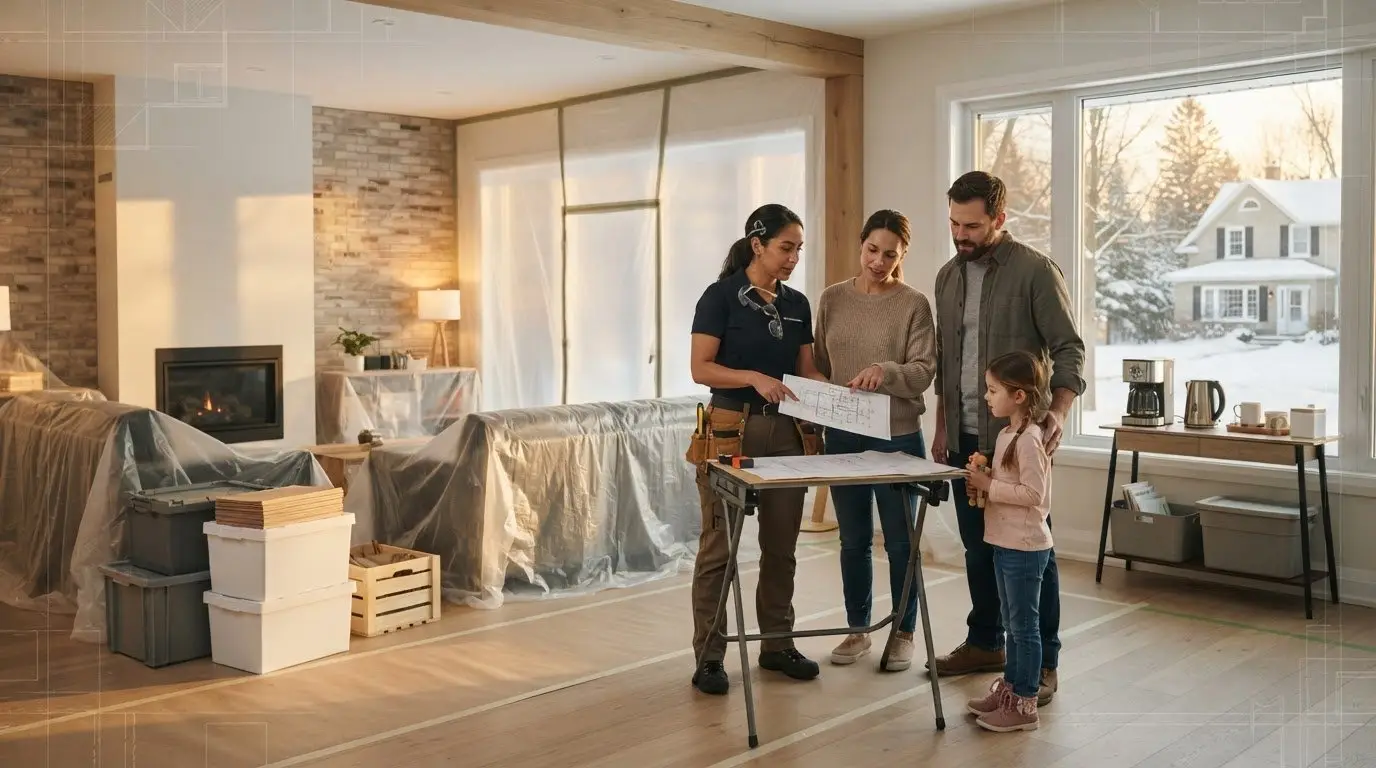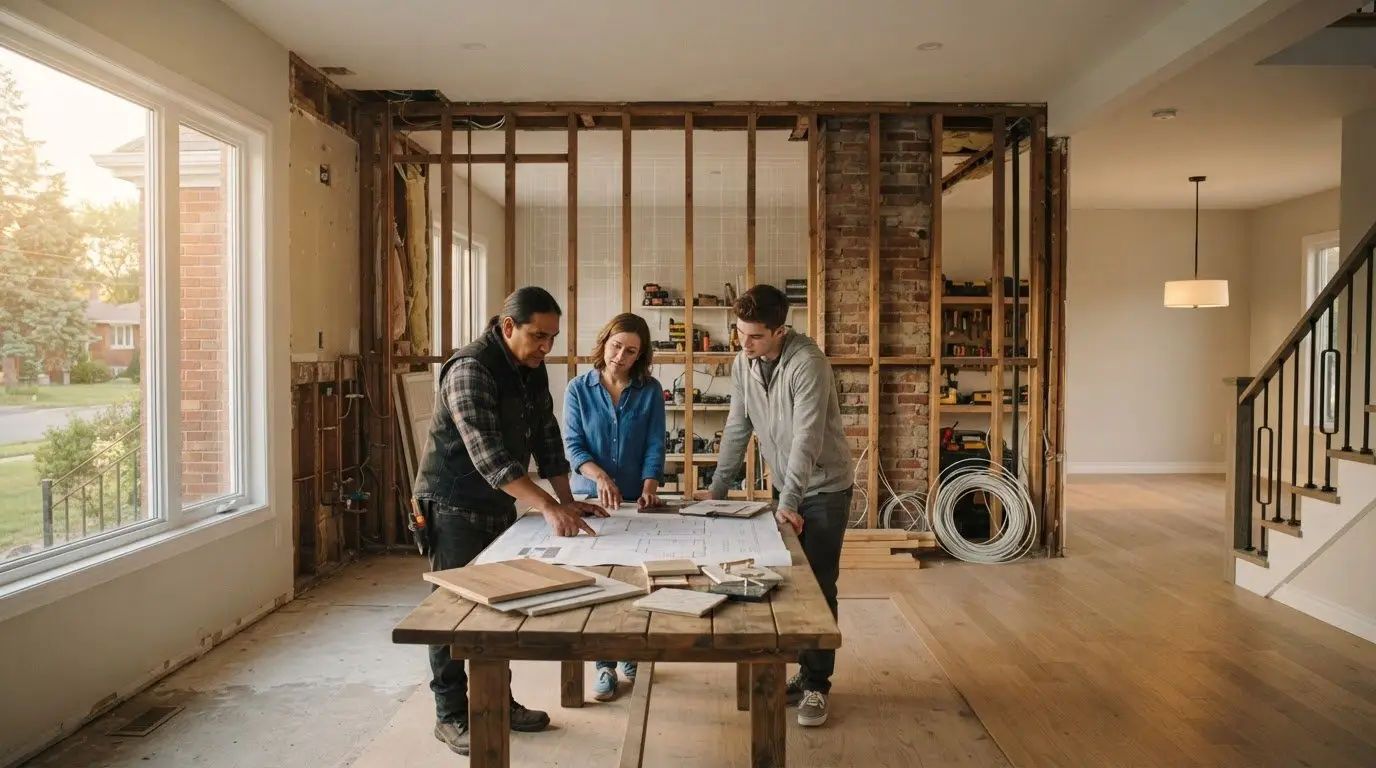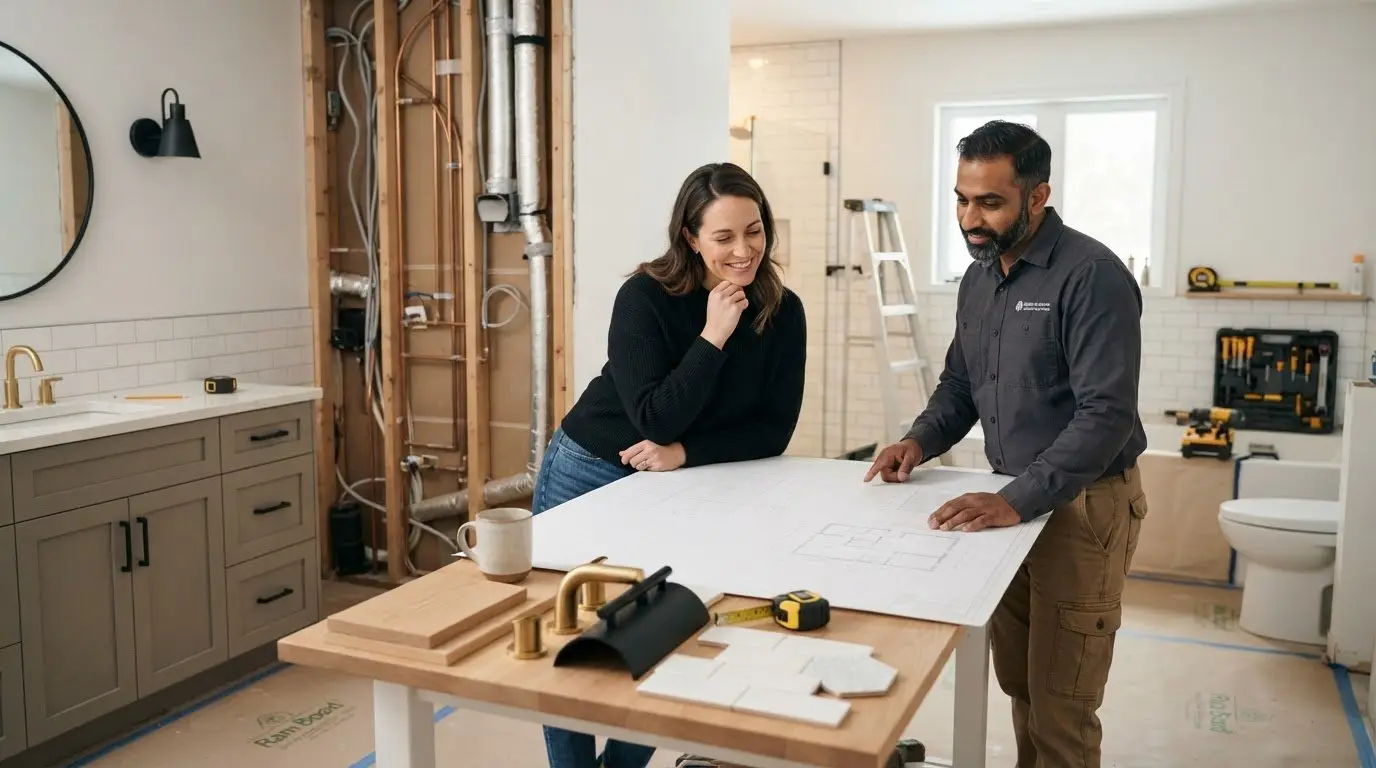
Renovation resistance isn’t actually about the floor plan or the tile choice; it’s a rational response to a lack of data. Most homeowners we speak to in the Ottawa area feel a deep sense of hesitation because they’re trying to balance a vision for their home with the very real fear of a budget that spirals out of control. If you’re currently struggling with convincing my spouse on a renovation, it’s likely because the risks feel abstract while the costs feel all too permanent. You both want a home that reflects your lifestyle, yet the prospect of an infinite timeline or a construction zone in the middle of a local winter can stall even the most necessary projects.
It’s possible to transform that anxiety into a shared, low-risk vision by moving away from guesswork and toward a structured planning approach. This guide will show you how to use data-driven certainty to protect both your investment and your relationship. We’ll explore how fixed-price budgeting eliminates surprises and why professional pre-construction scoping acts as an insurance policy for marital harmony. We’ll also cover how to navigate the 1,730 technical updates in the 2024 Ontario Building Code that impact 2026 projects, ensuring you move forward with the confidence that your home is in expert hands.
Key Takeaways
- Identify the three core fears, including financial overruns and unreliable contractors, that typically drive spousal hesitation in the Ottawa market.
- Master the strategy of convincing my spouse on a renovation by shifting the conversation from aesthetic costs to the specific lifestyle problems your project will solve.
- Discover how high-fidelity 3D renderings and mood boards bridge the gap between imagination and reality to create a unified vision for your home.
- Learn why a fixed-price contract and live project dashboards are essential tools for maintaining transparency and reducing construction-related stress.
- Understand how a professional pre-construction scoping process acts as an insurance policy for both your investment and your domestic harmony.
Understanding the ‘No’: Why Spouses Hesitate on Major Renovations
A spouse saying “no” is rarely a rejection of a better kitchen or a finished basement; it’s usually a defense mechanism against uncertainty. Most homeowners we speak to are wrestling with three specific anxieties: the “Money Pit” where costs balloon, the “Never-Ending Project” that destroys domestic peace, and the “Cowboy Contractor” who disappears mid-build. These aren’t just myths. In the Ottawa market, regional labor shortages and supply chain bottlenecks for materials have made these fears feel more grounded than ever. When you are convincing my spouse on a renovation, it’s vital to acknowledge these risks rather than dismissing them.
Here’s where projects go wrong: homeowners often frame a remodel as a “want” rather than a strategic investment. In reality, the “Moving vs. Renovating” trap in Ottawa is real. Between land transfer taxes, real estate commissions, and current mortgage rates, the friction of moving often exceeds the cost of a high-end remodel. Choosing to stay and invest into your existing footprint allows you to bypass the volatile local housing market while building immediate equity. For homeowners who view their property as a long-term asset, you can learn more about Van Treese Management to see how professional oversight can help maximize the value of residential real estate. It’s about solving a lifestyle problem, like the lack of a dedicated home office, while protecting your financial future.
Translating Dreams into Market Value
Data is your best tool for alignment. In Ottawa, a professional basement conversion can yield a 70% return on investment while adding critical square footage that buyers value in a competitive market. A professional basement conversion transforms an underutilized storage area into a high-value living space, significantly increasing the total finished square footage and market appeal of an Ottawa bungalow. We often see that waiting actually increases your total spend. Construction costs rarely trend downward, and delaying a project often means paying more for the same result next year. Utilizing effective negotiation strategies means focusing on these hard numbers rather than just the paint colors.
The Disruption Factor: Planning for the ‘Mess’
Anxiety often peaks when thinking about living in a construction zone during an Ottawa winter. To ease this, you need a logistical plan that addresses dust, noise, and privacy. Here’s what you should watch for: a contractor who doesn’t have a clear plan for winter site access or indoor air quality. You’ll need to discuss how the 2024 Ontario Building Code updates, such as new radon rough-in requirements, might affect the timeline. Setting realistic expectations about the “mess” upfront prevents resentment later in the project.
What this means for you
- Validate your spouse’s fears by showing you understand the local labor and supply risks.
- Compare the cost of moving, including taxes and fees, against the cost of your renovation.
- Focus on the 70% to 90% ROI seen in Ottawa bathroom and basement projects to frame the discussion as a financial move.
- Address the “sunk cost” of waiting, as construction inflation often outpaces savings.
A 5-Step Strategy to Align Your Renovation Vision
Moving from conflict to collaboration requires a shift in how you present the project. When convincing my spouse on a renovation, the goal is to remove the “imagination gap” that causes friction. Start by identifying the lifestyle problem the renovation solves, such as a lack of quiet workspace or a kitchen that can’t accommodate family gatherings. This reframes the project as a solution rather than an expense. When you focus on the “why,” the discussion moves away from abstract costs and toward tangible quality-of-life improvements.
True quality of life often involves a holistic approach to well-being; just as a home renovation restores your living space, taking the time to explore SONICWAVE Therapy can help restore personal vitality and strengthen the connection between partners, whether you are in Ottawa or elsewhere in Ontario.
Step two involves utilizing high-fidelity visuals. Most homeowners struggle to visualize a finished $200,000 basement from a flat floor plan. Professional 3D renderings and mood boards bridge this gap, allowing both partners to see exactly how the light hits the new lounge or how a custom home theater integrates with the existing layout. This visual clarity is a powerful way to survive a renovation without destroying your relationship by ensuring there are no aesthetic surprises on move-in day.
The third and fourth steps involve structural planning and mutual compromise. We recommend drafting a “Non-Negotiable” list together. Each partner lists three must-have features, ensuring both feel represented in the final design. Finally, introduce a formal pre-construction phase. This step allows you to identify structural challenges, such as load-bearing walls or HVAC rerouting, before construction begins. It protects your budget by ensuring the initial quote is based on reality, not assumptions.
The Power of Data-Driven Pricing
Financial anxiety is the primary reason projects stall. Our Measured, Managed, MasterCrafted process removes the guesswork by providing data-driven pricing models. A fixed-fee contract serves as the ultimate peace-of-mind tool, as it guarantees that the price you agree on is the price you pay. Pre-construction scoping identifies hidden costs, such as outdated wiring or plumbing issues, before the first sledgehammer swings. This level of transparency makes it much easier for a skeptical partner to say yes.
Visualizing the Final Result
Seeing the potential of your home helps justify a significant investment. If you’re looking for inspiration on how a dark basement can become a high-value living space, our guide on Basement Renovations in Ottawa showcases what’s possible with professional design-build project management. Reviewing our full range of services can help you and your spouse narrow down exactly which high-value project makes the most sense for your family’s future.
What this means for you
- Shift the focus from what the project costs to what lifestyle problems it solves.
- Use 3D renderings to eliminate visual uncertainty and build excitement.
- Create a “Non-Negotiable” list to ensure both partners are heard and represented.
- Insist on a fixed-price contract to eliminate the fear of “Money Pit” scenarios.
- Start with pre-construction scoping to identify structural risks before you sign a major contract.

Choosing a Partner That Protects Your Relationship
Selecting the right partner is the final hurdle in convincing my spouse on a renovation. Many homeowners are tempted by the lowest bid, but the “cheapest quote” is often the most expensive choice for your marriage. These estimates usually lack depth. This leads to the exact budget overruns and timeline shifts that cause domestic stress. In Ottawa’s competitive market, a low bid often signals a lack of professional scoping or a reliance on trades who may not prioritize your project during the busy season. It is better to choose a team that values precision over a low entry price.
A Design-Build firm acts as a single point of accountability. Instead of you acting as the referee between an architect and multiple independent trades, one team manages the entire project lifecycle. This model stops the finger-pointing that often happens when structural surprises are found behind the walls. By centralizing the management, you ensure that the vision you and your spouse agreed upon remains consistent from the first drawing to the final walkthrough. It moves the burden of coordination from your shoulders to ours.
What this means for you: The Meraki Difference
Our focus on proactive communication and transparency eliminates the “unclear timeline” anxiety that plagues most home improvements. We use live project dashboards so you can see progress in real time without needing to ask for an update. This transparency acts as a pressure valve for the relationship. It ensures both partners feel informed and respected throughout the build. We suggest a joint pre-construction consultation as a low-risk next step to align your goals and budget before any construction begins.
What to Ask Your Contractor
Before signing a contract, use these four questions to gauge a contractor’s reliability and transparency:
- How do you handle budget overruns, and who is responsible for “surprises” found behind the walls?
- What specific technology do you use to keep us updated on progress without us having to ask?
- Can you provide a fixed-price contract based on detailed pre-construction data?
- How do you manage site cleanliness and dust control to protect our living space?
What this means for you
- Prioritize professional management over the lowest quote to avoid hidden marital and financial costs.
- Look for a single point of accountability to reduce conflict between different contractors and designers.
- Demand access to live project data so you and your spouse can stay informed without the stress of constant follow-ups.
- Use the interview process to verify that the contractor has a structured plan for managing risks and communication.
Moving Forward with Confidence
High-stakes home improvements shouldn’t be a source of domestic friction. We’ve seen that the most successful projects in Ottawa start with a shared understanding of both the lifestyle benefits and the financial protections in place. By shifting the conversation from abstract costs to concrete data and visual renderings, convincing my spouse on a renovation becomes a collaborative effort to build a better future together. It’s about replacing uncertainty with a structured plan that respects your home and your relationship.
The key to long-term satisfaction lies in choosing a partner who prioritizes transparency. Our expertise in high-value Ottawa renovations is built on a foundation of fixed-price contracts and live project dashboards that keep both partners in the loop. This structured approach eliminates the “money pit” fears and timeline anxieties that often stall great ideas. When you have a single point of accountability, the focus stays on the craftsmanship rather than the logistics.
Ready to bridge the gap between your individual visions? Book a Joint Pre-Construction Consultation with Meraki GC to get the professional clarity you need. Taking this step together ensures your home transformation is managed with the precision and respect it deserves. Your ideal home is within reach.
Frequently Asked Questions
How do I handle a disagreement with my spouse over the renovation budget?
Shift the focus from emotional preferences to objective data by investing in a professional pre-construction scoping session. This process provides a realistic baseline for costs before any commitments are made. Most homeowners we speak to find that a fixed-price contract resolves disagreements because it eliminates the fear of unexpected “money pits.” When the numbers are based on hard data rather than guesses, the financial risk feels managed rather than reckless.
Is it better to renovate all at once or in smaller phases to reduce stress?
Renovating all at once is generally more cost-effective and reduces the total duration of domestic disruption. Phasing a project often leads to higher mobilization costs and multiple permit fees, which currently sit at $12.75 per $1,000 of construction value in Ottawa. Completing the work in one window, especially during the winter months when indoor living is a priority, prevents you from living in a semi-permanent construction zone for several years.
What are the most common renovation pitfalls that cause relationship strain?
Relationship strain usually stems from a lack of transparency regarding timelines and “hidden” costs found behind the walls. Here’s where projects go wrong: a contractor provides a vague estimate that later balloons, causing one spouse to feel misled. When convincing my spouse on a renovation, look for partners who provide live project dashboards. These tools ensure both partners have real-time access to progress, which prevents the anxiety of being left in the dark.
How can we determine if a renovation will actually add value to our Ottawa home?
Analyze regional return on investment (ROI) data for high-value projects like basements and kitchens, which typically see a 70% return in the Ottawa market. You should also consider how the 2024 Ontario Building Code updates impact future resale. Upgrading to current standards for energy efficiency or adding a legal secondary suite with the required 1.95-meter ceiling height adds measurable equity. These technical improvements signal to future buyers that the home was managed by professionals.

Article by
~ Jason Bourguignon
Jason has been passionate about building homes from a young age, starting his first successful construction company at age 21. With experience across nearly every sector of the industry, he brings a hands-on understanding of the entire building process. For over two decades, he has managed hundreds of custom home builds, additions, and renovations with some single projects exceeding $2.5M. Jason does not just focus on construction, but also helps homeowners create spaces they truly call home.
Disclaimer
The information in this article is provided for general educational purposes only and is based on typical renovation scenarios in Ontario. Every project is unique, and actual costs, timelines, and requirements may vary. This content does not constitute professional, legal, or engineering advice. We recommend consulting with a qualified contractor or specialist for your specific project.